Shadow Fleet
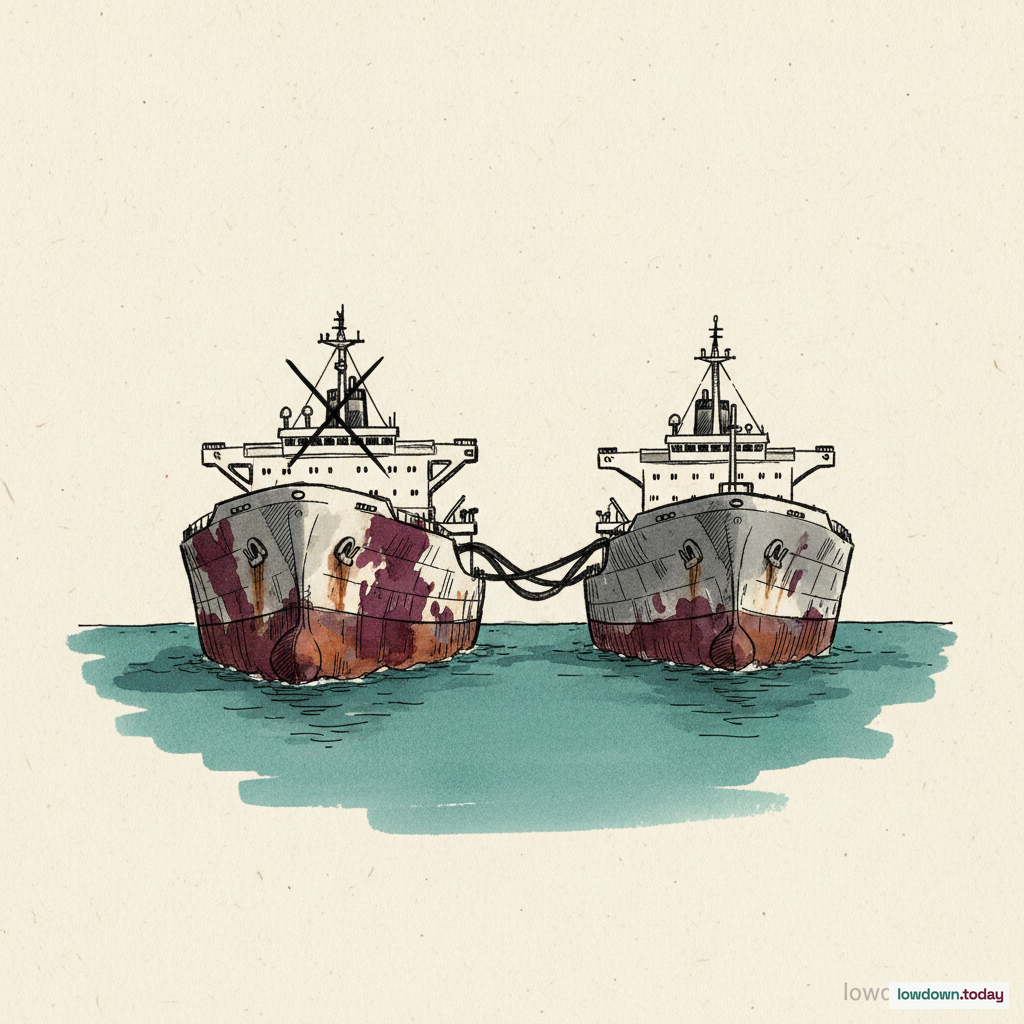
Ageing uninsured tankers moving sanctioned oil via AIS spoofing and ship-to-ship transfers.
Last refreshed: 3 August 2026 · Appears in 1 active topic
How does the GL 134C lapse change the shadow fleet's ability to move Russian crude?
Timeline for shadow fleet
EU navies board tanker off Pantelleria
Russia-Ukraine War 2026The dark fleet fakes an anchored ship
Iran Conflict 2026Mentioned in: OFAC sanctions Hengli, China's number two teapot
Iran Conflict 2026Mentioned in: Carnegie: Iran war masks Kyiv's oil strike cost
Russia-Ukraine War 2026Mentioned in: Shadow fleet uses dead ships' identities
Iran Conflict 2026Background
The shadow fleet has expanded to an estimated 632 designated vessels following the EU's 20th sanctions package in April 2026, which added 46 tankers and imposed a blanket ban on Russian and Belarusian crypto assets and stablecoins. Combined US, UK, and EU designations now cover the largest share of the global shadow tanker fleet ever targeted, though enforcement remains uneven outside European waters.
Iran pioneered shadow fleet tactics from 2010 as sanctions cut its exports from 2.5 million to one million Barrels Per Day. Russia expanded the fleet by roughly 70% in the nine months after its February 2022 invasion. Vessels average 20 years old, with 60% aged 20 or over. The International Group of P&I Clubs, covering 90% of the world's oceangoing fleet, has largely withdrawn, leaving most shadow tankers without meaningful pollution or salvage cover. CREA found 56% of Russian crude moved on sanctioned shadow tankers in February 2026.
Western countermeasures intensified sharply in mid-June 2026. On 14 June, Royal Marines rappelled from helicopters onto the Cameroon-flagged shadow tanker Smyrtos in the English Channel, Britain's first such interdiction operation, seizing the vessel and arresting an Indian national for suspected sanctions offences. The EU's 15 June mini-package listed 24 additional shadow-fleet operators, and on 17 June OFAC's General Licence 134C lapsed without a successor, removing the Western vessel-services umbrella (insurance, crewing, bunkering, classification, salvage) from Russian-origin crude at the same moment. The two measures align for the first time, squeezing both the vessel layer (EU designations) and the insurance layer (GL 134C expiry) simultaneously. The fleet remains indispensable to Russian war financing, transporting the bulk of the crude revenue that funds roughly 30% of Russia's federal budget. The interdiction pace continued into mid-July: OFAC blocked a further 28 vessels on 14 July, alongside Iran's central bank, as part of the same expiring-clock sanctions week that also produced the EU's one-week Russia oil price cap stopgap. Ukraine has also added a kinetic dimension to the pressure: its military said it struck 159 shadow-fleet vessels in a 12-day campaign through mid-July, up sharply from 35 strikes in the previous 96 hours, though the tally is a Ukrainian-sourced claim rather than an independently verified count.
Reference
Which countries are the main users of the shadow fleet?
What is the shadow fleet and how does it evade oil sanctions?
Does the shadow fleet have insurance?
Who created the shadow fleet?
Why is the shadow fleet dangerous?
How does the shadow fleet evade detection?
What happened when the EU boarded the tanker Toa Payoh in August 2026?
Has Ukraine attacked the Russian shadow fleet?
What did the expiry of OFAC General Licence 134C mean for Russian crude shipping?
Why did Royal Marines board a tanker in the English Channel in June 2026?
How many shadow fleet vessels have been sanctioned by the EU, US, and UK?
How big is the shadow fleet?


