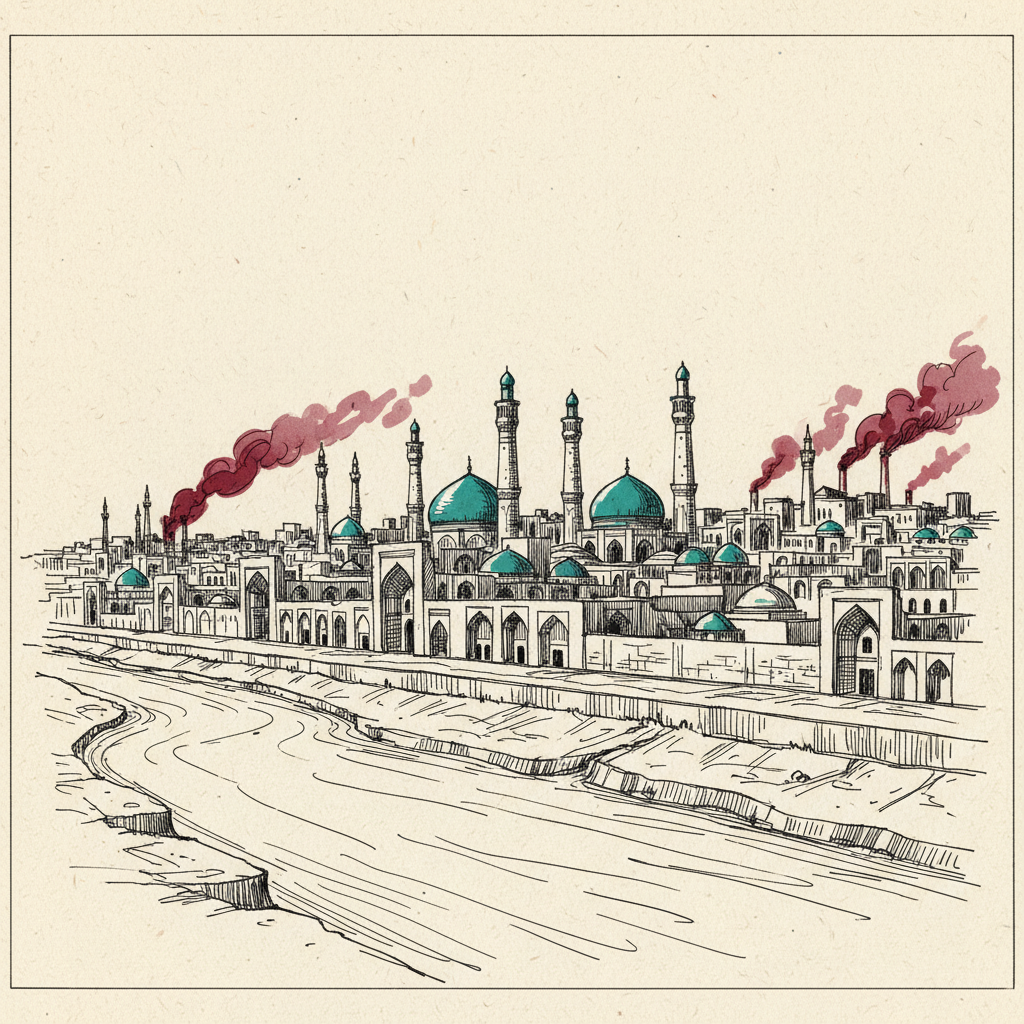
Isfahan
Iranian city; site of nuclear fuel conversion facilities, UNESCO Heritage square, and wartime executions.
On 1 September, the IAEA said it still could not verify nuclear material at Isfahan and called access urgent, leaving the city’s underground complex central to the unresolved account of Iran’s enriched uranium.
Last refreshed: 2 October 2026 · Appears in 1 active topic
Is Isfahan's underground uranium stockpile still intact after the 2026 war?
Timeline for Isfahan
Undeclared enrichment plant location
Iran Conflict 2026: Mentioned in: IAEA Board sends Iran's file to New YorkIAEA still cannot locate Iran's uranium
Iran Conflict 2026Mentioned in: Iran executes a fifth Isfahan defendant
Iran Conflict 2026Mentioned in: Iran executed 67 in July, admitted 8
Iran Conflict 2026Mentioned in: Iran hangs a protest detainee at Shahrud
Iran Conflict 2026Background
Isfahan is an Iranian city in central Iran, known for Naqsh-e Jahan Square, a UNESCO World Heritage site, and for its role as a regional industrial centre. Its large urban population, heavy industry and cultural Heritage make it more than a military or nuclear location.
The city also hosts the Isfahan Nuclear Technology Centre, where uranium ore is converted into uranium hexafluoride for further processing. The IAEA disclosed on 19 March 2026 that Iran had a fourth known enrichment facility underground at Isfahan, which inspectors could not access. Iran later acknowledged on 13 April that strikes had damaged Isfahan alongside other nuclear sites.
This combination of cultural prominence, industrial capacity and nuclear infrastructure gives Isfahan enduring national importance. Its prison system also gives the city a separate human-rights relevance in accounts of Iran’s wartime repression.
Its uranium remains unverified
Isfahan remained beyond IAEA inspectors' reach on 1 September, when the agency said it needed urgent access to check Iran's nuclear material. For Isfahan, that leaves its underground complex at the centre of a monitoring gap that inspectors cannot repair remotely.
Earlier, on 4 June, the IAEA estimated that roughly 200 kg of 60%-enriched uranium was probably at Isfahan, while the location of the rest of the recorded stockpile remained uncertain. The estimate made the city a key test for any agreement that claims to restore verified control of Iran’s nuclear material.
Its executions face scrutiny
On 15 July, Mohammad Amini Dehaghani was hanged in Isfahan over an arson charge connected to January’s protests. No public record of his arrest or trial had surfaced, making the city a documented site in the wider pattern of secret wartime executions.
On 2 August, Hengaw recorded at least 67 executions across Iran during July, while authorities acknowledged eight. The National figure does not assign every death to Isfahan, but it places the city’s documented case within a sustained system whose public record remains incomplete.
Its buried uranium stays unverified
Was Isfahan's nuclear facility destroyed in the Iran war?
Reference
Is Isfahan the same as Natanz?
What is the Isfahan Nuclear Technology Centre?
Is Isfahan safe from further strikes?
What happened to protesters in Isfahan during the 2026 war?
Why is Isfahan significant in the Iran nuclear deal talks?
Where is Iran's enriched uranium stockpile now?
Is Naqsh-e Jahan Square in Isfahan damaged?
Why are protesters from Isfahan being executed in Iran?


