University of Michigan Consumer Sentiment Index
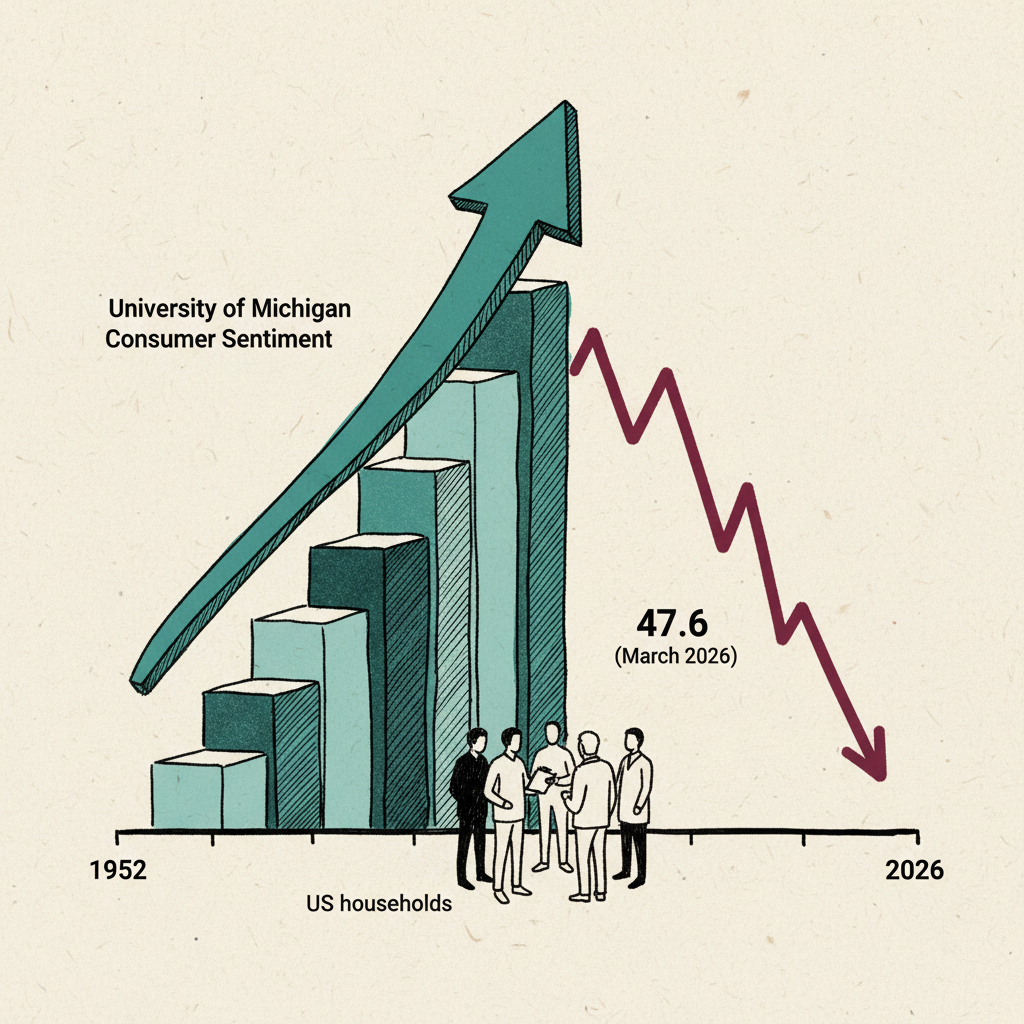
US household confidence survey running since 1952; hit record low 47.6 in March 2026.
Last refreshed: 13 April 2026
How bad was American consumer confidence before the blockade even started?
Timeline for University of Michigan Consumer Sentiment Index
Mentioned in: US inflation hits 1967 levels before blockade
Iran Conflict 2026Background
The University of Michigan Consumer Sentiment Index hit an all-time low of 47.6 in March 2026, driven by gasoline prices up 21.2% and mounting war anxiety, before the blockade announcement added a further shock. The reading is the lowest in the survey's 74-year history, below the previous record set during the 1979 oil crisis. Because the survey measures conditions as of mid-March, it predates both the Ceasefire and the blockade: April's reading, when published, is expected to fall further.
Published monthly by the University of Michigan's Survey of Consumers since 1952, the index surveys approximately 500 US households on their assessment of current personal finances, buying conditions, and five-year economic outlook. The long-run historical average is roughly 86. A reading below 60 has historically coincided with recessions. The 47.6 print is almost 20 points below that threshold. The survey is separate from the Conference Board's consumer confidence index; both track sentiment but weight different factors and rarely diverge by more than a few points over extended periods.
The index matters beyond polling. Consumer spending represents approximately 70% of US GDP; when households cut spending, corporate earnings fall and the economy contracts. The 47.6 reading came alongside a March CPI rise of 0.9% month-on-month, the largest since 1967, compressing real incomes at the same moment confidence collapsed. Political consequences are immediate: Midterm elections in November 2026 will be contested on economic grounds if gasoline and grocery prices remain elevated through summer.
What is the University of Michigan consumer sentiment index?
Why did consumer sentiment hit an all-time low in 2026?
What does a consumer sentiment reading below 60 mean?
How will the Iran war affect the US economy?

