
Skip to content
Briefings are running a touch slower this week while we rebuild the foundations.See roadmap
Iran Conflict 2026
30MAR

Day 31: Trump wants Iran's oil; 3,500 Marines land

5 min read
08:00UTC

President Trump told the Financial Times he wants to 'take the oil in Iran' on the same day 3,500 Marines arrived in theatre, the 82nd Airborne confirmed Kuwait as its staging ground, and the Pentagon disclosed weeks of ground operations planning. Iran's parliament filed a bill to withdraw from the Non-Proliferation Treaty, Hengaw documented 1,700 wartime arrests concentrated in Kurdish provinces, and an Iranian strike on a Kuwait desalination plant killed its first worker on Kuwaiti soil.

Key takeaway

Three incompatible US objectives persist; Iran built legal facts; Gulf water supplies now targeted.

This briefing mapped
Loading map…
Diplomatic
Military
Legal
Humanitarian
Economic
Domestic

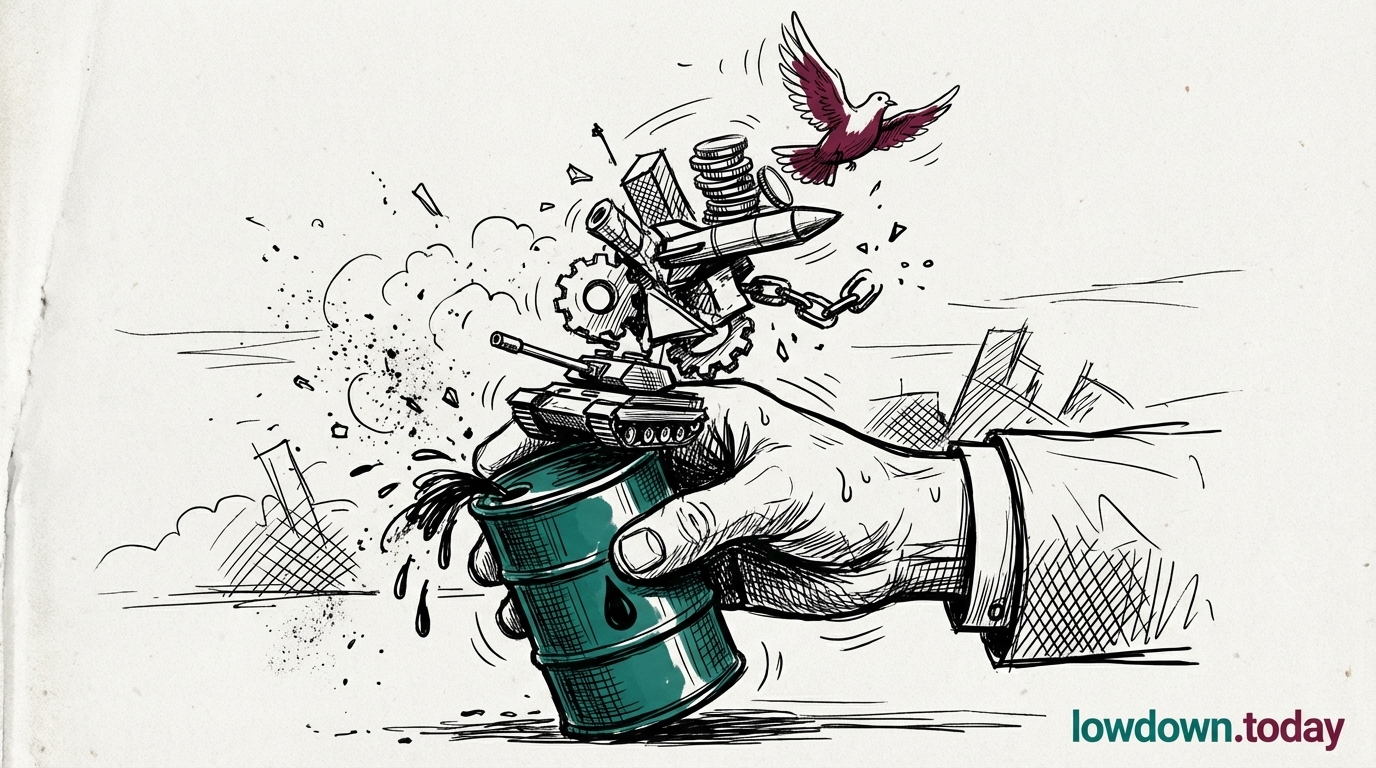
The US president told the Financial Times he wants to seize Iran's oil, claimed a peace deal was imminent, and sent thousands of troops to the Gulf. All on the same day.

Sources profile:This story draws on centre-left-leaning sources from United States and Israel
United StatesIsrael

Trump told the Financial Times on 30 March that his 'favourite thing is to take the oil in Iran,' naming Kharg Island directly. In the same interview he claimed a peace deal 'could be soon' and acknowledged that killing Iran's leaders is regime change.

Pakistan was at that moment offering to host direct US-Iran talks. No country negotiates while the other side plans to seize its primary revenue source. The Islamabad summit closed without a communique the same day. 

The USS Tripoli brought 3,500 Marines into theatre the same week the 82nd Airborne's Devil Brigade began moving to Kuwait. Three Pentagon sources confirmed planning for weeks of ground operations.

Sources profile:This story draws on centre-left-leaning sources from United States
United States

The USS Tripoli arrived in the Gulf around 27 March carrying 3,500 Marines and sailors. The 82nd Airborne's Devil Brigade simultaneously began deploying to Kuwait, joining forces at bases Iran had already struck.

3 Pentagon sources confirmed to The Washington Post that active planning covers 'weeks of ground operations,' including an amphibious seizure of Kharg Island. The last time comparable US ground forces assembled in the Gulf was the 2003 Iraq invasion. 

A bill to withdraw from the Non-Proliferation Treaty appeared on parliament's portal as priority legislation. If passed, Iran would be the second state after North Korea to leave.

Sources profile:This story draws on mixed-leaning sources from Qatar
Qatar

MP Malek Shariati uploaded an NPT withdrawal bill to Iran's parliament portal on 28 March, tagged as 'priority legislation.' If passed, Iran would become only the 2nd state after North Korea to leave the Non-Proliferation Treaty.

The Majlis has not sat since 28 February, so a vote is not imminent. The bill's existence still gives Iran a loaded instrument for the moment Parliament reconvenes, while the International Atomic Energy Agency has 440 kg of 60%-enriched uranium unverified. 

A projectile destroyed a structure just 350 metres from Iran's only operating nuclear reactor. Rosatom, the Russian firm that built it, broke its silence to warn of 'growing nuclear risk.'

Sources profile:This story draws on neutral-leaning sources from United Arab Emirates and Austria
United Arab EmiratesAustria
LeftRight

A 3rd projectile struck within Bushehr Nuclear Power Plant's perimeter on 28 March, destroying a structure 350 metres from the operating reactor. The International Atomic Energy Agency confirmed all 3 strikes within 10 days; no radiation was released.

Rosatom broke its silence warning of 'growing nuclear risk.' Each strike that causes no radiation leak teaches the attacker that the next one can go closer. The Zaporizhzhia precedent showed how fast that normalisation happens. 

A drone or missile hit a Kuwait desalination plant on 30 March, killing an Indian national. It is the first confirmed fatality from an Iranian strike inside Kuwait.

Sources profile:This story draws on centre-left-leaning sources from Qatar
Qatar

An Iranian drone or missile struck a Kuwaiti power and water desalination plant on 30 March, killing 1 Indian national. It marked the first confirmed fatality from an Iranian strike on Kuwaiti soil since the war expanded to Gulf industrial targets.

Kuwait, like most Gulf states, draws over 70% of its freshwater from desalination plants. Earlier strikes hit oil infrastructure, then aluminium plants; water is now the 3rd category in Iran's escalating target doctrine. 

Sources:Al Jazeera

The Kurdish rights group broke five days of silence with its 8th war report. Buried in it: at least 1,700 wartime arrests that have received almost no international attention.

Sources profile:This story draws on neutral-leaning sources from Iran
Iran

Kurdish human rights group Hengaw published its 8th war casualties report on 28 March: 6,900 killed, including 720 civilians, in the first month. The civilian death rate had risen to roughly 20 per day.

Buried in a separate 26 March report that received almost no international coverage: at least 1,700 wartime arrests inside Iran, more than 300 of them Kurdish detainees held across 5 border provinces. The Iranian government fought an external war and an internal one simultaneously. 

Sources:Hengaw

Four nations spent two days building a ceasefire framework. They produced the war's most substantial diplomatic initiative, and then concluded without committing a single word to paper.

Sources profile:This story draws on mixed-leaning sources from United States
United States

Foreign ministers of Pakistan, Turkey, Egypt, and Saudi Arabia concluded two days of talks in Islamabad on 30 March — the most substantial multilateral diplomatic initiative since the war began — without publishing a formal communique. Pakistan's FM Ishaq Dar announced his country would host direct US-Iran talks 'in coming days.' China declared 'full support' for the initiative. Iran's FM Abbas Araghchi repeated: 'Intermediary messages are not direct negotiations.'

The absent communique means the strongest multilateral mediation effort of the conflict produced no binding framework. Trump's oil seizure statement, arriving the same day, structurally undermined any mediation before it could begin. 

Brent crude advanced above $116, up 72% from pre-war levels and heading for its largest monthly increase on record. Markets are pricing prolonged conflict, not resolution.

Sources profile:This story draws on centre-left-leaning sources from United States
United States

Brent crude advanced above $116 per barrel on 30 March, roughly 72% above its pre-war level of $67.41, on track for a record monthly gain. Goldman Sachs put a $14-18 per barrel geopolitical risk premium inside that price.

Markets abandoned any hope of a quick end: Houthi entry, 3,500 US Marines arriving in the Gulf, and Trump's oil-seizure interview all landed within 48 hours. The 6 April power-plant strike deadline adds the next pressure point. 

Sources:Bloomberg

Two drones intercepted over Israel. Three attacks in three days confirms sustainable tempo, not a one-off provocation. The Houthi deputy minister named Bab al-Mandeb closure as 'among our options.'

Sources profile:This story draws on mixed-leaning sources from Qatar
Qatar

Houthi forces fired at Israel for a 3rd consecutive day on 30 March; Israeli defences intercepted 2 drones. Deputy Information Minister Mohammed Mansour described Bab al-Mandeb closure as 'among our options' if Israel strikes Hodeidah port.

3 attacks in 3 days confirms sustainable tempo. Combined with near-total Hormuz closure, a formal Bab al-Mandeb blockade would place simultaneous pressure on both of the world's critical oil transit routes for the first time since 1973. 

Eighty per cent of March Hormuz transits were shadow fleet vessels. Legitimate commercial shipping has effectively stopped: three transits per day against a pre-war baseline of 138.

Sources profile:This story draws on neutral-leaning sources from United States
United States

shadow fleet vessels carried 80% of Strait of Hormuz transits in March 2026, up from 15% in February. Legitimate commercial traffic collapsed to roughly 3 ships per day against a pre-war baseline of 138.

Iran now controls who passes and charges up to $2 million per vessel, payable in Chinese yuan. Trump's claim of '20 big boats of oil' moving through Hormuz each morning found no support in independent tracking data. 

Western intelligence placed the end of March as the completion date for Russian drone deliveries to Iran. The deadline passed. The Kremlin denied everything. Nobody confirmed anything.

Sources profile:This story draws on mixed-leaning sources from United States
United States

Russia's drone delivery to Iran, which Western intelligence said would complete by end of March, closed on 30 March with no public confirmation. EU High Representative Kaja Kallas confirmed the timeline at the G7 on 26 March. The Kremlin denied everything.

The upgraded Shahed variants carry jet propulsion and in-flight course correction. A 29-drone strike hit Prince Sultan Air Base on 27-28 March; whether any Russian-supplied drones were used remains unconfirmed. 

The 24-hour deadline passed. No campuses were hit. But Texas A&M Qatar went to shelter-in-place, the American University of Beirut moved online, and the US Embassy warned university cities across Iraq.

Sources profile:This story draws on neutral-leaning sources

The IRGC's 24-hour university ultimatum expired at noon Tehran time on 30 March with no US condemnation issued and no confirmed retaliatory strikes on Gulf campuses. However, Texas A&M Qatar shifted to shelter-in-place and remote learning, the American University of Beirut moved fully remote, and the US Embassy Baghdad issued warnings for university cities including Baghdad, Sulaymaniyah, and Dohuk.

The IRGC achieved disruption without kinetic action. The precedent matters: future ultimatums will be taken seriously regardless of follow-through, and Gulf universities now operate under a new threat calculus. 

No video. No audio. One written statement read by a TV anchor over a still photograph. The longest absence of any Supreme Leader since 1979.

Sources profile:This story draws on centre-left-leaning sources from United States and Israel
United StatesIsrael

Supreme Leader Mojtaba Khamenei had not appeared in public for 17 days as of 30 March 2026, the longest absence of any Supreme Leader since the 1979 revolution. His only communication was a written statement read by a TV anchor over a still photograph; no video or audio surfaced.

During those 17 days, Bushehr was struck 3 times and 1,700 people were arrested. The IRGC left its fingerprints on every major decision; who authorised them remains unknown. 

Closing comments

Sharply upward. Ground forces are converging on the Gulf with confirmed planning for weeks of operations; Trump has publicly stated intent to seize Iranian territory; Iran has filed the NPT withdrawal bill and killed its first Kuwaiti victim; Houthi attacks on Israel have reached sustainable three-day tempo; the 6 April power grid deadline approaches with no diplomatic movement.

Different Perspectives
United States
United States
President Trump told the Financial Times he wants to seize Iranian oil, claimed a peace deal was close, and deployed 3,500 Marines to the Gulf , all on the same day. Three incompatible objectives now run simultaneously with no internal mechanism to resolve which one takes precedence.
Iran
Iran
Tehran filed priority legislation to leave the Non-Proliferation Treaty while senior officials declared Iran would determine when the war ends. The NPT bill converts a latent nuclear threat into a procedural fact, signalling that diplomacy has concrete costs.
Pakistan
Pakistan
Pakistan hosted the Islamabad Four summit and offered to facilitate direct US-Iran talks, but concluded without a formal communique. Trump's oil-seizure statement arrived the same day, structurally undermining any mediation initiative before it begins.
Russia
Russia
Russia's end-of-March drone delivery window to Iran closed on 30 March with the Kremlin denying all transfers. If completed, Iran holds upgraded Shahed variants with AI guidance tested in Ukraine, deepening the Russia-Iran military axis that the EU's senior diplomat confirmed at the G7.
Israel
Israel
Vice President Vance publicly rebuked Netanyahu for overselling Iranian government overthrow, exposing a fracture in the US-Israel relationship. Israel continued strikes on Iranian university facilities it classified as IRGC research sites, triggering the university ultimatum that disrupted Gulf campuses.
Kuwait
Kuwait
Kuwait absorbed the first confirmed Iranian strike fatality on its soil on 30 March, when a drone or missile struck a power and desalination plant. Officials stated water and electricity supplies remain stable, but the attack tests how much civilian harm Gulf states will absorb before shifting from reluctant hosts to active belligerents.