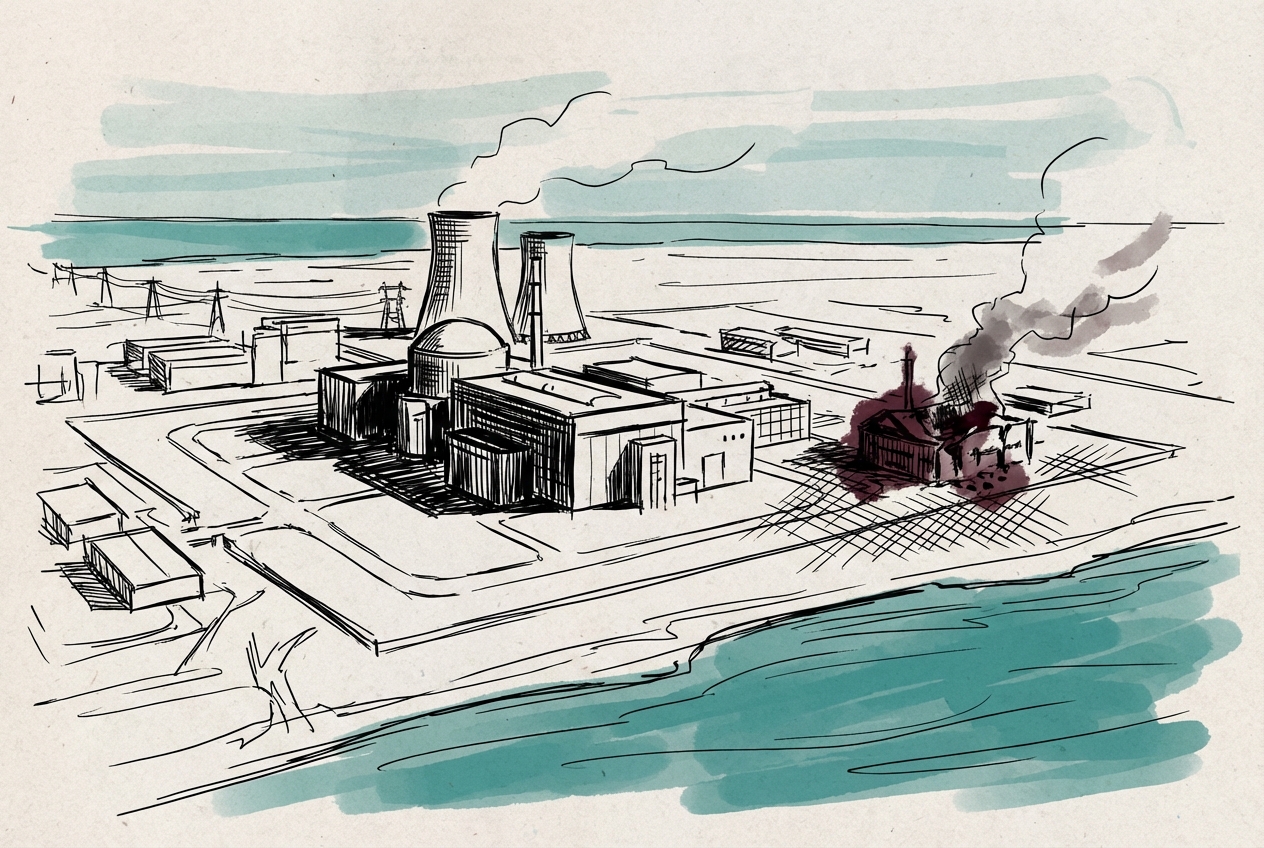
Bushehr Nuclear Power Plant
Iran's sole nuclear reactor, struck four times in 2026, now covered by US-Israel-Russia deconfliction.
Bushehr, Iran's sole operating nuclear reactor, has taken repeated strikes since March; Al Jazeera's open-source unit confirmed fresh impact scars inside its boundary on 17 July, the first Independent evidence a strike reached the site.
Last refreshed: 19 July 2026 · Appears in 2 active topics
US and Israel told Russia the Bushehr strikes were accidents. So why do they continue?
Timeline for Bushehr Nuclear Power Plant
Iran says strike hit unfinished reactor
Iran Conflict 2026Placed under a 50C warning
Iran Conflict 2026: Khuzestan sends its civil servants home at 45CIAEA opens a file on Darkhovin strike
Iran Conflict 2026Showed newly formed impact scars inside its complex boundary
Iran Conflict 2026: Satellite scars confirm a Bushehr strikeGrossi won't back Iran's Bushehr claim
Iran Conflict 2026Background
Bushehr is Iran's only operating nuclear power reactor, built and operated under a Russian contract with Rosatom and, by Iran's own account, under full IAEA safeguards. Since 24 March the plant has taken at least four reported strikes, each said to have caused no radiation release, prompting Rosatom to suspend construction of the planned Units 2 and 3 and to evacuate roughly 180 of its 200-plus engineers by 16 April, leaving about 20 staff on site.
Verification has been the recurring problem. IAEA director-general Rafael Grossi has declined to confirm Iran's own strike claims, most recently on 10 July, and Iran's parliament barred inspectors from all nuclear sites in April, leaving the watchdog with no Independent access. Satellite analysis by Al Jazeera's open-source unit on 17 July was the first outside evidence a strike reached inside Bushehr's boundary; Tehran's own deputy governor has since walked back an earlier claim of a perimeter hit.
Russia has separately offered to take custody of Iran's 440.9 kg stockpile of 60%-enriched uranium, an offer reaffirmed by Vladimir Putin on 6 June, but Bushehr's Rosatom evacuation leaves the technicians needed to execute any transfer outside the country, and Iran's Supreme Leader has ordered the material stay in Iran.
Reference
What is Bushehr Nuclear Power Plant?
Was the Bushehr nuclear reactor bombed again in July 2026?
What did Putin say about Bushehr at the St Petersburg forum?
Is Bushehr Nuclear Power Plant still operating in 2026?
Why did Russia evacuate staff from Bushehr?
Has Bushehr Nuclear Power Plant been damaged in 2026?
What would happen if Bushehr nuclear plant was destroyed?
What is Rosatom's role at Bushehr and why does it matter?

