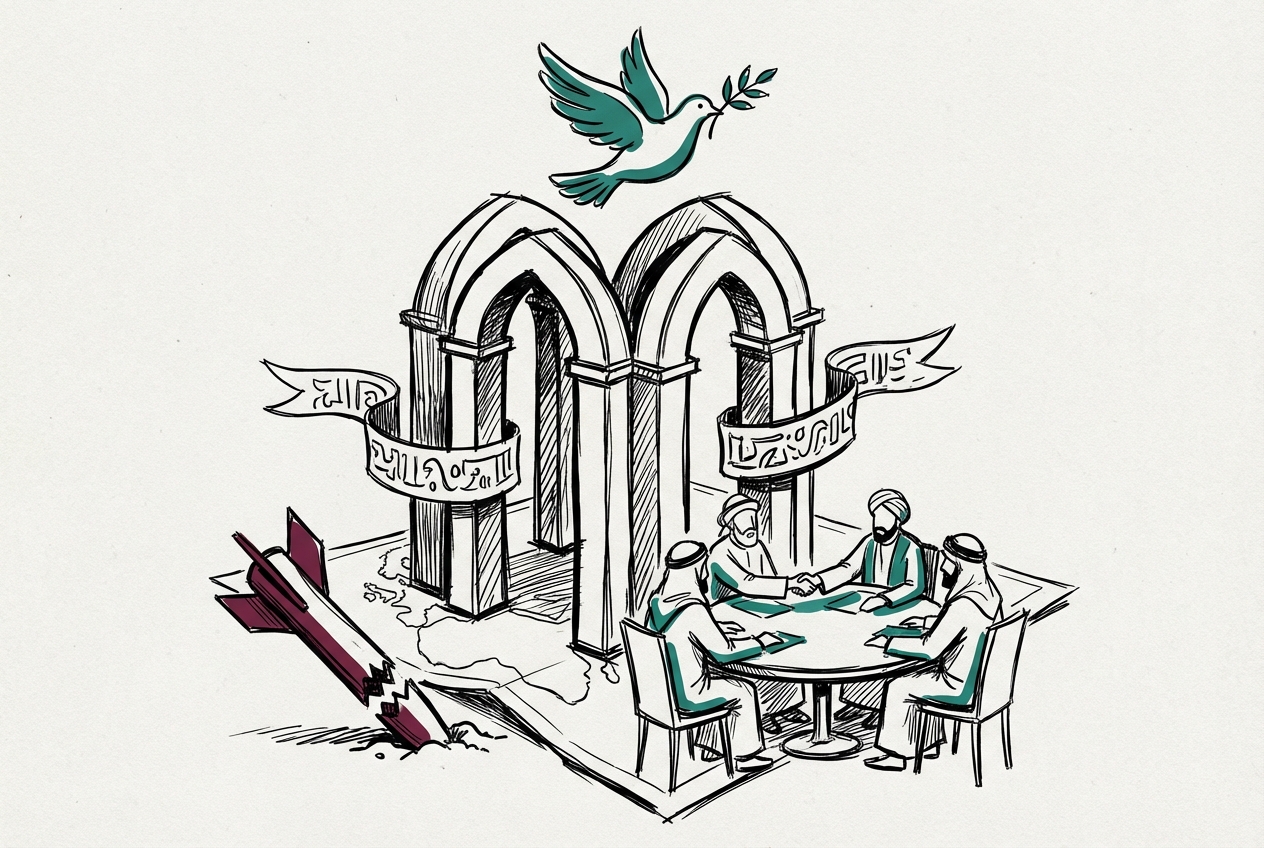
Three Islamabad rounds have collapsed — is Pakistan's mediating mandate still intact?
Timeline for Islamabad Four
Araghchi flies home; Witkoff grounded in DC
Iran Conflict 2026Mentioned in: CENTCOM intercepts reach 33 in the Strait
Iran Conflict 2026Mentioned in: IRGC Military Council Captures Iranian State
Iran Conflict 2026Mentioned in: Khamenei dubbed 'disabled veteran' on TV
Iran Conflict 2026Mentioned in: Iran: six more months; trust level zero
Iran Conflict 2026Background
"Islamabad" refers to two distinct but overlapping diplomatic constructs in the 2026 Iran conflict, and conflating them produces serious analytical errors.
The first is the Islamabad Four framework: a four-country nuclear-monitoring quartet whose membership has not been made public, proposed by Pakistan Army Chief Field Marshal Asim Munir after his Tehran shuttle on 16 April 2026. Munir extracted Iran's first nuclear monitoring concession — a vague acceptance of the quartet principle — during that visit. The framework has never been formally activated; its membership, mandate, and legal basis remain undefined. It should be understood as a concept Munir carried back from Tehran, not an operational body.
The second is the Islamabad talks rounds — specific US-Iran proximity negotiating sessions hosted in Islamabad, named sequentially. These are distinct from the Four framework: they are bilateral (US-Iran) rather than multilateral, and they have a concrete record of attempts and collapses.
Three rounds of Islamabad talks have been attempted and failed. Islamabad 1 (11-12 April) opened as the first formal US-Iran engagement since 1979, with delegations in separate rooms and Pakistani officials carrying messages between them. It ended after 21 hours with no agreement, no joint text, and no next-round commitment. Islamabad 2 (Vance, expected 22 April) was postponed before departure after Iran publicly rejected a restart and demanded a written US framework first. Islamabad 3 (Witkoff-Kushner-Araghchi, 25 April) collapsed when Trump cancelled his envoys' Pakistan flight mid-preparation, posting on Truth Social that Iran should simply call Washington rather than require an 18-hour delegation trip.
The original Islamabad Four diplomatic summit of 29-30 March 2026 — Pakistan, Turkey, Saudi Arabia, and Egypt — was the mechanism that gave Pakistan its formal mediating mandate and named it host for direct talks. That summit is the parent event from which all three failed rounds descend. Pakistan's mediating role persists in principle, but the format is structurally broken: no Islamabad 4 round is scheduled, the modality gap (Iran demands Pakistani facilitation; Trump demands a direct phone call) is publicly stated on both sides, and the War Powers Resolution Deadline is 1 May 2026.
What is the Islamabad Four?
Did the Islamabad Four summit succeed?
Why did the Iran ceasefire talks collapse?
What was the China-Pakistan five-point plan?
Who was mediating the Iran war in 2026?


