Vancouver
Canadian Pacific city hosting seven 2026 FIFA World Cup matches at BC Place.
Vancouver's police chief confirmed on 31 March 2026 that US immigration enforcement would not be deployed for its World Cup matches, a stance that set the city apart from Dallas, Houston and Miami.
Last refreshed: 28 July 2026 · Appears in 1 active topic
Will Vancouver's spring 2027 cost-benefit reconciliation vindicate its World Cup hosting bill?
Timeline for Vancouver
Mentioned in: Atlanta's rail win, its police bill
2026 FIFA World CupRecorded a 20.9% year-on-year hotel occupancy drop
2026 FIFA World Cup: Host cities got emptier hotel roomsMentioned in: Switzerland edge Colombia in a shootout
2026 FIFA World CupMentioned in: Argentina reach last eight; Egypt out
2026 FIFA World CupMentioned in: Switzerland top Group B, Qatar last
2026 FIFA World CupBackground
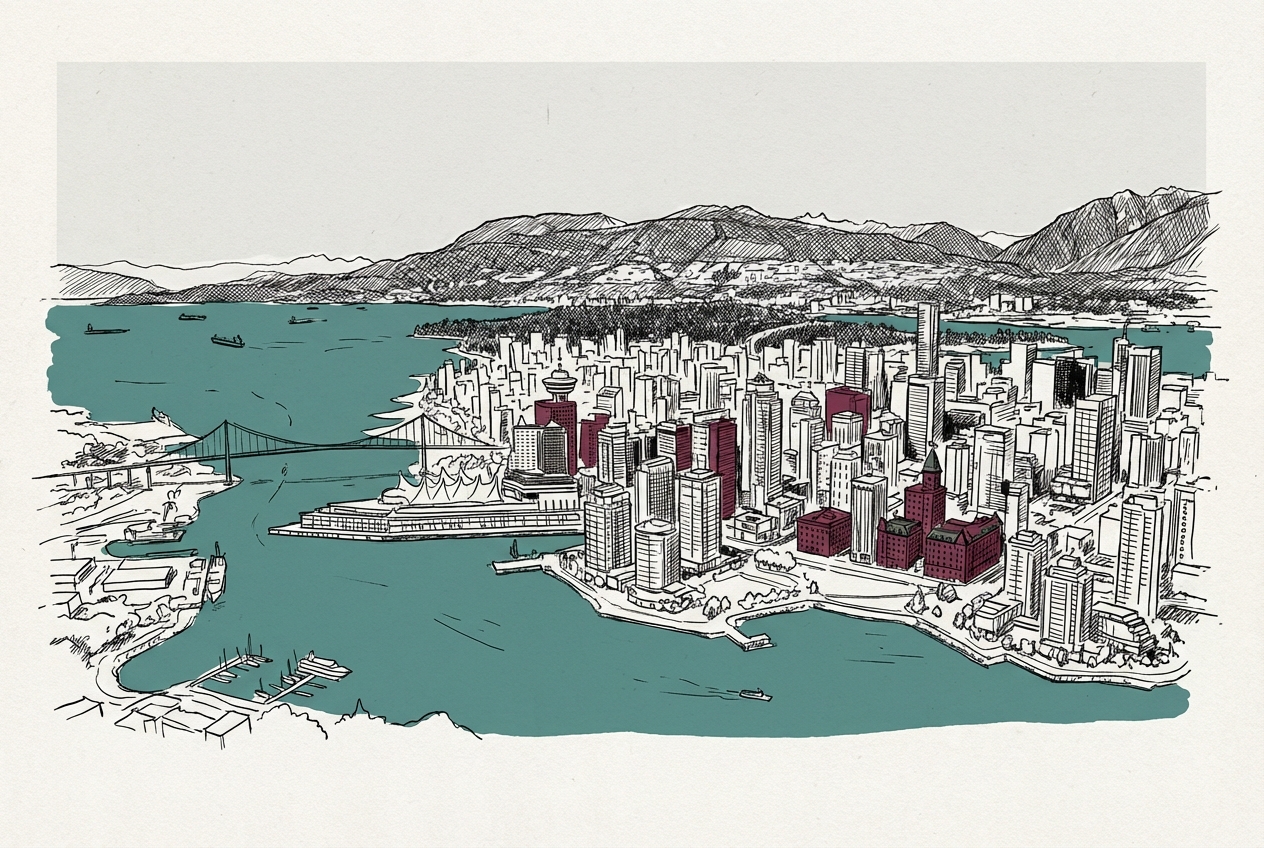
Vancouver is Canada's third-largest city and principal Pacific gateway, set between the Coast Mountains and the strait of Georgia in British Columbia. The city of roughly 675,000 people within a 2.6 million metro area has the highest population density of any Canadian municipality, and its port handles more than 140 million tonnes of cargo annually, North America's third-busiest by tonnage. Vancouver's economy spans technology, film production, resources finance and tourism, and it consistently ranks among the world's most liveable cities.
Vancouver's own World Cup ledger is still being drawn up: early figures put the city's hosting costs somewhere between C$532 million and C$624 million, and a full account of what it spent against what it earned won't land until a formal reconciliation in spring 2027. Hotel occupancy in the meantime fell 20.9% year on year over the tournament's first 17 days, the steepest such drop of any host city reporting a decline. That caution over costs sits beside a longer civic habit of hosting on its own terms: Vancouver staged the opening and closing ceremonies of the 2010 Winter Olympics at the same BC Place venue, under the same retractable roof, and its no-ICE World Cup stance extends that same willingness to set conditions its larger neighbours do not.
Vancouver bars ICE from its venues
Vancouver's police chief confirmed on 31 March 2026 that US Immigration and Customs Enforcement would not be deployed, invited or approved for World Cup security in the city, a policy Amnesty International's "Humanity Must Win" report the same day contrasted with Dallas, Houston and Miami, all of which had signed ICE collaboration agreements.
Vancouver was also one of only four host cities, alongside Atlanta, Dallas and Houston, to publish its Human Rights Watch-tracked human rights action plan by the 11 May deadline, while 12 of 16 host committees published nothing. The combination made Vancouver the clearest outlier among North American hosts on both immigration enforcement and public accountability.
BC Place stages seven World Cup matches
BC Place hosted seven 2026 World Cup matches across Group B and Group G, including Canada's 6-0 rout of nine-man Qatar on 18 June, a Jonathan David hat-trick that topped the group on goal difference over Switzerland, and Switzerland's penalty shootout win over Colombia on 7 July that completed the tournament's last-eight field.
The venue also carried cost: Canada midfielder Ismael Kone fractured his tibia and fibula there on 18 June, requiring surgery in the city and ending his tournament. Seven matches through without a logistical hitch is itself the story for a stadium built for a different Games entirely, sixteen years and one sport removed from its last global outing.
Reference
When did Vancouver last host a major global sporting event before the World Cup?
Where is BC Place stadium in Vancouver?
What happened to hotel occupancy in Vancouver during the World Cup?
What World Cup matches are being played in Vancouver?
How much did Vancouver's World Cup hosting cost?
How many cities in Canada are hosting World Cup 2026 matches?
What happened at the FIFA Congress in Vancouver in 2026?
Why is Vancouver different from US host cities on immigration policy?
Why did Vancouver refuse to allow ICE during the World Cup?
When is the FIFA Congress in Vancouver in 2026?
When is the FIFA Congress in 2026?
Why is Vancouver not allowing ICE at the World Cup?

Written with AI from Lowdown's published reporting. Not individually reviewed by an editor. Updated 28 July 2026. Editorial standards.