
Skip to content
Briefings are running a touch slower this week while we rebuild the foundations.See roadmap
Iran Conflict 2026
7MAR

Day 8: Russia shares targeting data on US forces

4 min read
07:34UTC

Russia began providing satellite targeting intelligence on US military positions to Iran — the first material Russian contribution to the conflict — as independent investigators concluded the Minab school strike that killed 168 children was likely a US weapon fired at a misidentified target. Brent crude reached $92.69 with Qatar warning of $150, and over a quarter of the world's THAAD interceptor inventory has been expended in eight days of fighting.

Key takeaway

The US air campaign has destroyed two-thirds of Iran's navy and struck over 3,000 targets, yet Iran's daily offensive output set a new record on Day 8 — the campaign is degrading Iran's conventional military while leaving its distributed strike architecture largely functional.

This briefing mapped
Loading map…
Diplomatic
Humanitarian
Economic
Military
Domestic

Unnamed US intelligence officials say Moscow is providing satellite imagery of American military positions to Tehran — partially restoring the targeting capability CENTCOM destroyed on Day 7.

Sources profile:This story draws on centre-left-leaning sources from United States
United States

Russia is providing satellite imagery and targeting intelligence on American military positions to Iran, according to US intelligence officials. This is the first reported material Russian contribution to Iranian targeting since the war began. Russian imagery provides an external substitute for Iran's destroyed space command capability, partially reversing the effect of CENTCOM's Day 7 strikes on Iran's satellite targeting infrastructure.

Russian satellite intelligence partially restores the targeting capability CENTCOM struck Iran's space command to destroy, establishing Moscow as a material participant in Iran's war effort. The data is operationally relevant to Iran's decentralised provincial launch units, which cannot guide precision strikes without external imagery. 

Sources:Washington Post·NBC News
Briefing analysis

The 1973 Yom Kippur War is the closest parallel for rapid high-end munitions depletion by a major power. Both the US and Soviet Union exhausted precision-guided stocks within two weeks, prompting the emergency Operation Nickel Grass airlift and reshaping US strategic stockpile policy. THAAD interceptor production at 48 per year has no surge-production equivalent — unlike 1973, when Cold War industrial capacity allowed rapid scaling. The depletion rate implies a multi-year gap in theatre missile defence coverage extending well beyond this conflict.

The Iran–Iraq Tanker War (1984–88) saw 451 attacks on commercial shipping and a comparable insurance collapse. Operation Earnest Will — the US Navy convoy escort programme — took six weeks to organise after the political decision was made. The current insurance withdrawal, with every major P&I club cancelling simultaneously, is more complete than anything during that conflict.

Putin called Iran's acting president and the Kremlin demanded a ceasefire — hours after reports that Moscow was feeding targeting intelligence to Tehran.

Sources profile:This story draws on centre-leaning sources from United Kingdom
United Kingdom
LeftRight

Putin telephoned Acting President Pezeshkian hours after reports surfaced of Russian satellite targeting data being shared with Iran. The Kremlin publicly called for a ceasefire. Critics characterised Moscow as arming one side's targeting chain while presenting itself as peacemaker — a pattern also noted during the Syrian civil war.

Russia's simultaneous intelligence sharing and ceasefire diplomacy reproduces the dual posture Moscow employed during the Syrian civil war. The ceasefire call enters a diplomatic vacuum where no party — Iranian, American, or third-party mediator — has established a functioning negotiation channel. 

Sources:Reuters

Independent investigations by the Washington Post, CNN, and CBC conclude the strike that killed 168 children at a Minab girls' school was a US weapon aimed at a misidentified target. The Pentagon has said nothing.

Sources profile:This story draws on mixed-leaning sources from United States and Canada
United StatesCanada
LeftRight

Independent satellite imagery analysis by the Washington Post, CNN, and CBC concluded the Day 1 strike on the Shajareh Tayyebeh girls' school in Minab was 'targeted and deliberate, possibly based on faulty IRGC intelligence' — a US weapon aimed at a misidentified target, not collateral damage from a nearby military hit. The three investigations used crater geometry, fragment analysis, and geolocated debris, converging with earlier Tomahawk debris identification at the site. 168 children were killed. The Pentagon has neither confirmed nor denied. Thousands gathered for a mass funeral in Minab's central square.

The convergence of three independent forensic investigations shifts the Minab school strike from contested fog-of-war reporting to a documented case with specific implications under International humanitarian law. The finding that a US weapon was deliberately aimed at a misidentified target — rather than causing collateral damage from a nearby legitimate strike — raises questions about pre-launch target verification that the Pentagon has not addressed. 

Sources:Washington Post·CNN·CBC

Brent crude hit $92.69 — up 27% since Day 1 — as the war's energy disruption split into two crises that a ceasefire alone cannot resolve.

Sources profile:This story draws on centre-left-leaning sources from United States and United Kingdom
United StatesUnited Kingdom
LeftRight

Brent Crude reached $92.69 on Friday, briefly touching $94 — the largest weekly gain in US crude futures history since records began in 1983. The price has risen approximately 27% since the war's opening day. Kuwait is cutting output. The energy disruption now operates on two separate timelines: military operations and the insurance collapse, with every major P&I club having cancelled War risk coverage effective midnight 5 March.

The largest weekly oil price gain since crude futures began trading in 1983 combines a physical supply disruption with an insurance mechanism collapse. Every major P&I club cancelled War risk coverage; even if fighting stops, commercial shipping through the strait of Hormuz cannot resume until insurers complete reassessments that typically take weeks. The oil price now contains a structural premium no ceasefire can immediately remove. 

Sources:Bloomberg·CNBC·Reuters

The world's largest LNG exporter warned of $150 crude if the Strait of Hormuz stays closed — a forecast from a country that absorbed 14 ballistic missiles this week.

Sources profile:This story draws on mixed-leaning sources from United States and United Kingdom
United StatesUnited Kingdom
LeftRight

Qatar's energy minister warned oil prices could reach $150 per barrel if the strait of Hormuz remains closed.

Qatar's $150 warning, from the world's largest LNG exporter and a country directly under Iranian missile attack, is the most authoritative forecast of the economic worst case. The $74 gap between this figure and Goldman Sachs' $76 Q2 forecast represents the market's uncertainty about whether this war ends in weeks or persists. 

Sources:Bloomberg·Reuters

Qatar loaded its first LNG cargo since declaring force majeure — testing whether exports can resume while missiles fly overhead and war risk insurance does not exist.

Sources profile:This story draws on mixed-leaning sources from United States and United Kingdom
United StatesUnited Kingdom
LeftRight
Sources:Bloomberg·Reuters

The US has fired more THAAD interceptors in eight days than its sole production line can replace in three years. The Pentagon is already eyeing South Korea's batteries.

Sources profile:This story draws on centre-leaning sources from United Kingdom
United Kingdom
LeftRight

Between 100 and 150 THAAD interceptors have been expended — over a quarter of the entire global arsenal in eight days of fighting. Lockheed Martin's facility in Troy, Alabama produces approximately 48 THAAD interceptors per year; replenishment would take an estimated two to three years. A former US official stated the US had 'shot several years' worth of production in the last few days.' One Gulf ally was running low on interceptors by Day 4.

THAAD interceptor consumption has outpaced production capacity by an order of magnitude, degrading US missile defence posture across multiple theatres — including the Korean Peninsula and the Pacific — for years after this conflict ends. 

Sources:Reuters

More than 80 aircraft dropped 230 bombs overnight on Imam Hossein University — the institution that trains the IRGC's officer corps — delivering the escalation Defence Secretary Hegseth telegraphed 24 hours earlier.

Sources profile:This story draws on centre-leaning sources from United Kingdom and Israel
United KingdomIsrael
LeftRight

More than 80 aircraft dropped 230 bombs in a single wave striking Imam Hossein University — the IRGC's primary military academy — materialising the 'dramatic surge' Defence Secretary Hegseth signalled on Day 7. Trump separately claimed munitions production would be 'quadrupled,' a figure no defence contractor has publicly confirmed.

The strike targets the IRGC's institutional capacity to reproduce its officer corps rather than immediate combat capability, aligning the air campaign with CENTCOM's expanded mandate to dismantle Iran's security apparatus. Trump's unverified claim of quadrupled munitions production raises separate questions about the campaign's sustainability. 

Sources:Reuters·Times of Israel

CENTCOM's tally has crossed 3,000 targets struck and 43 warships destroyed in eight days. Iran entered this conflict with 65 operational vessels — two-thirds now sit on the seabed.

Sources profile:This story draws on centre-leaning sources from United Kingdom
United Kingdom
LeftRight

CENTCOM's cumulative tally now exceeds 3,000 targets struck and 43 naval vessels destroyed since Day 1. Iran's pre-war surface fleet comprised approximately 65 operational vessels; two-thirds are now gone.

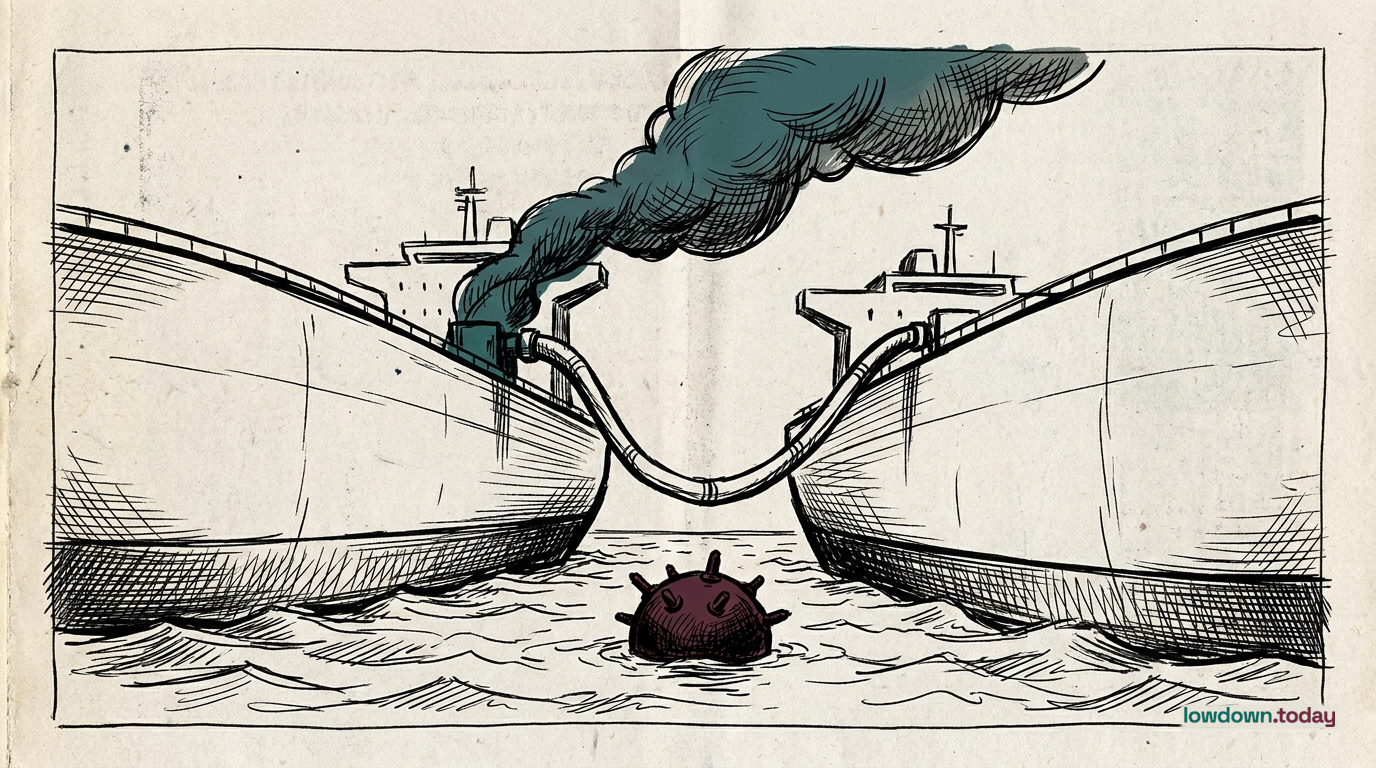
The destruction of two-thirds of Iran's surface fleet eliminates conventional naval power for a generation, but leaves intact the asymmetric maritime capabilities — shore-based missiles, mines, fast attack craft — that historically posed the greater threat to Gulf shipping and that can close the strait of Hormuz from land. 

Sources:Reuters

The first Iranian strike on a Saudi mega-field marks the highest-value energy target hit in this conflict — and reprises the strategy Tehran employed at Abqaiq and Khurais in September 2019.

Sources profile:This story draws on mixed-leaning sources from United Kingdom and Saudi Arabia
United KingdomSaudi Arabia
LeftRight

Iranian forces targeted Saudi Arabia's Shaybah oilfield — one of the world's largest, producing approximately one million barrels per day. This is the first Iranian strike on a mega-field in this conflict. The escalation pattern has moved from military infrastructure to diplomatic targets to energy infrastructure: BAPCO refinery in Bahrain, Fujairah port, now Shaybah — reprising the September 2019 Abqaiq-Khurais playbook.

Iran's targeting of Shaybah, which produces approximately one million barrels per day, extends the conflict into direct attacks on the world's primary oil production infrastructure and threatens to accelerate the energy price spiral already underway. 

Sources:Reuters·Arab News

Iranian missiles hit the Crowne Plaza hotel and Fontana Towers residential complex — civilian buildings in a country smaller than Singapore, already absorbing strikes on its military base, refinery, and diplomatic sites.

Sources profile:This story draws on mixed-leaning sources from United Kingdom and United Arab Emirates
United KingdomUnited Arab Emirates
LeftRight

Iranian strikes hit the Crowne Plaza hotel and Fontana Towers residential complex in Bahrain. The targeting of civilian commercial and residential buildings represents a further escalation of strikes on Bahraini territory beyond military, diplomatic, and energy targets.

The targeting of commercial and residential buildings in Bahrain expands the categories of targets Iran is striking in the Gulf's smallest and most exposed state, moving beyond military, diplomatic, and energy infrastructure to civilian-occupied structures. 

Sources:Reuters·Gulf News

The Israeli embassy attack in Bahrain reported as a direct strike on Day 7 was actually intercepted before impact — a correction that changes the damage assessment but not Iran's intent to hit a diplomatic mission in a third country.

Sources profile:This story draws on mixed-leaning sources from United Kingdom and United Arab Emirates
United KingdomUnited Arab Emirates
LeftRight

The Israeli embassy attack in Bahrain reported as a strike on Day 7 was actually intercepted before impact — a correction to earlier reporting that described a direct hit.

The correction from a direct hit to an interception revises the operational picture for Bahrain's air defences, though it does not alter the fact that Iran targeted an Israeli diplomatic facility on Bahraini sovereign territory. 

Sources:Reuters·Gulf News

A single-day record of 109 drones and 9 ballistic missiles struck UAE targets — three days after CENTCOM claimed 90% of Iran's missile capacity was destroyed.

Sources profile:This story draws on mixed-leaning sources from United Kingdom, United Arab Emirates and 1 more
United KingdomUnited Arab EmiratesIsrael
LeftRight

109 drones and 9 ballistic missiles launched at UAE targets on Friday — a single-day record for the conflict. The volume directly contradicts CENTCOM's claimed 90% reduction in Iran's Ballistic missile capability and 83% reduction in drone launches. Iran's Decentralised Mosaic Defence — devolving launch authority to 31 autonomous provincial units — sustained offensive operations after the destruction of central command infrastructure. The Day 5 question of whether reduced fire reflected destroyed or dispersed capacity appears answered: it was dispersed.

The single-day record of 109 drones and 9 ballistic missiles against the UAE directly contradicts CENTCOM's Day 5 assessment that Iran's ballistic capability was 90% degraded. Iran's Decentralised Mosaic Defence doctrine — designed after studying the 2003 Iraq campaign — sustained offensive operations after the destruction of central command infrastructure, validating its core design premise and imposing unsustainable attrition on defender interceptor stockpiles. 

Sources:Reuters·Gulf News·Times of Israel

Trump's first constructive framing of Iran's future arrives after every diplomatic channel — direct, back-channel, and multilateral — has been closed, exposed, or rejected.

Sources profile:This story draws on centre-leaning sources from United Kingdom
United Kingdom
LeftRight

President Trump rated the military operation '12-15 on a ten-point scale' and used the phrase 'Make Iran Great Again' — the first constructive post-war framing in a rhetorical trajectory that moved from 'demolished ahead of schedule' through unconditional surrender to immunity-or-death ultimatums to IRGC commanders. No diplomatic channel exists to give the framing operational meaning: Araghchi publicly closed the door on talks, and the Egypt-Turkey-Oman mediation has produced no confirmed participants.

The first constructive rhetorical framing of Iran's future in Trump's wartime statements arrives without any diplomatic mechanism to pursue it. Every potential conduit — Araghchi's direct rejection, the CIA back-channel exposed and rebuffed, multilateral mediation with no participants — is closed. The structural gap between escalating rhetorical ambition and absent diplomatic infrastructure defines the conflict's political deadlock. 

Sources:Reuters

The Intelligence Ministry evacuated Ward 209 — home to Iran's most sensitive political and intelligence detainees — to an undisclosed location, separate from the broader NOPO seizure of Evin Prison.

Sources profile:This story draws on centre-left-leaning sources from United Kingdom
United Kingdom

Ward 209 — the Intelligence Ministry's own detention wing inside Evin Prison — has been evacuated, with prisoners moved to an unknown location. This is distinct from the broader NOPO takeover of Evin days earlier which seized the prison from regular staff and halted food distribution. Ward 209 held Iran's most sensitive political and intelligence detainees. Nobel laureate Narges Mohammadi and Kurdish activist Zeynab Jalalian are among those held in the broader Evin complex.

The Intelligence Ministry's evacuation of Ward 209 moves Iran's most sensitive political and intelligence prisoners to an unknown and unmonitorable location during active military operations — a deliberate extraction distinct from the broader NOPO seizure of the prison. The detainees' whereabouts and conditions cannot be verified from outside. 

Sources:Middle East Eye

The UN's first consolidated displacement figure spans four countries in eight days, while $26 million in medical supplies sit inaccessible at a Dubai hub that 75 nations depend on.

Sources profile:This story draws on neutral-leaning sources

UN Secretary-General Guterres reported 330,000 displaced across the region — the first consolidated UN displacement figure for the conflict, capturing displacement across Iran, Lebanon, Bahrain, and the wider Gulf. Guterres warned violence 'could spiral beyond anyone's control.'

The first UN-consolidated displacement count establishes the human cost across the entire conflict zone while revealing that the humanitarian infrastructure meant to respond — the WHO's global logistics hub in Dubai — is itself a casualty of the conflict, extending damage to healthcare systems in Sub-Saharan Africa, South Asia, and Latin America

Sources:UN News

Al Jazeera concludes Israeli strikes last summer destroyed Ansar Allah's command structure months before the war — leaving weapons without officers to coordinate their use.

Sources profile:This story draws on centre-left-leaning sources from Qatar
Qatar

Al Jazeera published analysis attributing Houthi non-participation in the conflict to Israeli strikes in August–September 2025 that destroyed the group's military command structure. Ansar Allah retains launch platforms but lacks the command-and-control layer to integrate with Iran's war effort — a distinction between possessing weapons and possessing organisational capacity to employ them. The Houthi leader's 'fingers on the trigger' rhetoric from Day 5 appears to have been posturing from a force that lost the officers who could plan and coordinate complex operations months before this war began.

The Houthis' absence means Iran's 'axis of resistance' multi-front strategy — designed to stretch US and Israeli defences across the Red Sea, Lebanon, and The Gulf simultaneously — has failed to activate at the moment Tehran needed it most, leaving the Bab el-Mandeb chokepoint unexercised and Iran fighting what is effectively a single-front war. 

Sources:Al Jazeera
Closing comments

Iran's target progression follows an identifiable ladder: military infrastructure (Days 1–3), diplomatic targets (Day 6 embassy strikes), energy infrastructure (BAPCO refinery, Fujairah port, Shaybah mega-field). The next rung is Gulf desalination infrastructure — the single greatest vulnerability for civilian populations in Bahrain, Qatar, Kuwait, and the UAE, where potable water depends entirely on coastal desalination plants along exposed coastlines. Separately, Russia's entry into the targeting chain introduces a new escalation axis: if US forces are struck using Russian-supplied intelligence, the conflict's bilateral framing collapses. No diplomatic channel exists to manage either escalation path.

Emerging patterns

  • External power backfilling destroyed military capabilities for belligerent
  • Moscow dual role: arming combatant while positioning as peacemaker
  • Independent forensic attribution of civilian mass casualty event under international humanitarian law
  • Accelerating war-driven energy price escalation compounded by structural insurance collapse
  • Gulf state warnings of extreme energy price scenarios tied to Hormuz closure duration
  • Cautious resumption of energy exports despite ongoing force majeure and hostilities
  • Wartime consumption of precision interceptors far exceeding peacetime production capacity
  • Air campaign intensification targeting military-educational command infrastructure
  • Approaching total elimination of Iranian naval capability
  • Iranian escalation to energy mega-infrastructure targeting, reprising Abqaiq-Khurais playbook
Different Perspectives
President Trump
President Trump
Used the phrase 'Make Iran Great Again' — the first constructive post-war framing — after a week of rhetoric that escalated from 'demolished ahead of schedule' to unconditional surrender demands to immunity-or-death ultimatums to IRGC commanders.
Bahrain (official correction)
The Israeli embassy attack at Financial Harbour Towers reported as a direct strike on Day 7 was actually intercepted before impact — correcting earlier reporting and Iranian state media claims of a successful hit.
Russia
Russia
Provided satellite imagery and targeting intelligence on US military positions to Iran — the first material Russian operational contribution — then called for a ceasefire within hours of the reports surfacing. Shifts Russia from diplomatic and political support to direct operational intelligence provision.
Washington Post, CNN, CBC (independent investigations)
Three outlets independently concluded the Minab school strike was 'targeted and deliberate, possibly based on faulty IRGC intelligence' — converging with earlier Tomahawk debris identification by CNN, the New York Times, and NBC News. Six separate forensic analyses now point to the same conclusion.