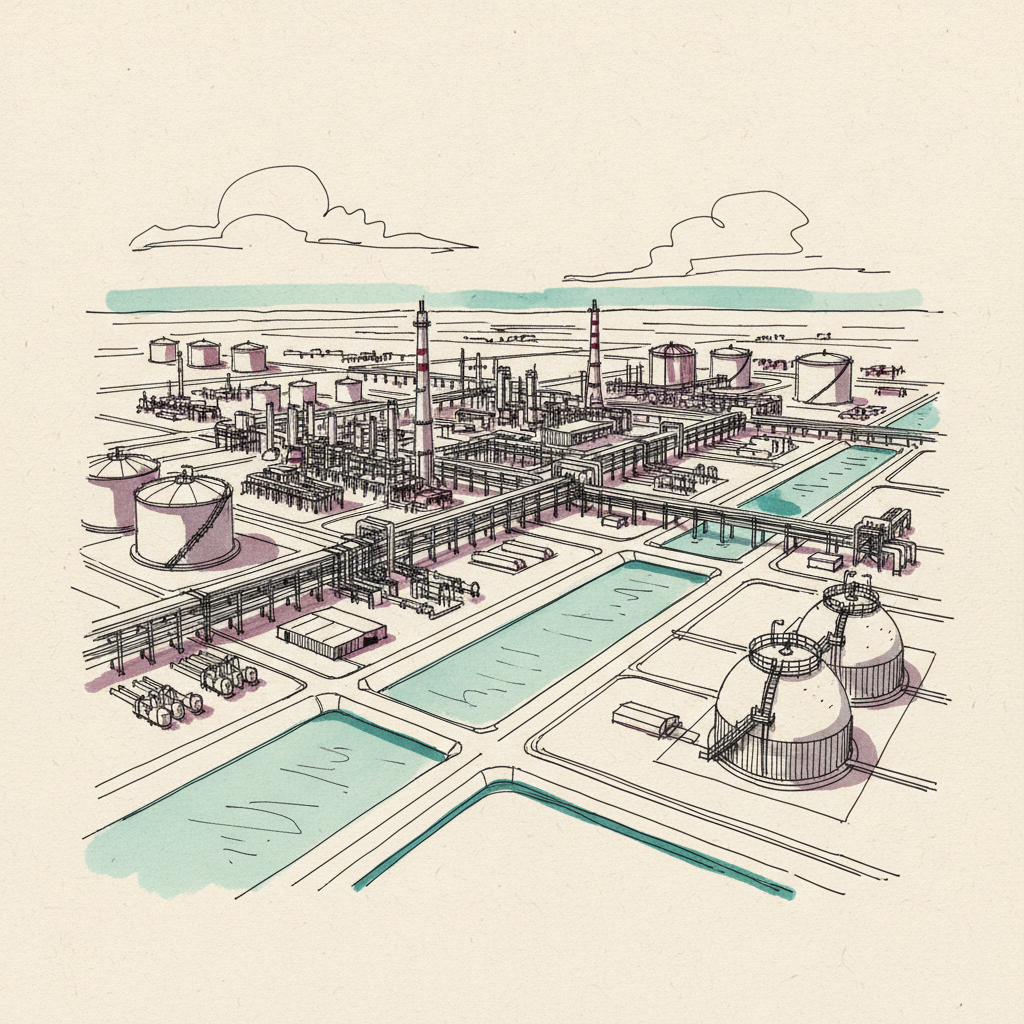
Abqaiq-Khurais
Saudi Aramco oil processing complex hit by Iranian drone-missile attack, September 2019.
On 15 March 2026, Saudi Arabia intercepted more than 60 drones targeting Abqaiq-Khurais and Ghawar, confirming the complex remains a live target in The Gulf war.
Last refreshed: 22 September 2026
What does the 2019 Abqaiq attack tell us about Iran's reach over Gulf oil exports?
Timeline for Abqaiq-Khurais
Mentioned in: EIA pushes oil recovery into 2027
Iran Conflict 2026Mentioned in: Drone hits US gas vessel at Damietta
Iran Conflict 2026Mentioned in: Brent tops $100 as the reroute closes
Iran Conflict 2026Mentioned in: Qatari envoy reopens the Doha channel
Iran Conflict 2026Mentioned in: Second US strike wave in 48 hours
Iran Conflict 2026Background
Abqaiq-Khurais is the name used for Saudi Aramco facilities in eastern Saudi Arabia. Abqaiq stabilises crude before export, while Khurais is a major producing field. Their concentration of processing and production capacity makes the complex important to Saudi oil exports.
The sites became a lasting reference point after drones and Cruise Missiles struck them on 14 September 2019. The attack interrupted 5.7 million barrels of daily production and exposed the risk that relatively cheap weapons could threaten heavily defended Energy infrastructure.
That vulnerability remains relevant. On 15 March 2026, Saudi Arabia reported intercepting more than 60 drones aimed at Abqaiq-Khurais and Ghawar. Three days later, missiles targeted the eastern region containing Abqaiq.
Abqaiq remains a defended target
On 15 March 2026, Saudi Arabia said it had intercepted more than 60 drones targeting Abqaiq-Khurais and Ghawar. For the complex, the episode showed that its importance has again made it a direct target during a regional conflict.
Three days later, Saudi defences intercepted missiles aimed at the Eastern Region that contains Abqaiq. The attacks did not establish that the facility was hit, but they placed it within a wider campaign against Saudi energy infrastructure.
What happened in the 2019 Abqaiq attack?
How much oil did the Abqaiq attack take offline?
Why is Abqaiq important to Saudi oil exports?
Is Abqaiq still a target in the 2026 Gulf conflict?
Why did oil prices spike again in July 2026?


