War risk coverage
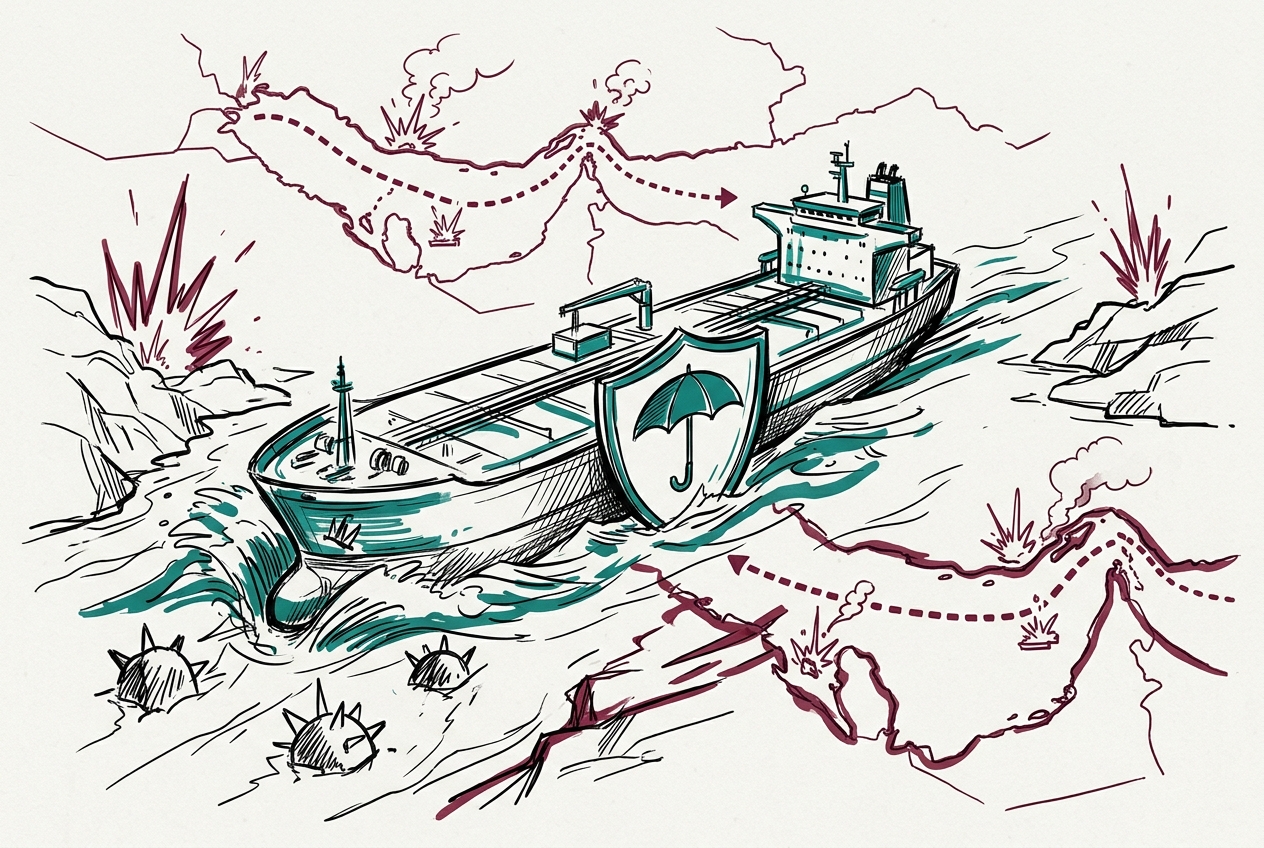
Marine insurance covering war-related losses, now critical as Gulf tanker routes collapse.
Last refreshed: 30 March 2026
Is commercial shipping in the Gulf effectively uninsurable while the Iran war continues?
Timeline for War risk coverage
Mentioned in: Two cabinet members split on Hormuz
Iran Conflict 2026Mentioned in: IEA: largest oil disruption in history
Iran Conflict 2026Mentioned in: IRGC: not a litre through Hormuz
Iran Conflict 2026Tracked 10 vessels struck in Hormuz by IMO tally since 28 February
Iran Conflict 2026: 20,000 seafarers trapped in HormuzMentioned in: Brent spikes to $116, record since 1988
Iran Conflict 2026Background
War risk coverage is the Marine insurance clause that pays when a vessel or cargo is lost through acts of war, mine strikes, or hostile seizure. Standard P&I and hull policies exclude war; shipowners buy it separately through syndicates at Lloyd's of London and mutual clubs such as Skuld, the London P&I Club, and the American Steamship Owners Mutual P&I. Premiums surge whenever a waterway becomes contested; The Persian Gulf has triggered war risk exclusions in every major tanker conflict since the 1980s Tanker War.
Three major P&I clubs cancelled Gulf and Gulf of Oman War risk coverage with 72 hours' notice from 2 March, effective midnight 5 March, leaving vessels without the insurance required to obtain port clearance or financing. VLCC freight rates hit an all-time high of $423,736 per day as shipowners priced the elevated risk into charter rates.
The US Development Finance Corporation stepped in with government-backed cover for US-aligned shipping, a scale of state intervention not seen since the US War Risk Insurance Act of 1914. Roughly 60% of Gulf oil flows to Asia, and Chinese, Russian, and Indian tankers operate under separate commercial arrangements, leaving the collapse unresolved for the bulk of Gulf trade.
What is war risk coverage?
Why did P&I clubs cancel Gulf war risk coverage in March 2026?
Is the US providing war risk insurance for Gulf shipping?
What is the difference between war risk coverage and standard P&I insurance?
How much did Gulf war risk premiums increase in 2026?


