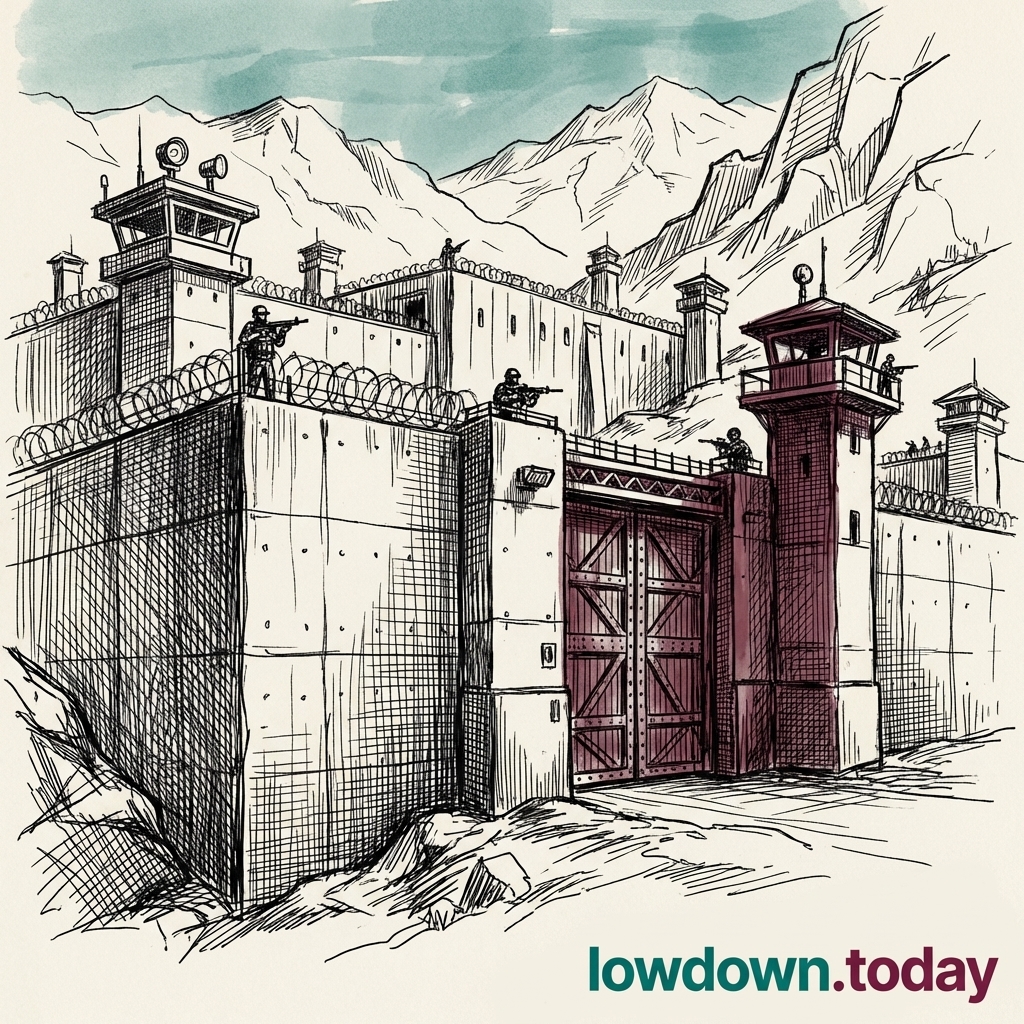
Evin's Ward 209 was emptied before Tehran had bomb shelters: what does that order of priorities tell us?
Timeline for Evin Prison
Mentioned in: 30 women held in Vakilabad 'Peace Ward'
Iran Conflict 2026Mentioned in: Hengaw: 3 executed, writer detained 19 May
Iran Conflict 2026Mentioned in: Hengaw: 56-prison hunger strike on 5 May
Iran Conflict 2026Mentioned in: Hengaw: two more 'Israel spy' hangings
Iran Conflict 2026Mentioned in: Iran: 22 political executions in six weeks
Iran Conflict 2026Background
Evin is Iran's most notorious detention facility, located in the hills of northern Tehran. Built in 1972 under the Shah, it became the Islamic Republic's primary site for holding political prisoners, journalists and dual nationals after the 1979 Revolution. Narges Mohammadi, the 2023 Nobel Peace Prize laureate, was among its most prominent inmates. Ward 209 operates under direct intelligence ministry control for the most sensitive political and security cases.
Iran's Special Forces (NOPO) seized Evin during the 2026 conflict, forcibly transferring prisoners while detainees in multiple wards resisted. The intelligence ministry separately emptied Ward 209, relocating its most sensitive political and security detainees to undisclosed locations under bombardment.
The wartime seizure and Ward 209 evacuation revealed the regime's priorities: political prisoners were secured before civilian shelter provision. Tehran's nine million residents had no bomb shelters or siren system; Ward 209 was emptied first. The disappearance of high-profile detainees into unknown facilities also eliminated the limited consular access that had previously served as a diplomatic lever.
Evin sits structurally distinct from Qezel Hesar Prison, where wartime executions of protest-era detainees have been carried out. Evin's role during the conflict has been prisoner removal and political isolation rather than execution; the Hengaw casualty-monitoring network, which built its methodology tracking Mahsa Amini protest detentions, now applies the same verification framework to both facilities. Iran's 60-day internet blackout (1,440+ cumulative hours by 28 April 2026) has made Independent verification of prisoner conditions at both Evin and undisclosed relocation sites impossible.
What is Evin Prison?
What happened at Evin Prison in 2026?
Who is held in Evin Prison?
What is Ward 209 at Evin Prison?
What is the difference between Evin Prison and Qezel Hesar Prison in Iran?



Written with AI from Lowdown's published reporting. Not individually reviewed by an editor. Updated 28 April 2026. Editorial standards.