Tanker War
Warfare targeting commercial oil tankers; coined during the 1984-88 Iran-Iraq War, recurring in 2026.
By 30 July, tanker traffic at Bab al-Mandeb had fallen to roughly 7.5 vessels a day, extending the Tanker War from Hormuz to a second chokepoint.
Last refreshed: 22 September 2026 · Appears in 1 active topic
Has Iran turned the Tanker War from a tactic into a business model?
Timeline for Tanker War
Mentioned in: Iran and CENTCOM clash over one tanker
Iran Conflict 2026Mentioned in: Navy says it cleared two Hormuz lanes
Iran Conflict 2026Mentioned in: Oman and Japan press for safe passage
Iran Conflict 2026Mentioned in: Seven filings put a price on Hormuz
Iran Conflict 2026Mentioned in: Ships with no Iranian tie quit Hormuz
Iran Conflict 2026Background
The Tanker War describes warfare that makes commercial oil tankers targets, tools of pressure or sources of commercial leverage. The term originated during the 1984-88 Iran-Iraq War and remains useful when military action disrupts shipping without closing a waterway by formal treaty.
Its modern relevance rests on the gap between political announcements and safe navigation. On 16 July, maritime authorities confirmed a mine near Hormuz shipping lanes, while Iranian claims of wider mining remained disputed. On 18 June, insurers and mines kept Hormuz commercially shut despite a blockade-lift announcement.
The Tanker War label now serves as a historical yardstick. It links attacks on vessels, mine risks, insurance withdrawal and naval escort or clearance into one question: whether Commercial shipping can operate safely.
The conflict reached a second strait
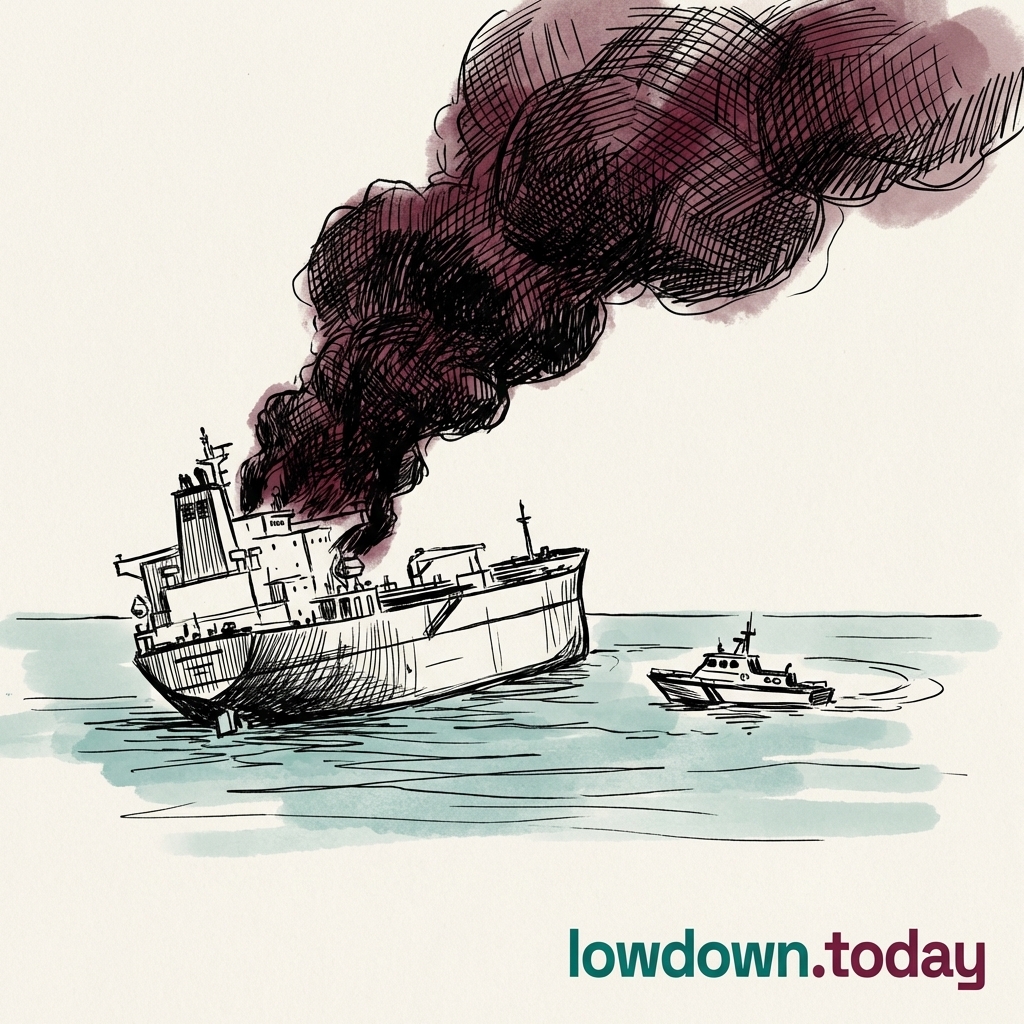
On 22 July, Houthi missiles and drones struck the Saudi tanker Encelia in Bab al-Mandeb, setting its bow on fire. Saudi state media confirmed the fire and said the crew survived. For the Tanker War, the attack extended a pattern of coercion against Commercial shipping beyond Hormuz.
By 30 July, tanker transits through Bab al-Mandeb had fallen 39% to roughly 7.5 a day in one Windward assessment. The figure has not been independently confirmed by an insurer or Lloyd's source, but it showed the label now describing disruption across two oil chokepoints.
Commercial passage became a military question
On 11 June, the Revolutionary Guard declared the strait of Hormuz closed to all shipping while Iran's civilian government was negotiating a Ceasefire. That clash between diplomatic language and military control made attacks, mines and transit orders central to the Tanker War concept.
By 20 July, weekly crossings had fallen 66% to 53 vessels from 157 the previous week, according to Lloyd's List Intelligence. Tanker and gas-carrier crossings fell from 90 to 30, showing that the term describes commercial exclusion as well as direct strikes.
Reference
What was Operation Earnest Will?
What is a tanker war?
What is the difference between the UKMTO mine advisory and Iran's mining claim in July 2026?
Why did Brent crude jump above $87 a barrel in mid-July 2026?
How did the 2026 Hormuz stand-down differ from Operation Earnest Will?
Did CENTCOM destroy Iranian minelayers in the Strait of Hormuz in 2026?
Is there a new tanker war in 2026?
How is the 2026 Hormuz crisis different from the 1980s Tanker War?
How does the tanker war affect oil prices?
Why do tanker attacks affect oil prices?
How did the 2026 tanker conflict affect Hormuz traffic?
What happened to tanker traffic at Bab el-Mandeb?


Written with AI from Lowdown's published reporting. Not individually reviewed by an editor. Updated 22 September 2026. Editorial standards.