Shipping Industry
Global maritime transport sector whose chokepoints determine energy flows and commodity prices worldwide
Last refreshed: 19 April 2026
Who really controls the ships carrying a third of the world's oil?
Background
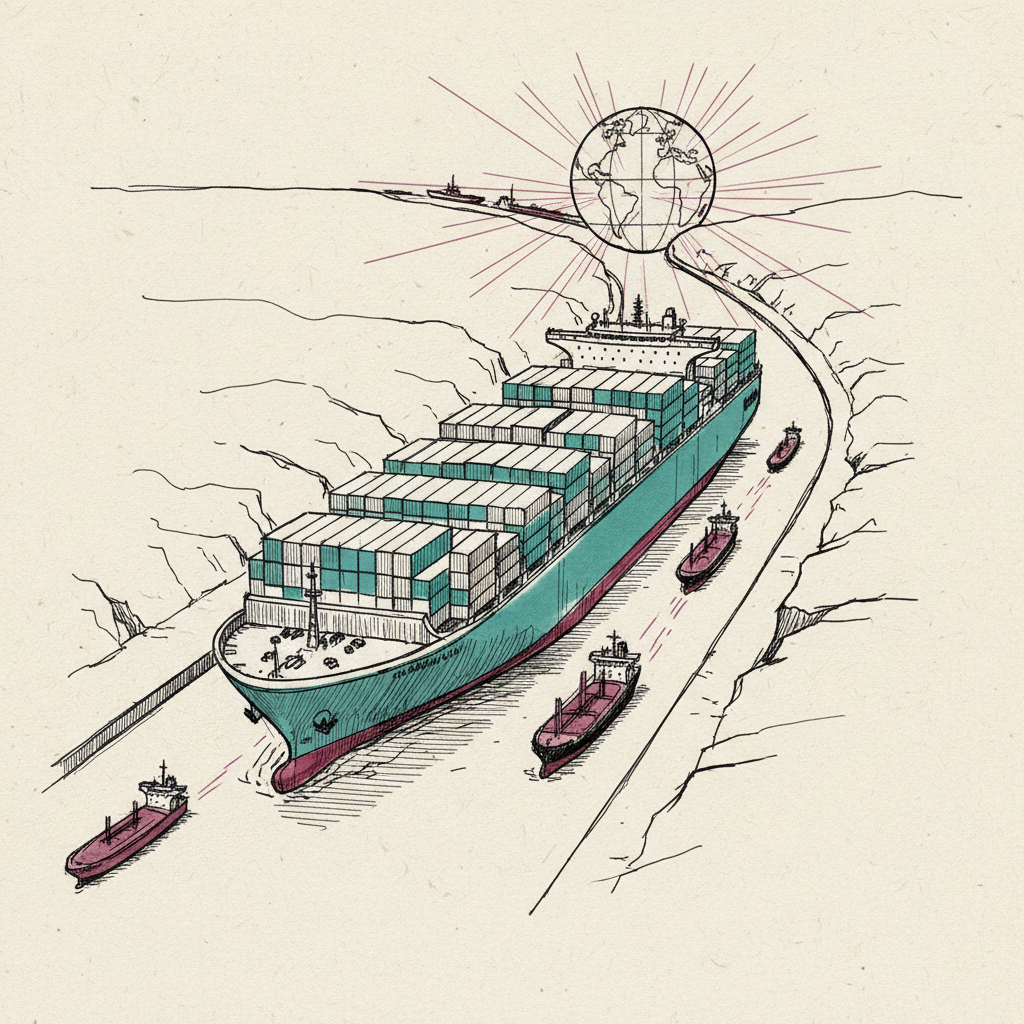
The Shipping Industry is the invisible backbone of global trade, moving roughly 80% of world goods by volume and the overwhelming majority of internationally traded oil and Liquefied Natural Gas. The April 2026 Iran-Gulf confrontation brought that invisibility to an abrupt end: within a single 24-hour window Tehran declared the strait of Hormuz "completely open" and then reimposed restrictions, whipsawing freight rates and underwriter appetite across the sector.
Hormuz is the most consequential maritime chokepoint on the Planet, carrying roughly one-third of seaborne crude oil and a fifth of global LNG. The industry that services it splits into mainstream operators running compliant Western-flagged or Western-insured vessels and a shadow "dark fleet" of older tankers moving sanctioned Iranian, Russian, and Venezuelan crude under opaque ownership. The lapse of OFAC General License U on 17 April 2026 exposed 325 tankers carrying roughly $3 billion of Iranian oil to secondary sanctions risk overnight.
Exposure runs far beyond The Gulf. Europe's last pre-conflict Qatari LNG tanker docked in the UK on 10 April 2026, after which 150 days of gas storage became the only buffer against protracted Hormuz disruption. Insurers, classification societies, and P&I clubs have had to reprice war-risk premiums almost weekly, while the sector's traditional assumption of freedom of navigation is being tested by IRGC fast boats firing on Indian-flagged carriers inside Omani waters.
How much oil passes through the Strait of Hormuz?
What is the shipping dark fleet?
How do sanctions affect oil tanker insurance?



Written with AI from Lowdown's published reporting. Not individually reviewed by an editor. Updated 19 April 2026. Editorial standards.