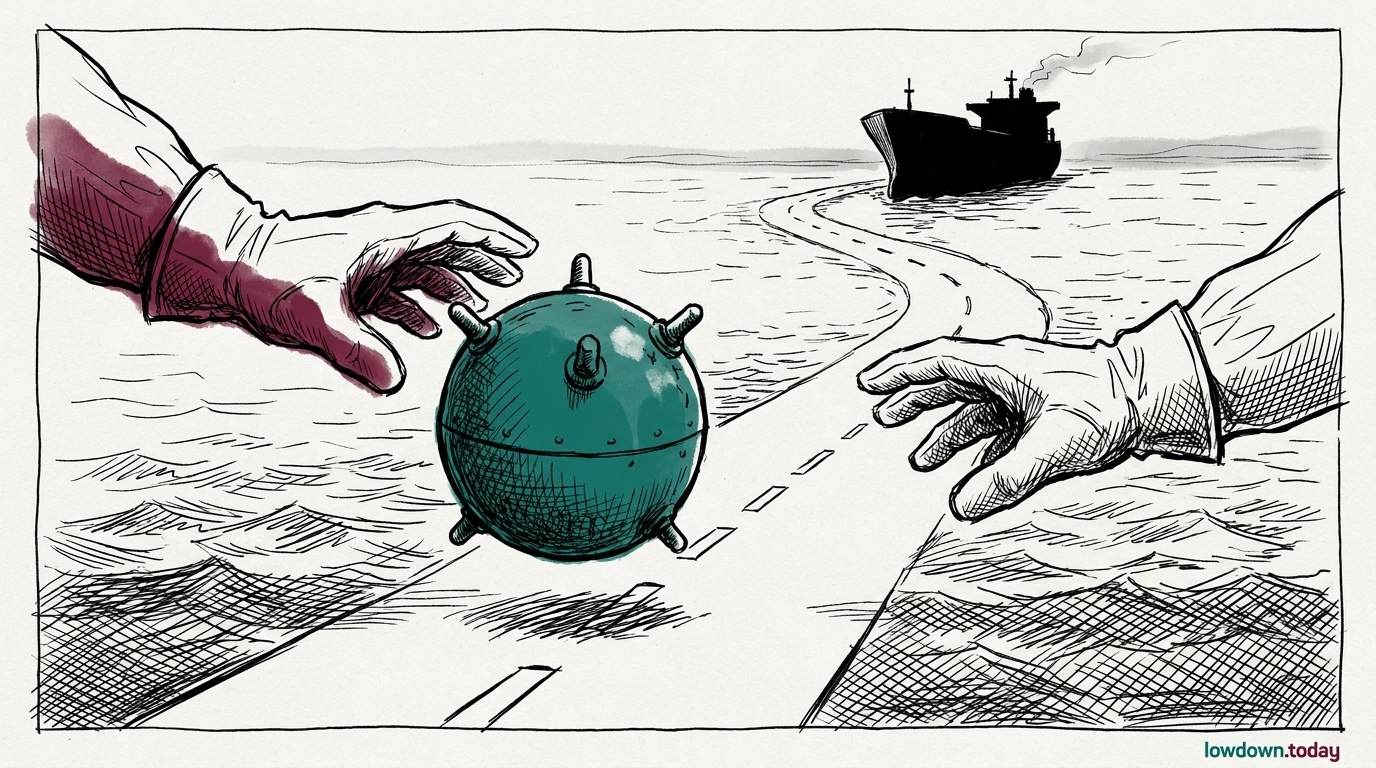
Admiral Brad Cooper, commander of US Central Command (CENTCOM), the American military command responsible for the Middle East, said on Friday 28 August that Navy divers, Navy SEALs and aircraft drawn from four services had cleared mines from two transit routes in the Strait of Hormuz. The mines were laid in the spring by the Islamic Revolutionary Guard Corps (IRGC), Iran's parallel armed force, which answers to the Supreme Leader rather than to the defence ministry. "The circumstances were challenging and dangerous, to say the least, but we got the job done," Cooper said1.
Cooper's announcement withholds the operational detail. It carries no count of mines removed or disabled, no account of how they were laid, no chart of the two routes and no date on which the sweep began. CENTCOM has run an escort corridor through this water since early May, and the region has been building around the risk it manages: DP World accelerated Fujairah port facilities designed to bypass the strait altogether.
Iran can seed a channel far faster than the US Navy can sweep it, and that ratio is the weapon. A small boat does the laying overnight; clearing the same water needs purpose-built hulls, divers in the water and days of methodical search. Iran leaned on that asymmetry through the 1987-88 Tanker War, when American reflagging and convoy escort ran alongside repeated re-mining and the strait never actually closed. Escorting does not clear water, and clearing water does not keep it clear.
Tehran has already converted the strait's condition into a financial claim, demanding compensation running to trillions of dollars for coastline damage. A route the US Navy declares clear and Iran declares mined is a route both governments can price.



