Skip to content
You can now search across every topic, entity and event.What's new
Iran Conflict 2026
30JUN

US strikes Iran's minelayers in Hormuz

3 min read
15:13UTC

CENTCOM struck 10 Iranian military targets across Sirik, Bandar-e Lengeh and Qeshm Island on 27 June, hitting the minelayer vessels that keep the Strait of Hormuz dangerous.

ConflictDeveloping
Key takeaway

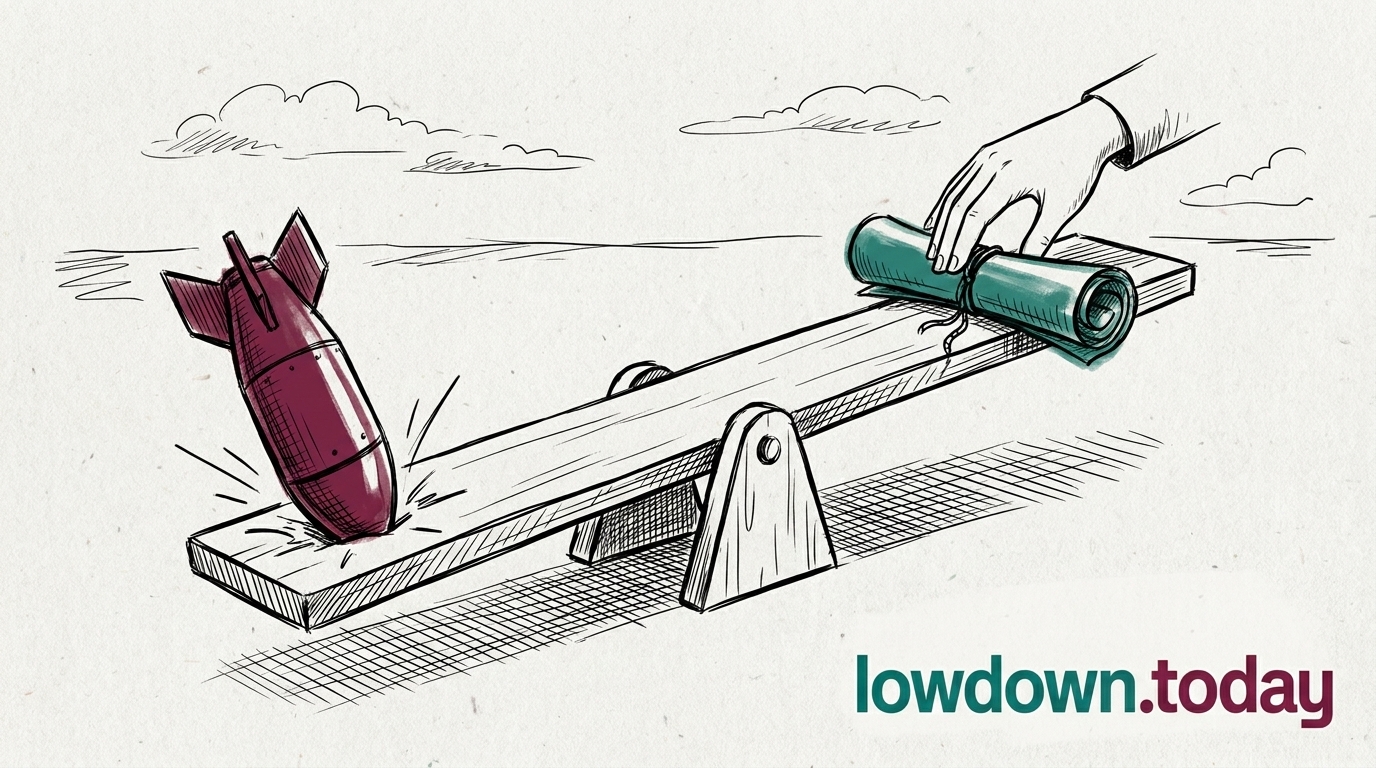
CENTCOM destroyed Iran's minelayers, the boats that keep Hormuz mined faster than Iran can clear the strait.

CENTCOM (US Central Command), the US military command for the Middle East, ran its second strike on Iran in two nights on 27 June, hitting 10 military targets across Sirik, Bandar-e Lengeh and Qeshm Island 1. The 26 June first raid had struck two sites ; this package was larger and aimed at a single capability. CENTCOM said Iran had been given a chance to honour the truce and chose not to take it when it struck the tanker Kiku on 27 June 2.

The new targets included Iran's minelayer vessels 3. The 16 June MOU (Memorandum of Understanding) gives Iran a month to clear mines from the strait, and the same boats that lay mines can re-lay them. By striking the minelayers, CENTCOM slows Iran's power to re-mine Hormuz faster than it can clear it, so the raid attacks the demining clock rather than only punishing the Kiku attack.

Washington struck hard but narrow: ten targets and the minelayers, well short of the bridges and power plants Trump has threatened to level.

Deep Analysis

In plain English

The United States military command for the Middle East, known as CENTCOM (US Central Command), carried out a second round of air strikes inside Iran on the night of 27 June 2026. The first round, on the night of 26 June, had targeted two sites. This second, larger attack hit ten locations along Iran's southern coast and on Qeshm Island, a large island in the Strait of Hormuz. The specific focus of these strikes was Iran's minelayer ships, vessels used to plant explosive sea mines in the water to block or damage commercial shipping. A June ceasefire agreement requires Iran to clear those mines from the strait within 30 days. By destroying the ships that plant new mines, the US was trying to ensure that Iran could not re-contaminate already-cleared stretches of water, effectively locking in the mine-clearance process. The strikes came directly in response to an earlier IRGC attack on a commercial tanker called the Kiku, which was hit while using a shipping route that international bodies had announced was safe for passage.

Deep Analysis
Root Causes

The Islamabad MOU's Article 5 created a structural asymmetry: Iran committed to a 30-day demining obligation but retained the physical means to re-mine faster than the clearance rate.

Admiral Brad Cooper's mid-May 2026 assessment, that CENTCOM had eliminated 90% of Iran's stored mine stockpile, removed warehouse stocks but left operational minelayer vessels intact. Those vessels remained capable of contaminating already-cleared lanes, creating a rolling enforcement problem that persisted regardless of the MOU's text.

The 27 June strike was a direct mechanical response to the IRGC drone attack on the tanker Kiku , itself struck while using the Oman-coordinated southern corridor. The IRGC had previously declared that corridor 'unacceptable and dangerous' and enforced that declaration by drone attack. CENTCOM's strike closed the loop: vessels were struck for using a corridor Iran denied; Iran's tools for denying future corridor use were then struck in return.

What could happen next?
  • Consequence

    Iran's capacity to re-mine the strait at speed is now severely degraded, shifting the demining balance toward the clearance coalition for the remainder of the Article 5 thirty-day window.

    Immediate · Reported
  • Risk

    Escalating the second strike package from two to ten targets establishes a precedent for graduated enlargement that Iran may calculate requires a proportional military response to maintain deterrence credibility.

    Short term · Assessed
  • Opportunity

    Removing Iran's re-mining capability makes a fully operational commercial corridor physically achievable within the Article 5 window if the routing governance dispute is resolved in Doha.

    Short term · Assessed
First Reported In

Update #141 · Iran hits two US bases; Trump pulls back

Al Jazeera· 30 Jun 2026
Read original
Different Perspectives
India
India
New Delhi has a national unaccounted for among GFS Galaxy's eleven-strong Indian crew, turning a standoff over transit rights into a consular emergency for a state with no seat at either table.
Oman
Oman
Muscat's 9 July arrangement to jointly manage Hormuz traffic with Iran, outside the frozen US channel, is overridden within days by Tehran's own unilateral closure and strike on GFS Galaxy.
Qatar
Qatar
Doha keeps mediating from an exposed position: Al Udeid hosts the CENTCOM strikes it is trying to broker a stand-down around, a week after a Qatari carrier was itself hit in the strait.
United States / CENTCOM
CENTCOM flew a third strike wave in a week, roughly 140 targets, killed Lieutenant Dehghani at Jask, and insists the strait remains open. It signed no instrument making that claim enforceable against Iran's closure.
Iran / IRGC
Iran / IRGC
Tehran struck GFS Galaxy and declared Hormuz closed, reasserting IRGC toll authority after its Oman-brokered management track failed to bind Washington to anything. The strike restores unilateral control after days of a negotiated alternative gaining ground.
Russia
Russia
Grossi's non-confirmation came from Kaliningrad, hours after Rosatom, the state agency that built and fuels Bushehr, hosted his talks. A refusal delivered from inside Russia's own nuclear orbit carries weight a Western capital could not manufacture, though Moscow itself made no statement on Iran's strike claim.