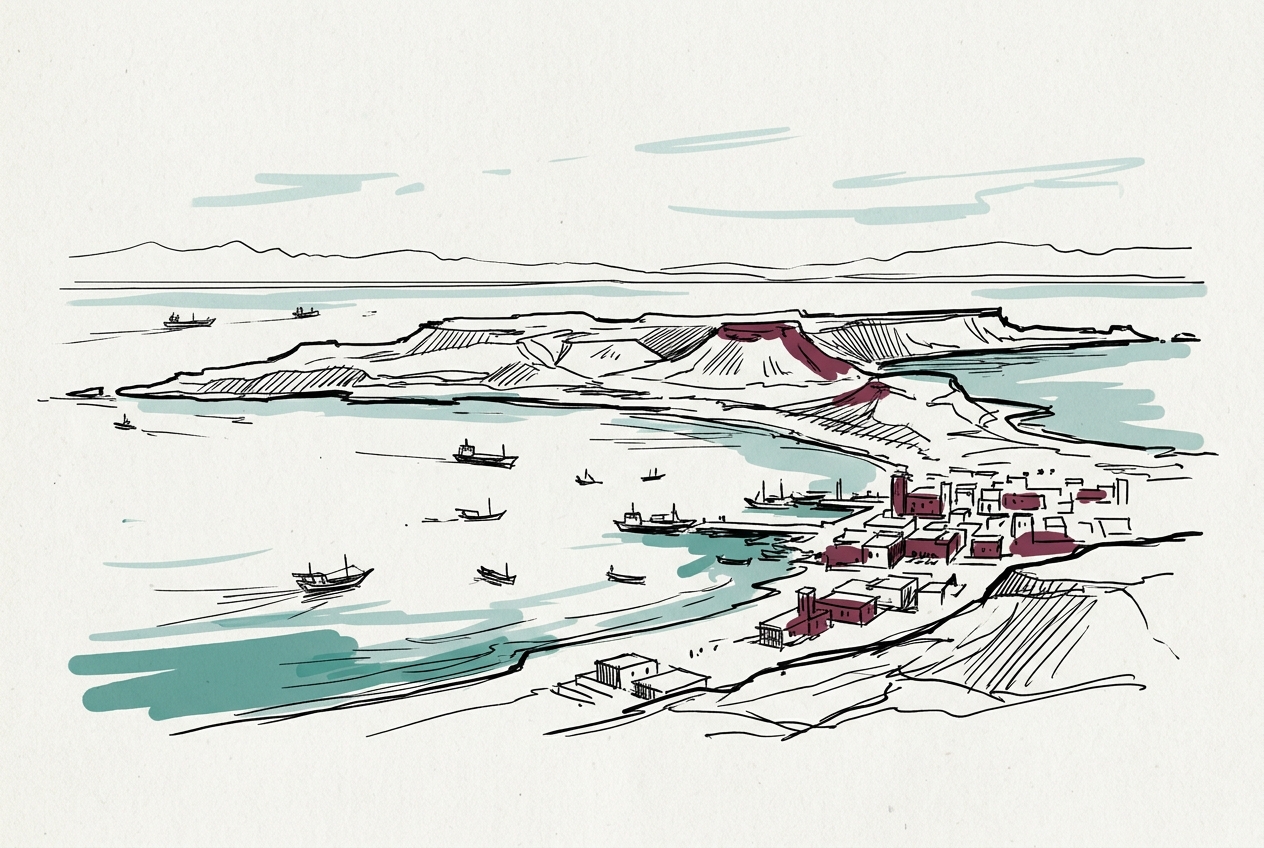
Qeshm Island
Iran's largest island, IRGC naval hub and free trade zone in the strait of Hormuz.
CENTCOM struck missile and drone storage facilities on Qeshm Island on 26 June, the first US strike on Iranian soil since the 16 June Islamabad memorandum, and Iranian state media reported fresh, unattributed explosions on the island on the night of 19 July.
Last refreshed: 14 August 2026 · Appears in 1 active topic
How does a strike on Qeshm Island affect Strait of Hormuz oil flows?
Timeline for Qeshm Island
A ship is hit near Hengam, and nobody names it
Iran Conflict 2026Mentioned in: Caroline Bezengi fouls 40km of Oman
Iran Conflict 2026Iran bills the world for Hormuz oil
Iran Conflict 2026Blasts reported at Bandar Abbas and Qeshm
Iran Conflict 2026Mentioned in: IAEA opens a file on Darkhovin strike
Iran Conflict 2026Background
Qeshm Island is the largest island in Iran, stretching roughly 135 kilometres in the strait of Hormuz at the entrance to The Persian Gulf, within Hormozgan Province. the strait carries an estimated 20% of global oil trade, making Qeshm one of the most strategically significant pieces of territory in the world. Iran designated it a free trade zone in 1991, attracting light manufacturing and investment.
Its dual character as both a civilian economic zone and a home to IRGC Navy bases creates a persistent strategic ambiguity: strikes on its infrastructure simultaneously threaten civilian life and military capability, a framing both Iran and the United States have exploited throughout the 2026 conflict. On 20 May 2026, Iran's Persian Gulf Strait Authority published formal maritime zone coordinates with Qeshm's tip as the western boundary anchor, giving Tehran a legal instrument to regulate all vessel passage through the strait.
CENTCOM strikes break the ceasefire at Qeshm
On 31 May-1 June 2026, CENTCOM struck radar installations and drone command posts on Qeshm itself, retaliation for Iran downing a US MQ-1 The Week before; the raid gutted the island's role as Iran's forward eyes over Hormuz traffic.
On 26 June, CENTCOM hit missile and drone stores on the island again, its first return to Iranian territory since the 16 June Islamabad memorandum, justified by citing IRGC drone attacks on the container ship Ever Lovely and the tanker Kiku as ceasefire breaches. On the night of 19 July, Iranian state media reported fresh explosions at Qeshm without naming an attributed actor, a claim that, unlike the confirmed May and June raids, carries no Independent confirmation.
Reference
What is Qeshm Island?
Were there explosions at Qeshm Island in July 2026?
What happened to Qeshm Island in the Iran war?
What is Iran's Persian Gulf maritime control zone and where is Qeshm Island in it?
Why is Qeshm Island strategically important?
How does Qeshm Island compare to Diego Garcia in the Iran conflict?
Was the June 2026 Qeshm Island strike a ceasefire violation?
Is Qeshm Island a military or civilian site?
Did the US strike Qeshm Island?
Why did CENTCOM strike Qeshm Island missile storage in June 2026?
Did the US bomb Qeshm Island after the ceasefire deal?
Did an oil spill reach Qeshm Island in August 2026?

