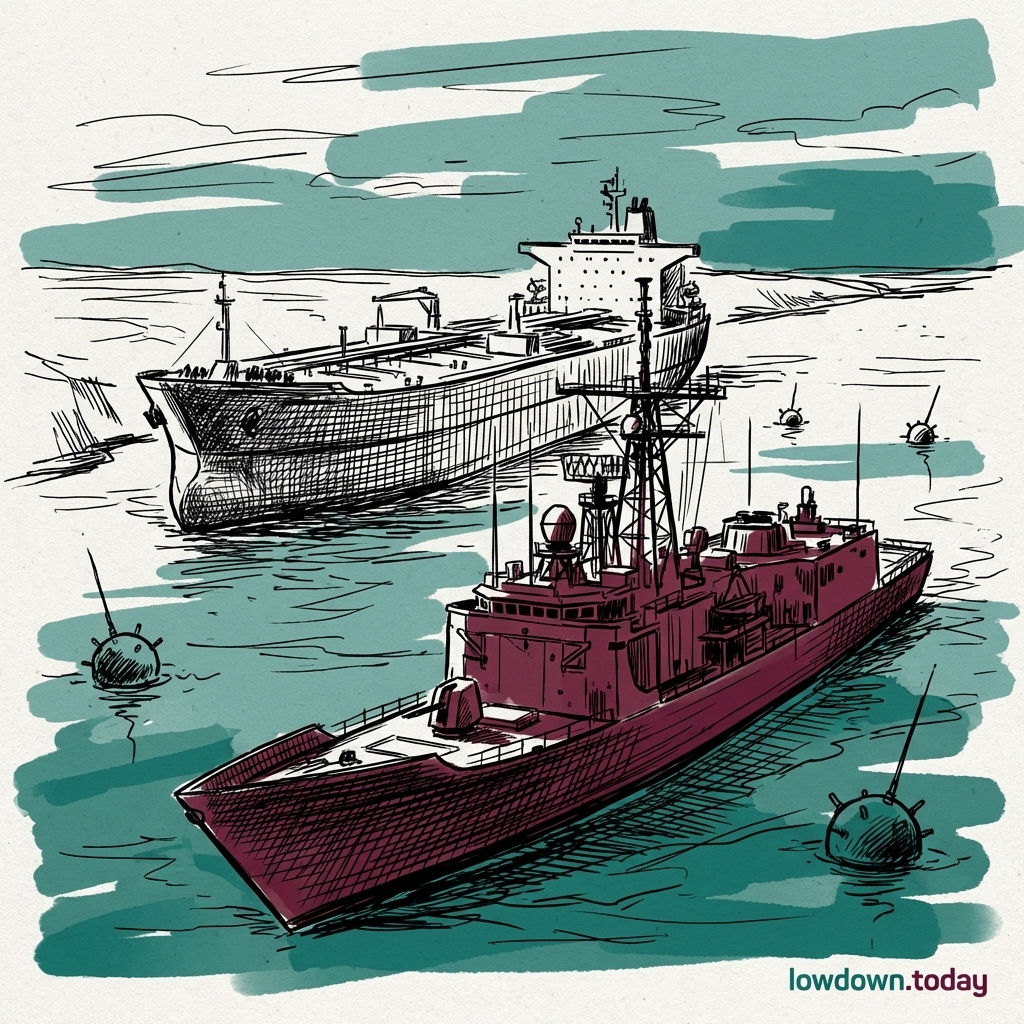
Operation Earnest Will
1987-88 US Navy escort of reflagged Kuwaiti tankers through Hormuz during the Iran-Iraq Tanker War.
On 4 May 2026, Project Freedom began escort and blockade duties in Hormuz, making Operation Earnest Will's 1987-88 tanker convoys the closest US historical comparison.
Last refreshed: 22 September 2026 · Appears in 1 active topic
Reagan committed warships and absorbed casualties — why won't the 2026 coalition publish rules of engagement?
Timeline for Operation Earnest Will
Mentioned in: Torpedoes kill an Indian wiper off Oman
Iran Conflict 2026Mentioned in: Iran and CENTCOM clash over one tanker
Iran Conflict 2026Mentioned in: CENTCOM adds nine ships as Trump vows
Iran Conflict 2026Mentioned in: Hormuz crossings fall by two thirds
Iran Conflict 2026Mentioned in: IRGC sets Kuwait's Shuaiba complex alight
Iran Conflict 2026Background
Operation Earnest Will was the US Navy operation that escorted reflagged Kuwaiti oil tankers through the strait of Hormuz in 1987-88, during the Iran-Iraq Tanker War. It remains a reference point for naval planners and readers assessing armed protection for Commercial shipping in the strait.
The operation paired warships with a defined group of civilian tankers facing mines and small-boat attacks. That makes it a useful historical comparator for the risks of convoying, mine clearance and escalation in Hormuz, rather than a precedent that settles present legal or political choices.
On 23 June 2026, allied robotic mine-hunters reached The Gulf after Iranian minelaying disrupted commercial traffic. The episode shows why Earnest Will still matters: the strait can require military protection even when commercial passage remains the stated aim.
Reference
What ships were involved in Operation Earnest Will?
How did Operation Earnest Will end?
What was Operation Earnest Will?
How does the 2026 Hormuz shutdown compare to Operation Earnest Will's 1987 convoys?
Why is Operation Earnest Will relevant in 2026?
Did the US repeat Operation Earnest Will in 2026?

