Skip to content
Briefings are running a touch slower this week while we rebuild the foundations.See roadmap
Iran Conflict 2026
8MAY

CENTCOM redirections rise to 52, pace slows

4 min read
11:07UTC

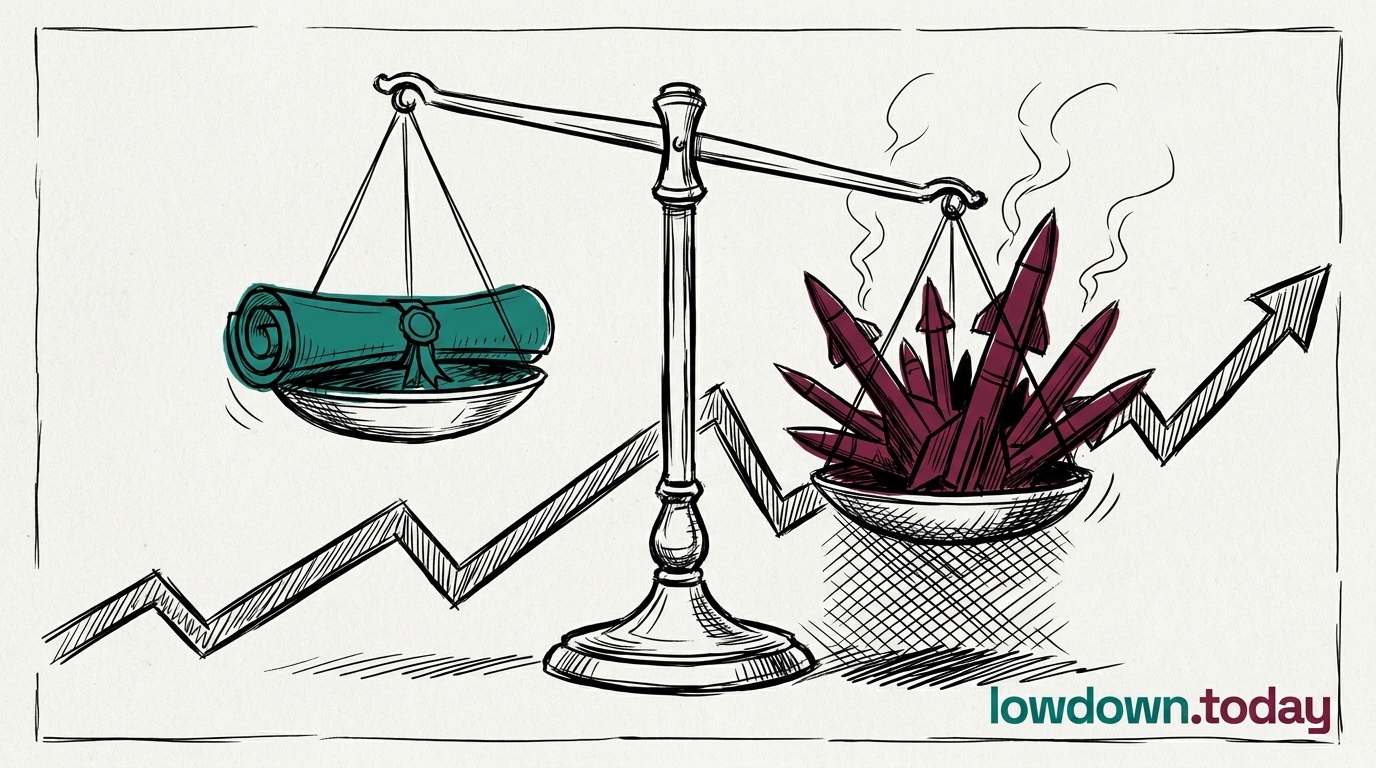
CENTCOM's Hormuz vessel-redirection count rose from 44 on 1 May to 52 by 7 May; the daily pace has slowed materially while Brent's rebound priced the missiles, not the steadier blockade.

ConflictDeveloping
Key takeaway

Eight more redirections in a week, but Brent moved on one night of missiles, not on the trend line.

CENTCOM's vessel-redirection count rose from 44 on 1 May to 52 by 7 May, an increase of eight redirections across the week . The pace has slowed materially. Earlier in the campaign, between roughly Days 60 and 62, CENTCOM was logging five redirections every two days. The 1-7 May window worked out to roughly two redirections every three days. CENTCOM is still tagging vessels in the strait, but the surge phase that ran into Day 62 has passed.

CENTCOM uses the redirection count as the cleanest single quantitative metric of operational tempo. Every redirection is a vessel ordered to change course, hold position outside the strait, or accept a CENTCOM escort. The figure compresses cumulative friction into a number that tracks weekly. The slowing pace, in isolation, would suggest a normalising chokepoint: traffic adapts, owners accept the delay, the system reaches a steady state.

Brent Crude did not read it that way. Brent's 8 May rebound followed the night of kinetic exchange in Hormuz, not the redirection count. Three days of price losses going into 7 May had reflected the MOU's progress through Pakistan; one night of kinetic action reversed all of it. The market is pricing the spikes, not the floor.

CENTCOM's redirection trend pointed one way; the Brent reversal pointed the other. Continuous infrastructure does not move oil prices once it is priced in. Kinetic events do, especially when they involve named US Navy assets in the strait that gives the benchmark its name. The blockade has settled into the background; the IRGC strike on the destroyers has not.

For producers and refiners in the United Kingdom, the practical reading is that pump prices will track the next missile, not the next redirection. Brent has now sat above the $100 mark long enough to feed through to forecourt repricing on its normal lag, and a sustained triple-digit Brent environment translates to roughly 10-12p per litre over the pre-war baseline. The next downward break in Brent will require either a signed instrument, rather than a paper one before Tehran's 9 May expiry, or a clean week without further exchanges of fire in the strait.


Deep Analysis

In plain English

The US military has been tracking how many ships it has turned away from the Strait of Hormuz since it started blocking vessels bound for Iran. That count reached 52 by 7 May, up from 44 a week earlier. But the rate at which ships are being turned away has slowed down noticeably compared to the opening weeks. The reason: most ships that were going to change course already have; the ones still trying to pass through either have Iranian permission or are willing to pay the toll. Meanwhile, oil prices react more sharply to the headline news of missiles being fired than to the slower-moving redirection count.

What could happen next?
  • Consequence

    The deceleration from five per 48 hours to two per 72 hours signals CENTCOM has shifted to a maintenance-rate interdiction posture that is sustainable for months without additional fleet deployment, removing the time-pressure that might have accelerated Iranian compliance.

  • Risk

    If oil markets continue pricing kinetic spikes rather than the redirection baseline, the next exchange of fire in the strait will produce another $1-3 Brent spike regardless of the underlying redirection trend, amplifying energy-price volatility for UK consumers and businesses.

First Reported In

Update #91 · MOU in Tehran, missiles in the strait

CENTCOM· 8 May 2026
Read original
Different Perspectives
Israel
Israel
Israeli strikes on Hezbollah positions in Lebanon continued through the weekend, maintaining the secondary front. The IDF has publicly named Mojtaba Khamenei as an assassination target; his courier-governance mode complicates targeting but does not remove him from the order.
Russia
Russia
Putin told a Moscow press conference that Washington, not Tehran or Moscow, killed the Russia-custody uranium arrangement by demanding US-territory-only storage. Neither Tehran nor Washington has corroborated the account, which appeared in second-tier outlets only, consistent with a trial balloon rather than a formal position.
United Kingdom
United Kingdom
HMS Dragon was redeployed from the Eastern Mediterranean to the Middle East on 9 May, the first physical European platform commitment to the Gulf. The Ministry of Defence called it "prudent planning" while publishing no rules of engagement, no tasking order, and no vessel name, committing a named asset to a conflict zone before the political instrument authorising it exists.
United Arab Emirates
UAE air defences intercepted two Iranian drones over its territory on 10 May, a kinetic escalation six days after the Fujairah oil terminal strike that drew no formal protest. The three-state simultaneous operation, not the severity of individual strikes, appears to have crossed the threshold at which the GCC states collectively began responding.
Saudi Arabia
Saudi Arabia
Riyadh issued the first formal Gulf-state protest of the conflict on 10 May, demanding an "immediate halt to blatant attacks on territories and territorial waters of Gulf states", ending 10 weeks of channelling displeasure through OPEC+ quota discussions. The protest forecloses Saudi Arabia's preferred quiet-channel role and reduces the functioning back-channel architecture to Pakistan alone.
Qatar
Qatar
Doha is simultaneously a strike target, the site of the Safesea Neha attack 23 nautical miles offshore, and an active MOU mediator: Qatar's prime minister met Rubio and Vance in Washington the same weekend. Whether Qatar issues its own formal protest or maintains its dual role is the critical escalation indicator for the week of 11 May.



