UKMTO
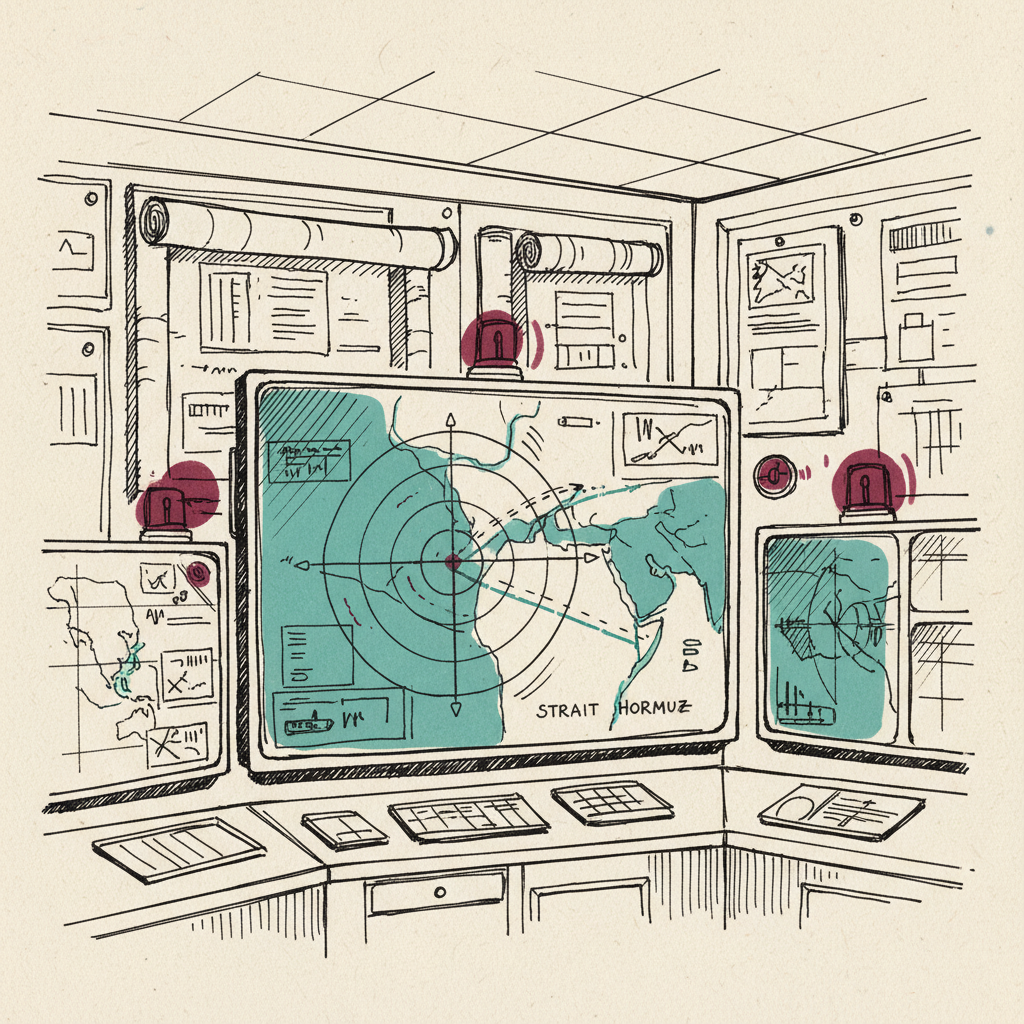
Royal Navy centre coordinating merchant-shipping security across the Indian Ocean and Persian Gulf.
On 11 September, UKMTO reported that only six of about 20 US-facilitated Hormuz transits showed on ship transponders, documenting a strait where shipping traffic had largely gone dark.
Last refreshed: 22 September 2026 · Appears in 2 active topics
Every ship in the Gulf calls UKMTO before its own flag state: who really controls maritime threat perception?
Timeline for UKMTO
Learned of the Al Funtas strike late and through a third party
Iran Conflict 2026: Al Funtas is struck and files no reportLogged the incident and told vessels to transit with caution
Iran Conflict 2026: A ship is hit near Hengam, and nobody names itRecorded a three-to-one gap between facilitated and AIS-visible Hormuz transits
Iran Conflict 2026: Hormuz traffic runs dark, and uncountedLogged the hijacking as a maritime warning
Iran Conflict 2026: Six men board a tanker off MukallaReported the strike and total-loss assessment
Iran Conflict 2026: Detour route writes off a cargo shipBackground
UKMTO is a Royal Navy coordination centre for merchant-shipping security across the Indian Ocean, Persian Gulf, Arabian Sea and Red Sea. It receives incident reports from vessels, issues warnings and links Merchant shipping with naval forces. Its reporting is particularly relevant when vessel identities, causes and responsibility remain unclear.
The centre is headquartered at the Maritime Trade Information Centre on Portsdown Hill in Portsmouth and maintains a liaison office in Dubai. It was founded in 2001 as a confidence-building measure after the 11 September attacks. UKMTO operates under British command alongside, but independently from, the US-led Combined Maritime Forces.
Its value lies in maintaining a common operational record for crews, owners, flag states and naval responders. On 18 August, its warning recorded an unclaimed projectile strike on an outbound Hormuz vessel, including one crew death and engine-room damage. On 13 September, it logged another strike near Hengam where the vessel was still unnamed.
UKMTO records Hormuz disruption
On 4 May, UKMTO raised its Strait of Hormuz advisory to critical as missile attacks and restrictions made normal passage unsafe. Its reports gave ship operators a shared account of hazards even where governments and combatants offered competing claims.
By 11 September, UKMTO counted about 20 US-facilitated daily transits, while only six appeared on transponders. For the centre, dark traffic reduced the visible record of WHO was moving through the strait and complicated its core task of warning merchant vessels.
UKMTO separates claims from evidence
On 5 August, Houthi forces said they had struck two oil tankers. UKMTO logged one explosion and did not identify the vessel, preserving the difference between a combatant claim and a confirmed maritime incident.
That distinction remained central to UKMTO's role on 20 August, when it reported armed people boarding and redirecting a tanker east of Al Mukalla without naming the vessel, operator or attackers. Its bulletins establish what crews reported and where, rather than settling responsibility before evidence permits it.
What is UKMTO?
Who do ships call when they're attacked in the Gulf?
What is the difference between UKMTO and Combined Maritime Forces?
How bad is GPS jamming in the Persian Gulf?
Did UKMTO report more than one ship hit in the July 2026 Hormuz strike?
How reliable are UKMTO's first incident reports?
What did UKMTO report about a Strait of Hormuz attack in August 2026?

