
Skip to content
Briefings are running a touch slower this week while we rebuild the foundations.See roadmap
Iran Conflict 2026
12MAR

Day 13: UN condemns Iran 13-0; ceasefire blocked

7 min read
05:10UTC

The Security Council condemned Iran's strikes on seven Arab states 13-0-2 but rejected a ceasefire resolution 4-2-9, codifying the institution's structural inability to address both sides of the conflict.

Key takeaway

The Security Council, the IEA, and the principle of freedom of navigation through international straits all failed on the same day — and in each case, the failure's primary beneficiary is China.

This briefing mapped
Loading map…
Military
Economic
Humanitarian
Domestic
Diplomatic

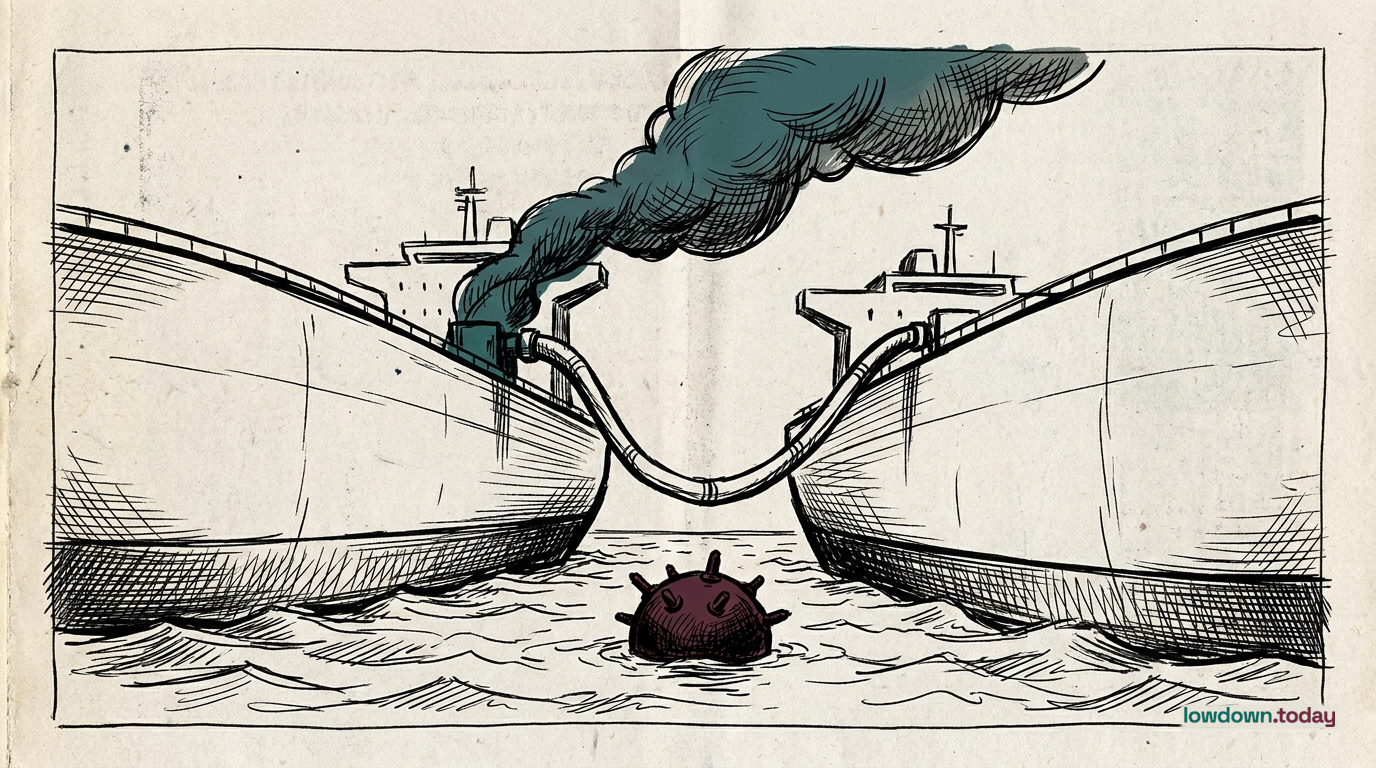
The IRGC promised total closure of the world's most important oil chokepoint — but 11.7 million barrels of Iranian crude have already passed through to China.

Sources profile:This story draws on mixed-leaning sources from United States
United States
LeftRight

IRGC declared on Wednesday that 'not a litre of oil' would pass through the strait of Hormuz — the most absolute blockade declaration of the conflict, escalating from the Foreign Ministry's earlier warning that tankers 'must be very careful.' Iran's own crude continues flowing unimpeded.

Iran escalated from diplomatic warnings to a declaration of total Hormuz closure — the strongest blockade language since the 1988 Tanker War. The declaration is selectively enforced: Iran's own crude transits freely to China while non-Chinese shipping faces interdiction, converting Hormuz from a waterway into a tool of economic coercion against US-aligned economies. 

Sources:CNBC·Fortune
Briefing analysis

The IEA was founded in 1974 in direct response to the Arab oil embargo, with pooled strategic reserves as its primary tool against coordinated production cuts. The 2011 Libya release (60 million barrels) and 2022 Russia-Ukraine release (182 million barrels) both succeeded in moderating prices because physical shipping routes remained open — reserves could flow to refineries.

Wednesday's failure is the first test of the reserve system against a physical chokepoint closure, where the bottleneck is transit capacity rather than production. The 1973 embargo doubled oil prices over three months; this conflict achieved the same in two weeks, partly because the IEA's counter-measure was built for the earlier threat model. The Tanker War of 1984–1988 — when Iran and Iraq attacked Gulf shipping — produced a US-led naval escort operation (Operation Earnest Will) within months, but that response required direct military commitment to keep the strait open, not reserve drawdowns.

The IEA released 400 million barrels — the biggest coordinated draw in its 50-year existence. Three tanker attacks and Iran's blockade declaration erased the effect before markets closed.

Sources profile:This story draws on centre-left-leaning sources from United States
United States

The IEA released 400 million barrels from strategic reserves — the largest coordinated action in the agency's 50-year history — intended to cap oil prices. The release failed within hours as three cargo ship attacks in the strait of Hormuz and Iran's explicit blockade declaration overwhelmed it. The US contribution of 172 million barrels from the Strategic Petroleum Reserve (43% of the IEA total) will take 120 days to deliver at planned discharge rates, with delivery beginning next week. The market's supply gap is immediate.

The IEA deployed its most powerful supply-side tool and the market absorbed it in a single trading session. Strategic reserves are designed for temporary disruptions, not sustained blockades of the world's most important oil chokepoint. The mechanism's failure leaves no institutional tool capable of capping prices while the strait remains contested. 

Sources:CNBC·Bloomberg·US State Department

Brent has climbed 41% in two weeks, settling into a $90–95 corridor that signals the market has moved from pricing a short war to pricing an extended one.

Sources profile:This story draws on centre-left-leaning sources from United States
United States
LeftRight

Oil prices continued rising despite the IEA reserve release. Brent Crude closed Wednesday at $91.98 (+4.76%), WTI at $87.25 (+4.55%). Thursday pre-market WTI pushed to approximately $95, up 9% from Wednesday's open. Brent has risen 41% from $67.41 on 27 February in under two weeks. Prices have settled in the $90-95 corridor — a range that triggers inflationary pressure across import-dependent economies.

Oil settling into a sustained $90–95 corridor is economically more damaging than a brief spike to $119, because it forces import-dependent economies to reprice at the new level rather than wait out a temporary disruption. The corridor signals the market has moved from pricing a short war to pricing an extended one. 

Sources:CNBC·Fortune·Bloomberg

Satellite tracking reveals half of all Hormuz transits in March are shadow fleet vessels carrying Iranian crude to China — protected by PLA Navy escort and formal Tehran-Beijing negotiations.

Sources profile:This story draws on centre-leaning sources from United States
United States
LeftRight

11.7 million barrels of Iranian oil have transited the strait of Hormuz since 28 February, all bound for China, according to TankerTrackers.com co-founder Samir Madani using satellite tracking. Shadow fleet ships account for half of all Hormuz transits in March. Chinese-operated vessels systematically broadcast AIS messages emphasising Chinese ownership and crew composition. The blockade has a China-shaped exception: Iran decides who transits and who does not, creating selective Economic warfare rewarding Beijing's diplomatic cover.

Satellite tracking data from TankerTrackers.com confirms a two-tier passage system where Chinese-linked vessels transit freely while all others are excluded. Backed by PLA Navy presence and direct negotiations between Beijing and Tehran, the arrangement gives China discounted Iranian crude through a protected corridor while Europe, Japan, South Korea, and India pay a 41% war premium on energy. Gulf energy flows are being reorganised around Beijing-Tehran alignment. 

Sources:CNBC·Fortune·TankerTrackers.com

Filipino, Indian, and Bangladeshi crews are stranded aboard vessels in the Persian Gulf while the countries that employ them negotiate a blockade that selectively lets Iranian oil through.

Sources profile:This story draws on neutral-leaning sources from United States and United Kingdom
United StatesUnited Kingdom

International Maritime Organisation cumulative tally for the strait of Hormuz since 28 February: 10 vessels attacked, 7 seafarers killed, 20,000 seafarers stranded in the Persian Gulf — mostly from the Philippines, India, and Bangladesh — facing immediate supply constraints. GPS jamming has been reported in the strait, adding navigational risk. Tanker traffic through Hormuz is down 90% from pre-war levels. The IMO has issued condemnations but possesses no enforcement mechanism to compel safe passage.

The 20,000 stranded seafarers represent a humanitarian crisis invisible behind the oil price headlines. Their governments have no leverage over the blockade's terms, the IMO has no enforcement power, and GPS jamming in one of the world's most congested waterways adds navigational danger to the physical threat of interdiction. 

Sources:IMO·Al Monitor·gCaptain·Lloyd's List

Five hours of coordinated fire on fifty-plus Israeli targets formalises the shift from parallel strikes by separate actors to a declared combined Iranian-Hezbollah campaign with unified timing and targeting.

Sources profile:This story draws on mixed-leaning sources from Israel, France and 1 more
IsraelFranceUnited States
LeftRight

IRGC and Hezbollah launched a declared joint operation on Wednesday night: five hours of sustained fire on more than 50 targets across Israel. The operation formalises the shift from parallel fire by separate actors to a declared combined campaign with coordinated timing and targeting. The IRGC's decentralised command structure of 31 autonomous provincial units retained the ability to synchronise with external partners despite the destruction of its aerospace and drone headquarters in Tehran.

The declared combined campaign forces Israel to treat its northern and eastern fronts as a single coordinated threat, compounding interceptor depletion and complicating defensive prioritisation at a pace neither front alone would impose. 

Hezbollah fired over 100 rockets at northern Israel in a single barrage as part of the first declared joint operation with the IRGC — formalising what Israel had already conceded: Lebanon now fires more at Israel daily than Iran does.

Sources profile:This story draws on centre-left-leaning sources from Israel and France
IsraelFrance
LeftRight

Hezbollah fired over 100 rockets at Northern Israel in a single barrage as part of the declared joint IRGC-Hezbollah operation. Sirens sounded in Haifa and across the Galilee. Two people were lightly injured. The IDF warned Hezbollah would 'likely attempt to increase its rate of rocket and drone attacks.'

The barrage is Hezbollah's component of a declared combined campaign with the IRGC, forcing Israel into simultaneous multi-front air defence and accelerating interceptor consumption against cheap munitions at rates that favour the attacker's economics. 

Sources:Jerusalem Post·France 24·Haaretz

The IDF struck ten Hezbollah facilities across Dahiyeh in a concentrated thirty-minute bombardment on Wednesday night, including an intelligence headquarters and command centres — hours after Hezbollah demonstrated coordinated fire with the IRGC.

Sources profile:This story draws on centre-left-leaning sources from Qatar and France
QatarFrance

IDF struck ten Hezbollah facilities in Dahiyeh, Beirut's southern suburbs, in 30 minutes on Wednesday night, including an intelligence headquarters and command centres.

The target selection — command-and-control infrastructure rather than weapons depots — indicates Israel is attempting to sever the organisational links that enabled Wednesday's joint IRGC-Hezbollah operation, attacking the coordination layer rather than the munitions themselves. 

A preliminary US military investigation found the school was hit because targeting data was outdated. The intended target was a nearby naval facility.

Sources profile:This story draws on mixed-leaning sources from United States
United States

AP sources reported that a preliminary US military investigation found outdated intelligence likely caused the strike on the Shajareh Tayyebeh girls' school in Minab. The intended target was a nearby naval facility. The school was hit because targeting data did not reflect current ground conditions. Between 165 and 180 people were killed — mostly primary school girls, along with teachers and parents. The investigation is preliminary; neither findings nor accountability measures have been made public.

The finding is the first official US acknowledgement of a targeting failure in Operation Epic Fury. It confirms what three independent investigations established: this was not collateral damage but a weapon aimed at the wrong building. Whether institutional accountability follows depends on decisions the administration has not yet made. 

Sources:AP·CBS News

Nearly half the Senate demands a public investigation into the girls' school strike — but the demand carries no mechanism to compel one.

Sources profile:This story draws on mixed-leaning sources from Qatar and United States (includes United States state media)
United StatesQatar

Forty-six senators — 44 Democrats plus independents Sanders and King — wrote to Defence Secretary Hegseth demanding a public investigation into the strike on the Shajareh Tayyebeh girls' school in Minab. The letter cited Hegseth's 2 March statement that US forces operate under 'no stupid rules of engagement.' Three independent investigations had already concluded the strike was likely a US weapon fired at a misidentified target.

The letter is the first organised congressional challenge to the conduct of Operation Epic Fury. It tests whether 46 signatures can force disclosure from an administration that controls both the investigation timeline and the classification level, after the same Congress failed by seven votes to assert war powers authority. 

An Israeli strike destroyed floors of a residential building in central Beirut's Aisha Bakkar neighbourhood — not Hezbollah's Dahiyeh stronghold — without prior warning. The second Israeli strike inside the city centre in four days.

Sources profile:This story draws on centre-left-leaning sources from Qatar, United States and 1 more
QatarUnited StatesFrance

Israeli strike hit a residential building in the Aisha Bakkar neighbourhood of central Beirut with no prior warning issued. One or two floors were destroyed — a profile consistent with a targeted assassination, not area bombardment. Aisha Bakkar is a dense residential area in the city centre, not Dahiyeh. This is the second Israeli strike in central Beirut in four days, after Sunday's Ramada hotel strike that killed five IRGC Quds Force commanders.

Israel's targeting has expanded from Dahiyeh to dense residential areas of central Beirut, following the pattern established by Sunday's Ramada hotel assassination of five IRGC Quds Force commanders. The absence of a warning in a civilian neighbourhood and the geographic shift beyond established Hezbollah zones changes how Israel is operating inside the Lebanese capital. 

Lebanon's dead have reached 634 in under a fortnight, with 86 children killed at a daily rate exceeding the 2006 war. Nearly 760,000 are displaced and the shelter system is full.

Sources profile:This story draws on mixed-leaning sources from Qatar, United Kingdom and 1 more (includes China state media)
QatarUnited KingdomChina
LeftRight

Lebanon's cumulative toll has risen sharply: 634 killed (439 men, 45 women, 86 children, 14 healthcare workers), 1,586 wounded, and 759,300 displaced — up from 486 killed and 700,000 displaced reported two days earlier. In less than a fortnight, Lebanon's displacement matches the entirety of the 33-day 2006 war. The child death rate of roughly 14 per day exceeds the 2006 rate UNICEF documented.

The rate of killing and displacement in Lebanon has exceeded the benchmarks set by the 2006 war — a conflict that lasted more than twice as long. Lebanon's medical and shelter infrastructure, degraded by the 2020 Beirut port explosion and subsequent economic collapse, cannot absorb casualties at this pace. 

Bahrain, struck by over 200 Iranian missiles and drones since 28 February, abstained on a ceasefire resolution rather than endorse any text that might constrain the US-Israeli campaign.

Sources profile:This story draws on mixed-leaning sources from China, Qatar and 2 more (includes China state media)
ChinaQatarPakistanUnited States
LeftRight

Russia's draft ceasefire resolution failed at the UN Security Council 4-2-9. Russia, China, Pakistan, and Somalia voted in favour. The US and Latvia opposed. Nine members abstained — including France, the UK, Denmark, and Bahrain, which itself has been struck by over 75 missiles and 123 drones since 28 February but abstained rather than endorse any text that might constrain the US-Israeli campaign.

Bahrain's abstention reveals that Gulf States calculate US military protection as more valuable than any ceasefire, even while absorbing sustained Iranian fire — a political alignment that removes any Council path to stopping the fighting. 

Sources:United Nations·CGTN·Al Jazeera·Dawn·Just Security

The Security Council's most co-sponsored resolution in history condemns Iran's attacks on seven states — but the US-Israeli campaign that provoked them does not appear in the text.

Sources profile:This story draws on mixed-leaning sources from China, Qatar and 3 more (includes China state media)
United Arab EmiratesChinaQatarPakistanIsrael
LeftRight

UN Security Council adopted Resolution 2817, sponsored by Bahrain on behalf of GCC states and Jordan, passing 13-0-2 with 135 co-sponsors — the most in UN history, surpassing the 134 for the 2014 Ebola resolution. Russia and China abstained. The resolution condemns Iran's attacks on Bahrain, Kuwait, Oman, Qatar, Saudi Arabia, the UAE, and Jordan and demands immediate cessation.

The most co-sponsored resolution in UN history formalises broad international opposition to Iran's regional strikes while leaving the US-Israeli campaign entirely unaddressed — an outcome determined by which side's allies hold permanent vetoes, not by the merits of either side's conduct. 

The Pentagon told senators behind closed doors that Operation Epic Fury burns $1.9 billion per day — a figure that excludes the missiles being fired and that no one has asked Congress to fund.

Sources profile:This story draws on centre-left-leaning sources from United States
United States

Defence Department officials told the Senate Appropriations subcommittee in closed session on Tuesday that Operation Epic Fury's first six days cost an estimated $11.3 billion — approximately $1.9 billion per day. Senator Chris Coons stated after the briefing that the true cost exceeds even $11.3 billion, as the figure excludes munitions replacement. At $1.9 billion per day, the war's 13-day running total exceeds $24 billion — roughly Iceland's annual GDP. Neither the White House nor the Pentagon has requested supplemental funding from Congress.

The Pentagon's disclosed cost of $1.9 billion per day — which excludes munitions replacement — means the war has already cost more than the entire 2011 Libya intervention. At 13 days the running total exceeds $24 billion, with no supplemental funding request submitted and no legislative mechanism to constrain spending after Congress rejected the only war powers challenge by seven votes. 

Sources:NBC News·The Hill·ABC News·CBS News

Emerging patterns

  • Hormuz blockade declarations escalating from operational warnings to absolute closure claims while selectively permitting allied traffic
  • Strategic reserve mechanisms failing to counter physical supply disruption when transit chokepoints are denied
  • Oil prices stabilising in $90-95 inflationary corridor after spike-pullback cycle
  • Two-tier Hormuz passage: Chinese-linked commerce flows freely while others are blocked, converting blockade into instrument of alliance management
  • Cumulative maritime disruption creating humanitarian crisis for stranded seafarers from labour-exporting countries
  • Formalisation of Iran-Hezbollah operational integration from parallel fire to declared combined campaign
  • Hezbollah sustained as primary daily attack source against Israel, surpassing Iran itself
  • Systematic degradation of Hezbollah command-and-control infrastructure in concentrated strike waves
  • Targeting process failure: outdated intelligence causing mass civilian casualties at misidentified targets
  • Growing congressional accountability pressure on US targeting process and civilian casualty incidents
Different Perspectives
Bahrain
Bahrain
Abstained on Russia's ceasefire resolution despite being struck by over 75 missiles and 123 drones since 28 February — a state under sustained direct attack declining to vote for ceasefire because the draft might constrain the US-Israeli campaign providing its defence.
IEA member states
IEA member states
Released 400 million barrels from strategic reserves — the largest coordinated drawdown in the agency's 50-year history, surpassing the 2022 Russia-Ukraine release by more than double. The action failed to stabilise prices within hours.
IRGC
IRGC
Declared that 'not a litre of oil' would pass through Hormuz — the most absolute blockade language of the conflict, escalating from the Foreign Ministry's earlier 'must be very careful' warning to an unconditional closure declaration, while Iran's own crude continued transiting to China.
46 US senators
46 US senators
Wrote to Defence Secretary Hegseth demanding a public investigation into the Minab school strike, citing his 'no stupid rules of engagement' statement — the largest organised Congressional accountability demand since the war began, though it carries no compulsory mechanism.
