Iceland
NATO Arctic island nation; key GIUK gap monitor, geothermal data-centre host, and 2026 World Cup qualifier.
Last refreshed: 25 June 2026
As NATO tests Arctic autonomous systems in Iceland's waters, is Keflavik the most important base Europe has never heard of?
Timeline for Iceland
Mentioned in: Kongsberg sells subsea guard in secret
Autonomous Systems: Land & SeaMentioned in: Room's 15 saves earn Curaçao a point
2026 FIFA World CupMentioned in: Europe starts a monthly mpox watch
Pandemics and BiosecurityUndersea robots go core at BALTOPS
Autonomous Systems: Land & SeaMentioned in: Tuchel Runs Two XIs in England's 1-0 Win
2026 FIFA World CupBackground
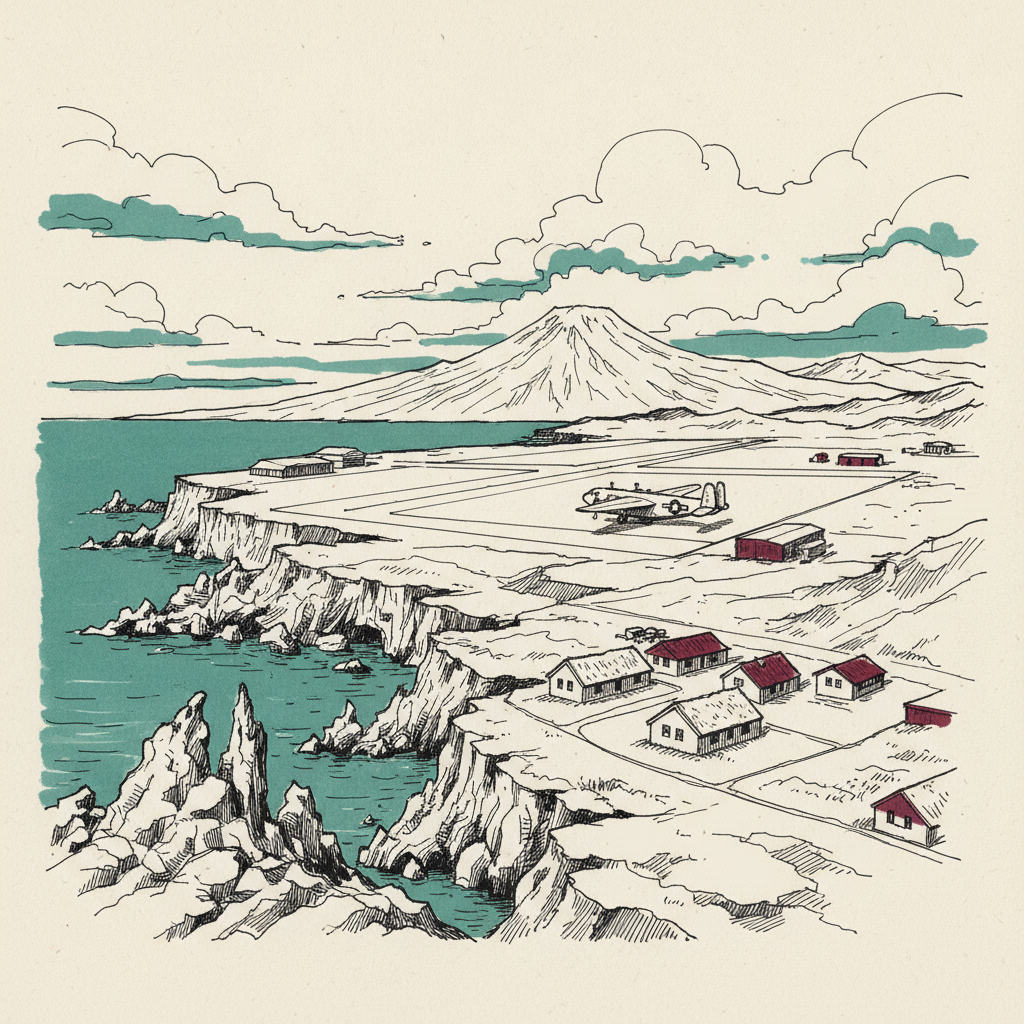
Iceland is a Nordic island state of roughly 375,000 people, a NATO founding member since 1949 and the only member without a standing military. Its Keflavik facility hosts rotating allied fighter deployments and US P-8 maritime patrol aircraft monitoring the GIUK gap, the seabed chokepoint carrying Russian submarine routes and critical subsea cables. That strategic position has gained renewed salience during the Iran conflict: Iceland sits on the Great Circle flight PATH used by US airlift and strategic forces redeploying between theatres.
NATO launched Task Force X-Arctic in June 2026 to trial networked autonomous systems across the North Atlantic and Arctic, targeting persistent GIUK gap awareness. Iceland's unique geography makes it the primary fixed node in that surveillance chain. On energy and data infrastructure, Iceland's volcanic geothermal reserves position it as a natural host for low-carbon data centres at a moment when hyperscalers are under intense pressure over their power consumption. Equinix's Nordic expansion, referenced in its April 2026 earnings, includes Iceland-adjacent capacity as part of an 800 MW regional build.
At the 2026 FIFA World Cup Iceland did not qualify, but the tournament context matters: Iceland remains the smallest nation ever to qualify for a major tournament (Euro 2016, World Cup 2018), a benchmark regularly revisited as newly qualifying debutants such as Curaçao drew attention to small-nation football. On public health, Iceland is within the ECDC monitoring zone as Europe tracks mpox spread in EU and EEA countries.
What is NATO Task Force X-Arctic and what does Iceland have to do with it?
What is the GIUK gap and why does Iceland matter for NATO?
Why is Iceland attractive for data centres?
Why is Iceland relevant to the Iran war?
Is Iceland in the 2026 FIFA World Cup?
What is the Keflavik base?
Is Iceland in NATO?
What is the GIUK gap?

