
Skip to content
Briefings are running a touch slower this week while we rebuild the foundations.See roadmap
Iran Conflict 2026
13MAR

Day 14: Oil breaks $100; war reaches Iraqi waters

9 min read
04:41UTC

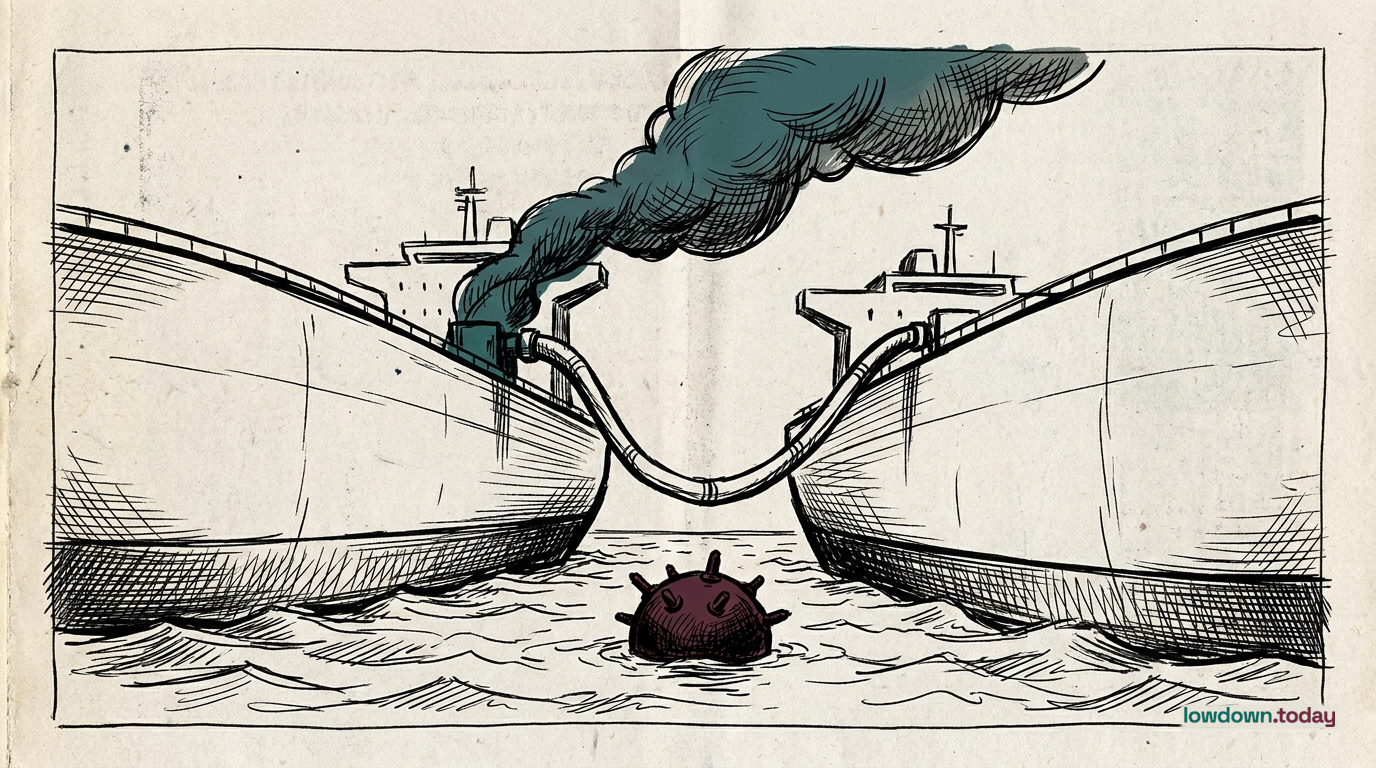
Brent crude closed above $100 for the first time since 2022 after the IEA declared the Hormuz closure the largest supply disruption in oil market history. Iran's new Supreme Leader confirmed the blockade in his first public statement — delivered by proxy, unseen — while drone boats attacked shipping in Iraqi territorial waters for the first time and a US tanker aircraft crashed in western Iraq.

Key takeaway

The war has crossed the threshold where no single actor's decision can reverse the economic damage; reopening Hormuz now requires coordinated de-escalation across three simultaneous conflicts, and no mechanism for that coordination exists.

This briefing mapped
Loading map…
Domestic
Diplomatic
Military
Humanitarian

The new Supreme Leader's first public statement was read by another person while a photograph was displayed. Mojtaba Khamenei has not been seen since taking office — raising the question of who actually commands Iran's war.

Sources profile:This story draws on centre-left-leaning sources from Qatar, United States and 2 more
United StatesQatarPakistanUnited Kingdom
LeftRight

Iran's state media broadcast the first public statement from Supreme Leader Mojtaba Khamenei. He did not appear on camera. Another person read his words while a photograph was displayed. The statement confirmed existing Hormuz blockade policy and referenced 'opening of other fronts.' Iran International reported it remains unclear whether the statement is genuinely his. The new Supreme Leader has not been seen in public since taking office.

In Iran's constitutional system, The Supreme Leader's authority rests on the doctrine of velayat-e faqih — personal clerical guardianship. Governing through unverified, proxied text without a single public appearance is without precedent in the Islamic Republic's 47-year history. If Mojtaba Khamenei cannot or will not appear, operational command defaults to the IRGC's 31 autonomous provincial commanders, who have already demonstrated the capacity to sustain fire without central direction. 

Briefing analysis

The Iran-Iraq Tanker War saw 546 commercial vessels attacked over four years in the Persian Gulf, prompting the US to launch Operation Earnest Will — Navy escorts for reflagged Kuwaiti tankers — in 1987. Reagan ordered escorts within weeks of Kuwait's request.

The current conflict has produced at least 16 vessel attacks in two weeks, a pace that would surpass the entire Tanker War's toll within a year. The structural difference: in 1987, US naval assets were available for escort duty because America was not simultaneously conducting a major air campaign against the state doing the attacking. In 2026, Energy Secretary Wright stated the opposite — all military assets are committed to offensive operations, leaving the escort mission unfilled.

Iran's president outlined three ceasefire conditions that Washington and Tel Aviv have already ruled out. On the same day, the Supreme Leader called for new fronts — a government speaking with two voices on the central question of the war.

Sources profile:This story draws on mixed-leaning sources from Qatar and Pakistan
QatarPakistan
LeftRight

President Masoud Pezeshkian outlined three ceasefire conditions in calls with the leaders of Pakistan and Russia: (1) recognition of Iran's 'legitimate rights' encompassing the nuclear programme and regional influence, (2) reparations for damage from US-Israeli strikes with no figure named, and (3) binding international guarantees against future military aggression. These conditions are incompatible with Washington's demand for unconditional surrender and Israel's stated goal of government replacement.

Pezeshkian's conditions are structured to be rejected. They establish a diplomatic record — evidence that Iran's civilian leadership pursued peace under bombardment — rather than a diplomatic opening. The simultaneous divergence between the president's ceasefire terms and The Supreme Leader's call for escalation exposes the constitutional fracture at the centre of Iran's war policy: the president lacks command authority over the armed forces, and The Supreme Leader who holds that authority is calling for expansion. 

Six commercial vessels struck in 14 hours across 200 kilometres, from Hormuz to Iraq's Basra oil terminal. Iran deployed explosive drone boats for the first time — a weapon it previously only supplied to proxies — and extended the maritime war into the waters that carry Iraq's sole significant source of hard currency.

Sources profile:This story draws on mixed-leaning sources from Qatar, United States and 2 more
United StatesQatarUnited Arab EmiratesIsrael
LeftRight

Six commercial vessels were struck within a 14-hour window across 200 kilometres of water from the strait of Hormuz to Iraq's Basra Oil Terminal, using anti-ship missiles, sea mines, and remotely detonated waterborne IEDs. Attacks reaching Iraqi territorial waters represents a geographic escalation with direct consequences for Baghdad's oil exports. Named vessels: Safesea Vishnu (Marshall Islands-flagged tanker) and Zefyros (Maltese-flagged tanker) struck near Basra — both caught fire, one crew member found dead, 38 crew rescued. ONE Majesty (Japan-flagged) hit near Ras al-Khaimah. Star Gwyneth (Marshall Islands bulk carrier) struck northwest of Dubai. A container ship hit 35 nautical miles north of Jebel Ali.

The geographic expansion to Iraqi territorial waters threatens Baghdad's oil export lifeline — roughly 3.3 million barrels per day through the Basra terminal complex, accounting for over 90% of Iraq's hard-currency revenue. The deployment of drone boats marks a tactical shift from conventional anti-ship missiles to asymmetric weapons that are cheaper, harder to detect, and cannot be neutralised by air strikes — a direct adaptation to CENTCOM's degradation of Iran's missile launchers and naval vessels. 

The IRGC deployed explosive unmanned surface vessels for the first time — a weapon it had only ever supplied to proxies — in the same waters it is trying to close to everyone else.

Sources profile:This story draws on mixed-leaning sources from Qatar and United States
QatarUnited States

At least two maritime attacks on Thursday used explosive-laden unmanned surface vessels (drone boats), marking Iran's first direct deployment of a weapon it previously only supplied to Houthi forces. Drone boats are harder to detect than missiles, operate in shallow coastal waters where conventional warships are constrained.

Iran's direct deployment of drone boats — previously supplied only to Houthi proxies — introduces a low-cost, hard-to-detect weapon into the strait of Hormuz that existing naval point-defence systems were not designed to counter, representing asymmetric adaptation to the sustained degradation of Iran's conventional missile and naval capability. 

Israel's new evacuation line crosses the boundary that ended the 2006 war — and Defence Minister Katz says the IDF will 'take the territory' if Lebanon cannot control Hezbollah.

Sources profile:This story draws on centre-left-leaning sources from Israel and United States
IsraelUnited States

The IDF ordered all civilians south of the Zahrani River to evacuate — a line north of the Litani River, beyond the boundary of UNSC Resolution 1701 and all previous evacuation zones, extending to within nine miles of Sidon. Defence Minister Katz stated Israel would take Lebanese territory if the government cannot prevent Hezbollah attacks.

Israel's evacuation order crosses the Litani River boundary established by UNSC Resolution 1701 — the international framework that ended the 2006 war. Katz's statement conditioning withdrawal on Lebanese control of Hezbollah sets a condition no Lebanese government has met, raising the prospect of an open-ended occupation resembling the 1985–2000 security zone. 

They fled Dahiyeh for central Beirut, then gathered at the seafront because it felt safe. A double-tap strike killed eight.

Sources profile:This story draws on centre-left-leaning sources from Qatar, United Arab Emirates and 1 more
QatarUnited Arab EmiratesUnited States

An Israeli double-tap strike hit the Ramlet al-Baida seafront in central Beirut, killing 8 people and wounding 31. Displaced families from Dahiyeh had gathered at the beachfront believing it safer. This was the third Israeli strike on central Beirut in five days.

The third Israeli strike on central Beirut in five days hit an open public space where displaced families had gathered, demonstrating that the conflict's targeting has expanded beyond Hezbollah's traditional Dahiyeh stronghold. The double-tap pattern — two munitions in succession — predictably strikes those responding to the first impact, raising questions under International humanitarian law's proportionality requirements. 

In under a fortnight, Lebanon's displacement has reached 80% of the 2006 war's 34-day total — and the child death rate already exceeds it.

Sources profile:This story draws on mixed-leaning sources from United States
United States

Lebanon's displacement has passed 800,000 — up from 759,300 the previous day. The child death rate continues to exceed the rate UNICEF documented during the 2006 war.

The rate of displacement — 800,000 in under two weeks against approximately one million over 34 days in 2006 — reflects both the intensity of Israeli operations and the progressive expansion of evacuation zones into previously unaffected areas. Lebanon's infrastructure, degraded by five years of economic crisis and the 2020 port explosion, cannot absorb displacement at this speed. 

Brent crude settled at $100.46 — up 49% from pre-war levels — on the day the IEA declared the war the largest supply disruption in oil market history. The agency's record 400-million-barrel reserve release, announced days earlier, did not prevent the breach.

Sources profile:This story draws on centre-leaning sources from United States, France and 1 more
United StatesFranceIndia
LeftRight

Brent Crude closed at $100.46 per barrel (+9.2% on the day, +49% above pre-war level of $67.41 on 27 February), breaching the $100 psychological threshold on a closing basis for the first time since the war began. WTI settled at $95.73 (+9.7%). The trigger was the IEA's monthly Oil Market Report.

The $100 closing breach signals the market has concluded the strait of Hormuz will not reopen on any near-term schedule. Both the IEA's largest-ever reserve release and the administration's repeated escort promises have failed to cap prices, and the threshold carries psychological weight that will accelerate downstream economic repricing across import-dependent economies. 

Gulf production is down at least 10 million barrels per day — nearly double the 1973 Arab oil embargo's impact, achieved in a fortnight rather than months. The IEA has applied a designation it has never used before.

Sources profile:This story draws on centre-leaning sources from United States and India
United StatesIndia
LeftRight

The IEA's March Oil Market Report declared the Iran war 'the largest supply disruption in the history of the global oil market.' Gulf production is down at least 10 million barrels per day. Hormuz flows have fallen from 20 million bpd to what the IEA described as 'a trickle.' The agency projects global supply will drop 8 million bpd this month — nearly double the approximately 5 million bpd removed during the 1973 Arab Oil Embargo.

The IEA's formal designation as history's largest oil supply disruption — surpassing the 1973 embargo by a factor of two in a fraction of the time — establishes the baseline against which all economic policy responses will now be measured. No historical precedent exists for a disruption of this speed and magnitude, which means no existing playbook is adequate. 

Deutsche Bank and Oxford Economics warned of recession and stagflation through Q3 2026 as the Dow fell 600 points — the same day oil breached $100 and the IEA declared the worst supply disruption in history.

Sources profile:This story draws on centre-leaning sources from United States
United States
LeftRight

The DoW Jones Industrial Average fell 600 points on Thursday. Deutsche Bank and Oxford Economics both published recession and stagflation warnings for the second and third quarters of 2026.

The recession and stagflation warnings from major institutions shift the economic framing of the war from a geopolitical shock with recoverable market dips to a macroeconomic regime change affecting growth, inflation, and monetary policy through at least the third quarter of 2026. The transmission mechanism — oil above $100 feeding into transport, manufacturing, and food costs — has no quick policy remedy while Hormuz remains closed. 

Sources:Fortune

A KC-135 Stratotanker crashed near the Jordanian border with six crew aboard. CENTCOM denied hostile fire; Iran-backed militias claimed a shootdown. The 60-year-old airframe cannot be replaced.

Sources profile:This story draws on centre-left-leaning sources from United States
United States
LeftRight

A US Air Force KC-135 Stratotanker crashed near Turaibil in western Iraq, close to the Jordanian border. Six service members were on board; their status was unknown at time of filing. A second KC-135 from the same mission landed safely at Ben Gurion Airport. CENTCOM stated the crash was not caused by hostile fire or friendly fire. The Islamic Resistance in Iraq claimed responsibility for shooting the aircraft down on Telegram without supporting evidence.

The loss of a KC-135 — from a fleet averaging over 60 years old with no near-term replacement path — directly reduces the aerial refuelling capacity on which US and Israeli long-range strike operations depend, regardless of whether the cause was enemy action or mechanical failure. 

Chief Warrant Officer Arnaud Frion was killed by a drone in Erbil while training Kurdish counter-terrorism forces. France had stayed out of the US-Israeli campaign — but its troops were already in range.

Sources profile:This story draws on centre-left-leaning sources from France, Israel and 1 more
FranceIsraelQatar

President Macron confirmed that Chief Warrant Officer Arnaud Frion of the 7th Battalion of Chasseurs Alpins was killed in a drone attack in the Erbil region of Iraqi Kurdistan — the first French military death in this conflict. Six other French soldiers providing counter-terrorism training were wounded. France has maintained deliberate distance from the US-Israeli campaign, declining to participate in offensive operations.

The first French military death forces Macron to choose between withdrawal from Iraq (damaging the counter-ISIS mission and Kurdish partnerships), remaining in place (absorbing casualties from a conflict France has no role in directing), or escalation (contradicting France's entire diplomatic positioning) — with no option free of domestic political cost. 

The Energy Secretary says the US military isn't ready for tanker escorts. The Treasury Secretary says they're coming soon. Oil closed above $100 — partly because the market has stopped believing either.

Sources profile:This story draws on centre-left-leaning sources from Qatar, United States and 1 more
United StatesQatarUnited Kingdom
LeftRight

Energy Secretary Wright told CNBC the US is 'simply not ready' for tanker escorts through Hormuz, with all military assets focused on destroying Iran's offensive capabilities. Treasury Secretary Bessent told Sky News escorts would happen 'as soon as militarily possible' and that the US was forming an 'international Coalition' for escort duty. The two statements are incompatible. This follows Wright's deleted and retracted 10 March claim that the Navy had already escorted a tanker, which briefly sent oil prices down approximately 12% intraday.

Three contradictory administration statements on Hormuz escorts in six days have eroded market confidence that the strait will reopen soon, contributing directly to oil's breach of the $100 threshold. The contradiction exposes a structural resource conflict: the same naval assets cannot simultaneously run a 5,000-plus-target bombing campaign and escort commercial shipping. 

More than 120 House Democrats demand to know whether the Maven Smart System selected the Minab girls' school as a military target — shifting the investigation from bad intelligence to whether AI processed it without human review.

Sources profile:This story draws on mixed-leaning sources from United States, United Arab Emirates and 1 more
United StatesUnited Arab EmiratesHong Kong SAR China
LeftRight

More than 120 Democratic representatives wrote to Defence Secretary Hegseth asking whether the Maven Smart System or other AI tools identified the Shajareh Tayyebeh school in Minab as a target. The Washington Post reported the US target list may have mistaken the school for a nearby military site due to outdated intelligence processed through automated systems. The inquiry escalated from the Senate (46 senators) to the House, shifting the question from whether outdated data caused the strike to whether AI processed that data without adequate human review.

The congressional investigation has escalated from the Senate to the House and narrowed from whether outdated intelligence caused the Minab strike to whether AI systems generated the target without adequate human review — a question with implications for the entire 5,000-plus target campaign, not just this single incident. 

At his first press conference since the war began, Netanyahu issued an implicit death threat against Iran's new Supreme Leader and Hezbollah's chief — then admitted he cannot guarantee the Iranian government will fall.

Sources profile:This story draws on centre-left-leaning sources from Israel, United States and 2 more
United StatesIsraelHong Kong SAR ChinaPhilippines
LeftRight

At his first press conference since the war began, Netanyahu stated he would not 'take out a life insurance policy' on adversary leaders when asked about Mojtaba Khamenei and Hezbollah chief Naim Qassem. He acknowledged he did not know whether the Iranian government would fall — a concession that the stated objective of regime collapse is not guaranteed.

Netanyahu's acknowledgement that regime collapse is uncertain contradicts the stated war objective and entered the public record on the same day Iran's new Supreme Leader confirmed the Hormuz blockade would continue. The gap between the war's declared aim and its achievable outcomes is now explicit. 

UNHCR reports up to 3.2 million Iranians have been forced from their homes since 28 February — 3.6% of the country — in what the agency calls the fastest mass displacement the region has seen in decades.

Sources profile:This story draws on centre-left-leaning sources from Switzerland, Qatar and 1 more
SwitzerlandQatarUnited States

UNHCR reported that between 600,000 and one million Iranian households — up to 3.2 million people — have been internally displaced since 28 February, calling it the fastest and largest wave of internal displacement in the region in decades. Iran's total population is 88 million; if the upper bound is correct, 3.6% of the country has been forced from home in a fortnight.

First consolidated UN displacement figure for Iran shows internal displacement has reached 3.2 million in two weeks — an order of magnitude above the 330,000 regional total the UN reported just days earlier. The speed reflects both direct military strikes and secondary atmospheric contamination from energy infrastructure destruction across Tehran province. 

An Iranian state-linked group claims to have wiped 200,000 systems at Stryker Corporation — a medical device company used in hospitals worldwide — in stated retaliation for the Minab school strike, opening the war's first cyber front.

Sources profile:This story draws on mixed-leaning sources from United States
United States
LeftRight

Handala Hack, an Iranian-aligned cyber group linked by Palo Alto Networks to Iran's Ministry of Intelligence, claimed a destructive wiper attack on US medical technology company Stryker Corporation on 11 March. The group claims erasure of data from 200,000 systems across 79 countries and extraction of 50 terabytes of data. Stryker disclosed a 'global disruption to the company's Microsoft environment' in an SEC filing. Login screens displayed the Handala logo. Stated motive: retaliation for the Minab school strike.

The war's first confirmed state-linked cyberattack targets a civilian medical supply chain rather than military or strategic infrastructure. The departure from Iran's prior cyber targeting pattern — Saudi Aramco in 2012, Israeli water systems in 2020 — suggests a deliberate strategy of reciprocal civilian-sector escalation tied explicitly to the Minab school strike. 

Closing comments

Three vectors point toward further escalation. First, Thursday's drone boat deployment proves Iran possesses and will use weapons capable of reaching vessels at anchor in UAE and Saudi ports — closing the alternative loading points that partially compensate for Hormuz. Second, attacks in Iraqi waters force Baghdad toward a binary choice between its US security partnership and its economic dependence on Iranian cooperation; either outcome widens the war's geographic footprint. Third, the IDF's move north of the Litani removes the last geographic constraint on what has become a southern Lebanon occupation. The sole de-escalatory signal: Netanyahu's acknowledgment that regime collapse is not guaranteed, which — if it migrates from press conference candour to policy — could eventually lower war aims from unconditional surrender to something negotiable.

Emerging patterns

  • Governance through proxy communication suggesting fragile or contested leadership authority, potentially leaving operational control with IRGC provincial commanders by default
  • Stated conditions functioning as diplomatic record rather than genuine negotiation, contradicting Khamenei's same-day call for escalation and exposing the internal civilian-IRGC fracture
  • Maritime theater expanding geographically from Hormuz corridor into Iraqi territorial waters, threatening Baghdad's sole significant hard currency source
  • Introduction of new weapon systems into maritime campaign — Iran transitioning from proxy-supplied capability to direct deployment
  • Israeli territorial expansion in Lebanon progressively exceeding internationally recognized boundaries and UNSC resolution limits
  • Strikes on locations where displaced civilians have gathered in central Beirut, third central Beirut strike in five days indicating pattern rather than exception
  • Accelerating displacement trajectory — 40,700 additional displaced in approximately 24 hours
  • Energy prices crossing psychological resistance levels despite record strategic reserve deployment, indicating market has priced in prolonged Hormuz closure
  • Institutional acknowledgment that supply disruption exceeds all historical precedents including the 1973 embargo benchmark
  • Economic contagion from energy price shock transmitting into equity markets and institutional growth forecasts
Different Perspectives
Prime Minister Benjamin Netanyahu
Acknowledged he does not know whether the Iranian government will fall — the first public admission that the stated war aim of regime collapse is uncertain, after two weeks of projected certainty.
Energy Secretary Chris Wright
Stated the US is 'simply not ready' for Hormuz tanker escorts, directly contradicting Treasury Secretary Bessent's same-day statement. This follows Wright's retracted 10 March claim that the Navy had already escorted a tanker.
IDF Northern Command
Ordered evacuations north of the Litani River for the first time, exceeding the UNSC Resolution 1701 boundary and every previous evacuation zone in this conflict. The new line extends to within nine miles of Sidon.
US House Democrats (120+ members)
Escalated the Minab investigation from 46 senators to 120+ representatives, shifting the inquiry from whether outdated intelligence caused the strike to whether AI systems processed targeting data without adequate human review.

