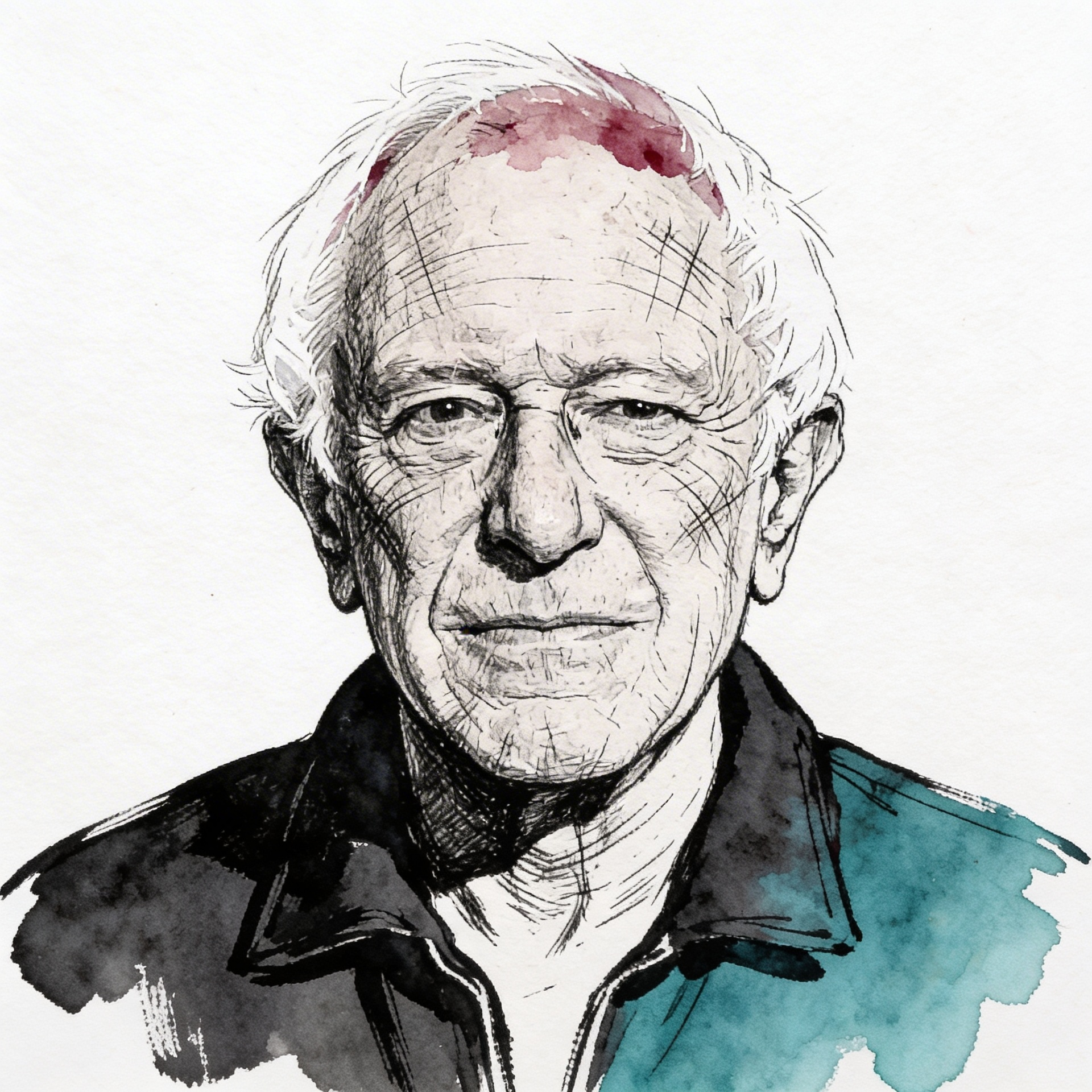
Bernie Sanders
US Senator behind AI data centre moratorium bill and robot tax proposal.
Last refreshed: 9 July 2026 · Appears in 3 active topics
Did Sanders's defeated federal moratorium trigger the state-level data centre freeze wave?
Timeline for Bernie Sanders
Proposed a rival one-time 50% tax on AI-company stock
AI: Jobs, Power & Money: OpenAI offers US a 5% stake, $42.6bnMentioned in: Microsoft's $900M retirement charge obscures 8,750 departures
AI: Jobs, Power & MoneyCo-introduced federal data centre moratorium proposal with Alexandria Ocasio-Cortez
Data Centres: Boom and Backlash: Maine passes first US statewide DC freezeDemocrats kill the Sanders AI moratorium
AI: Jobs, Power & MoneySanders and AOC target AI data centres
AI: Jobs, Power & MoneyBackground
Bernie Sanders is the Independent US Senator for Vermont, caucusing with Democrats since 2007, and a two-time Democratic presidential primary contender (2016, 2020) whose campaigns pushed Universal healthcare and wealth-inequality policy into the mainstream. He chaired the Senate Health, Education, Labor and Pensions (HELP) Committee in 2023-24 and now serves as its ranking member.
Sanders has spent decades as Washington's most vocal champion of working-class economic security, a role that has extended into 2026 legislative campaigns on both AI Labour policy and defence oversight.
On 25 March 2026 Sanders co-introduced the AI Data Centre Moratorium Act with Representative Alexandria Ocasio-Cortez, which would ban new AI data centre construction until Congress passes worker protection, consumer rights, civil rights and environmental legislation. He simultaneously pushed a one-time 50% tax on AI-company stock to fund worker retraining. Both bills are dead: the moratorium was killed by his own party, with Senator Fetterman calling it 'China First' and Warner calling it 'idiocy'.
Yet the moratorium idea has propagated to the states: Maine passed the first US statewide data centre freeze on 22 April 2026, with 12 state legislatures running similar bills.
Sanders's robot-tax proposal remains stalled, but it now sits opposite OpenAI's own idea for capturing AI's windfall: a 5% US government equity stake worth roughly $42.6bn, pitched by chief executive Sam Altman as a public wealth fund modelled on the Alaska Permanent Fund. The two proposals attack the same distributional question from opposite ends, OpenAI offering Washington a permanent equity share and Sanders proposing to tax the windfall once, and Sanders's plan has still not advanced to committee.
Sanders broke ranks with most senators on the Iran conflict, co-signing a letter with 46 senators demanding a public investigation into the Minab school strike, citing Defense Secretary Pete Hegseth's own 'no stupid rules of engagement' statement as context for the inquiry.