Iron Dome
Israeli short-range missile defence that is failing to stop Iran's evolving barrage tactics.
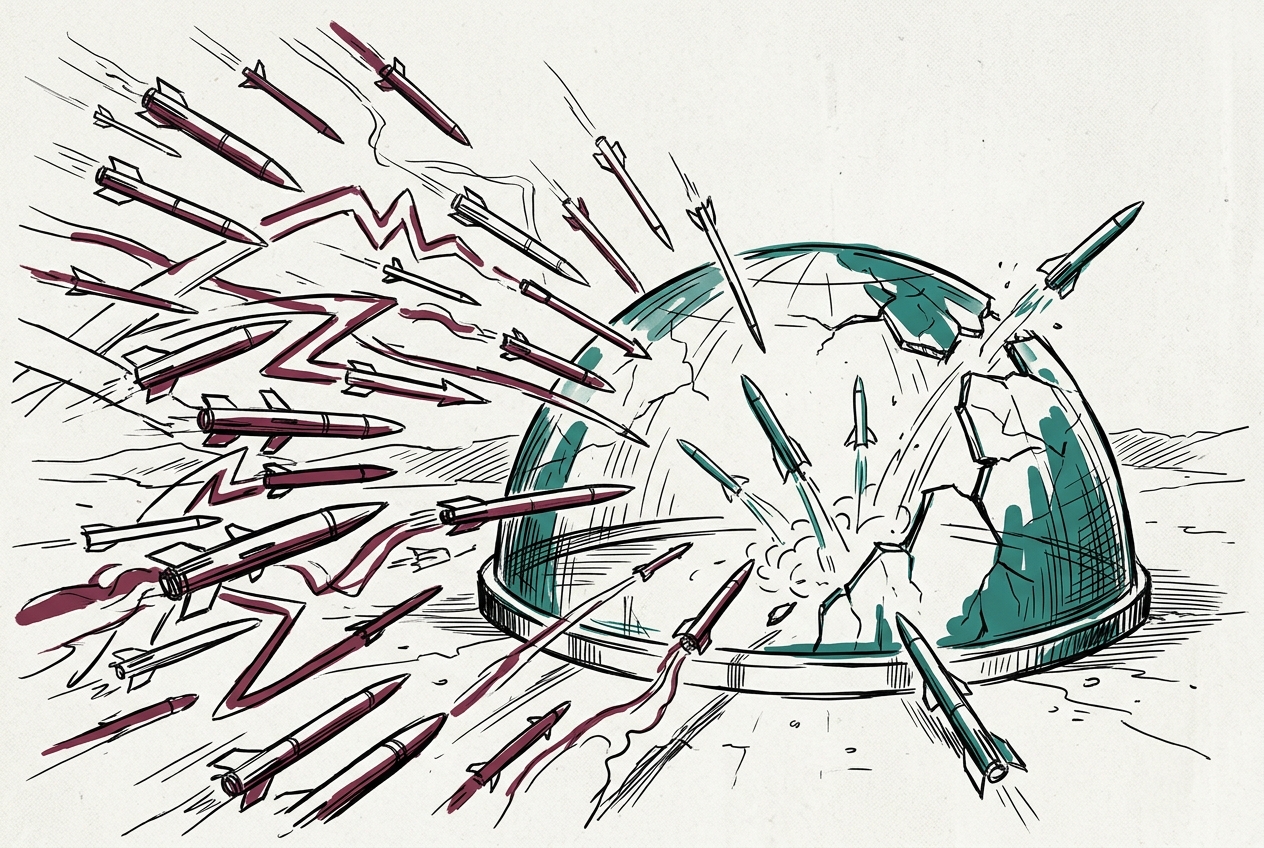
On 14 March, cluster-munition missiles breached Israeli defences, testing Iron Dome's role in protecting populated areas from complex missile attacks.
Last refreshed: 22 September 2026 · Appears in 1 active topic
Can Iron Dome cope with cluster munitions and one-tonne warheads at the same time?
Timeline for Iron Dome
Mentioned in: Russia downs 660 drones in one night
Russia-Ukraine War 2026Mentioned in: Iskander gap exposes the Patriot shortage
Russia-Ukraine War 2026Mentioned in: 85 Shaheds hit Kharkiv before big strike
Russia-Ukraine War 2026Mentioned in: Saudi Arabia left off the Patriot list
Iran Conflict 2026Mentioned in: Bahrain's missile shield runs near empty
Iran Conflict 2026Background
Iron Dome is Israel's short-range missile-defence system. It is designed to protect populated areas from rockets, artillery shells and mortars, forming the short-range layer of a wider national air-defence architecture.
Rafael Advanced Defense Systems developed the system, which entered service in 2011. A battery uses radar, battle-management equipment and Tamir interceptor missiles to identify threats and engage those assessed as dangerous to defended areas.
Its enduring significance lies in the economics and speed of short-range defence. Iron Dome must distinguish between threats quickly enough to protect civilians while preserving interceptors for attacks likely to cause harm. The March 2026 cluster-munition breach showed why that task remains central to Israel's defence planning.
Iron Dome faces a new threat
On 14 March, Iranian cluster-munition missiles breached Israeli defences in a barrage that struck central towns. For Iron Dome, Israel's short-range protective layer, the attack highlighted the challenge of defending civilian areas when a single incoming weapon can create several threats.
On 5 April, the IDF publicly acknowledged air-defence failures at Dimona and Arad after earlier strikes. The admission matters for Iron Dome because its value rests on dependable protection against attacks directed at populated places and critical sites.
What is Iron Dome?
Has Iron Dome failed during the Iran conflict?
What is the difference between Iron Dome, David's Sling, and Arrow-3?
Why is Iron Dome struggling against Iranian missiles in 2026?
How much does an Iron Dome interception cost?
Is South Korea building its own version of Iron Dome?


