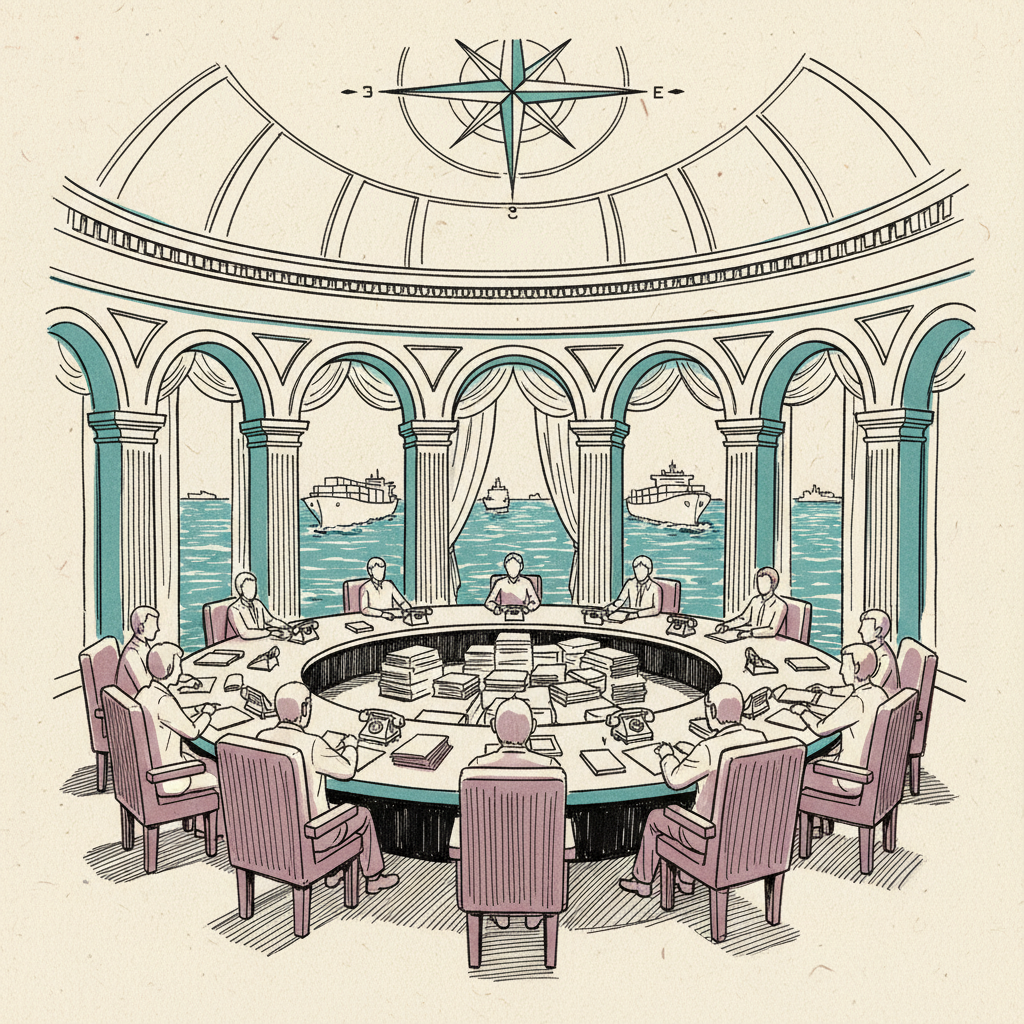
Persian Gulf Strait Authority
Iranian body administering Strait of Hormuz transit permits, fees and compulsory insurance.
On 12 July, the Persian Gulf Strait Authority said passage through Hormuz was "not possible" after the GFS Galaxy strike, putting its claimed control of transit at the centre of the closure dispute.
Last refreshed: 22 September 2026 · Appears in 3 active topics
Does the PGSA insurance mandate make the 60-day charge-free window an enrolment trap?
Timeline for Persian Gulf Strait Authority
Published a non-compliant vessel list that did not include Al Funtas
Iran Conflict 2026: Al Funtas is struck and files no reportPosted that passage through Hormuz was currently not possible
Iran Conflict 2026: IRGC strikes GFS Galaxy, shuts HormuzMentioned in: Hormuz held severe as Guard herds ships
Iran Conflict 2026Mentioned in: Japan reopens Iran oil talks after 2019
Iran Conflict 2026Mentioned in: Hormuz tanker count back to pre-war
Iran Conflict 2026Background
The Persian Gulf Strait Authority is an Iranian state body that administers a claimed permit system for Strait of Hormuz transits. It seeks vessel registration, ownership and cargo documentation, and clearance for an Iranian-designated corridor. Its public portal made those administrative demands operational in May 2026.
The authority turns Iran's maritime claim into a shipping-facing bureaucracy. It has presented passage conditions, fees and Iranian-approved insurance as parts of one system. Its claimed controls remain contested by states and operators that treat the strait as an international transit route.
The PGSA matters because it supplies the paperwork and rules through which Iran can assert recurring control over commercial traffic. On 16 May, Iran's parliamentary security committee publicly backed the fee mechanism and an exclusion for Project Freedom-linked vessels. That institutional role is distinct from a single military closure order.
Its transit claim faces a test
On 12 July, the Persian Gulf Strait Authority said passage through the strait of Hormuz was "not possible" after the GFS Galaxy was struck. The statement put the authority's claimed transit role behind a closure declaration rather than a routine permit process.
Five days earlier, vessels were still being hailed and diverted into an Iranian-controlled northern corridor while the threat level remained severe. For the authority, that operating environment made its corridor rules more consequential, but also tied its administrative system to a route whose safety remained disputed.
Its fees shape passage choices
The authority's fee system remained central to commercial passage after Iran's toll claim became public in June. An Iranian MP said ships were being charged US$1.5m to US$2m, with barter goods or cryptocurrency used outside dollar clearing channels.
On 20 June, the authority added compulsory insurance to Hormuz transits, initially without charge and with fees reserved for August. That moved its role beyond collecting payment: operators faced an Iranian registration and insurance requirement even where international insurers would not provide cover.
Why did Iran make marine insurance compulsory for Hormuz transits?
Has the Islamabad ceasefire deal abolished Iran's Hormuz toll?
Is Iran's Hormuz toll legal under international law?
What are the PGSA's formal boundaries at the Strait of Hormuz?
Which countries have paid Iran's Hormuz tolls?
What is Iran's Persian Gulf Strait Authority and what does it do?
How are Iraq and Pakistan transiting Hormuz without paying the PGSA toll?
Is Project Freedom excluded from the PGSA toll corridor?
Can ships pay Iran's Hormuz toll without violating US sanctions?
Why are Hormuz tolls being paid in Chinese yuan?
How much does it cost to transit the Strait of Hormuz now?
How does the Persian Gulf Strait Authority conflict with international maritime law?
What does MARAD Advisory 2026-004 say about the new Iranian Hormuz permit regime?
Will the Persian Gulf Strait Authority survive a ceasefire or US pause of Project Freedom?
Why did Iran suspend the Hormuz seafarer evacuation corridor?
How many seafarers are stranded after Iran closed the Hormuz corridor?
Has the Persian Gulf Strait Authority declared Hormuz closed?



