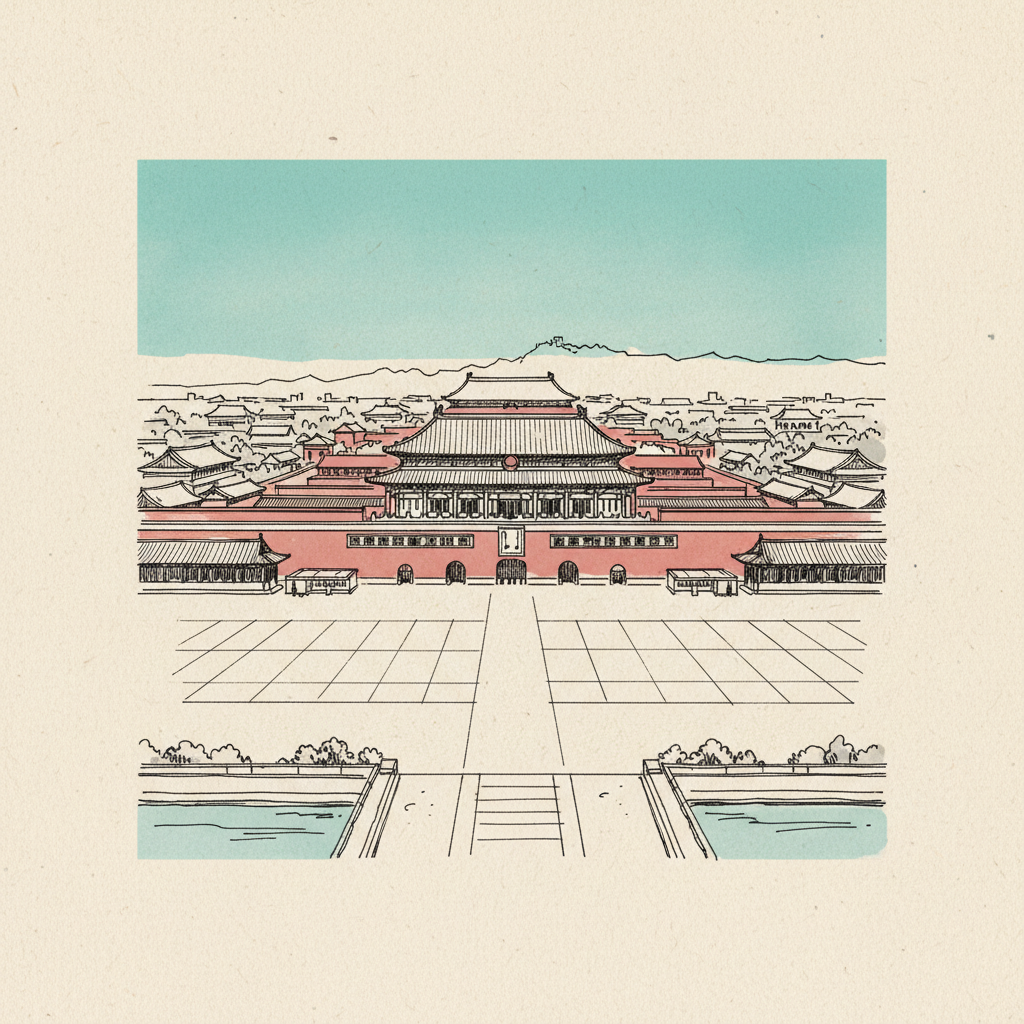
Beijing
Capital of the People's Republic of China; seat of the Communist Party and global diplomatic counterweight.
On 8 September Beijing hosted a Qatari visit to coordinate a restart of Iran talks with China, making Qatar the latest mediator to route Iran diplomacy through the Chinese capital after Pakistan's leaders met Xi Jinping there in May.
Last refreshed: 3 October 2026 · Appears in 2 active topics
How is Beijing shaping the Iran deal without openly backing Tehran?
Timeline for Beijing
Mentioned in: Ten agencies name Beijing firm in hacks
Cybersecurity: Threats and DefencesMentioned in: Treasury names 10 Iran missile suppliers
Iran Conflict 2026Mentioned in: Trump signs Graham Russia sanctions law
Russia-Ukraine War 2026Mentioned in: Russia and China kill Iran's UN monitor
Iran Conflict 2026Mentioned in: UK awards Tekever up to £400m for AR5
Drones: Industry & DefenceBackground
Beijing is the capital of the People's Republic of China and the seat of the Communist Party leadership, the State Council and the central ministries. It is a direct-administered municipality with provincial rank, and its institutions issue the rules that govern China's economy and foreign relations.
Policy signalled from Beijing carries national force. In May 2026 its commerce ministry activated China's Blocking Rules for the first time against US Iran sanctions, while its banking regulator curbed state-bank lending to sanctioned refiners. On 5 August the commerce ministry moved dual-use drone parts bound for the US onto case-by-case export licences.
The capital's travel advice also moves tourism. A Beijing advisory urging citizens to avoid Japan cut Chinese arrivals there by 56.8% to 330,700 in April 2026.
Beijing hosts the Iran mediators
The capital became a waypoint for Iran's mediators in May 2026. On 13 May, the day before the Trump-Xi summit, Beijing publicly backed Pakistan as The Channel between Washington and Tehran. On 25 May Pakistan's prime minister Shehbaz Sharif and Army chief Asim Munir met Xi Jinping there together, Munir having flown in from Tehran two days earlier.
The traffic continued into September. On 8 September Qatar's foreign ministry reported joint work with Chinese officials, during a stop in the capital, on reviving the Iran negotiations. Each visit runs through the leadership in Beijing without a formal Chinese Mediation mandate, which keeps the city a host rather than a guarantor.
Beijing split defiance from bank caution
In May 2026 the ministries in Beijing pulled in two directions. The Ministry of Commerce activated China's 2021 Blocking Rules for the first time, telling five named refiners not to comply with US Iran sanctions, while a separate banking track moved towards caution.
On 25 May the banking regulator, NFRA, ordered the big four state lenders (Bank of China, ICBC, China Construction Bank and Agricultural Bank of China) to stop new lending to five sanctioned refiners, including Hengli, while leaving existing credit lines open. The split let the capital protect refinery operations in domestic law while limiting its largest banks' exposure to US secondary sanctions.
Beijing hosts the Iran mediators
Why did Pakistan's army chief visit Beijing during the Iran conflict?
Who met Wang Yi in Beijing ahead of the Trump-Xi summit?
Beijing split defiance from bank caution
What did China's big four banks do about Iran sanctions in May 2026?
Why did China activate its Blocking Rules against US Iran sanctions in May 2026?
What is Beijing's role in the 2026 Iran sanctions dispute?
Why hasn't China retaliated against US sanctions on Chinese companies?
What is China's Decree 835 and why was it issued?
How is China responding to US Iran war sanctions?
Did Trump reject China as a custodian for Iran's nuclear stockpile?
What is China's Blocking Statute and how does it affect US Iran sanctions?



