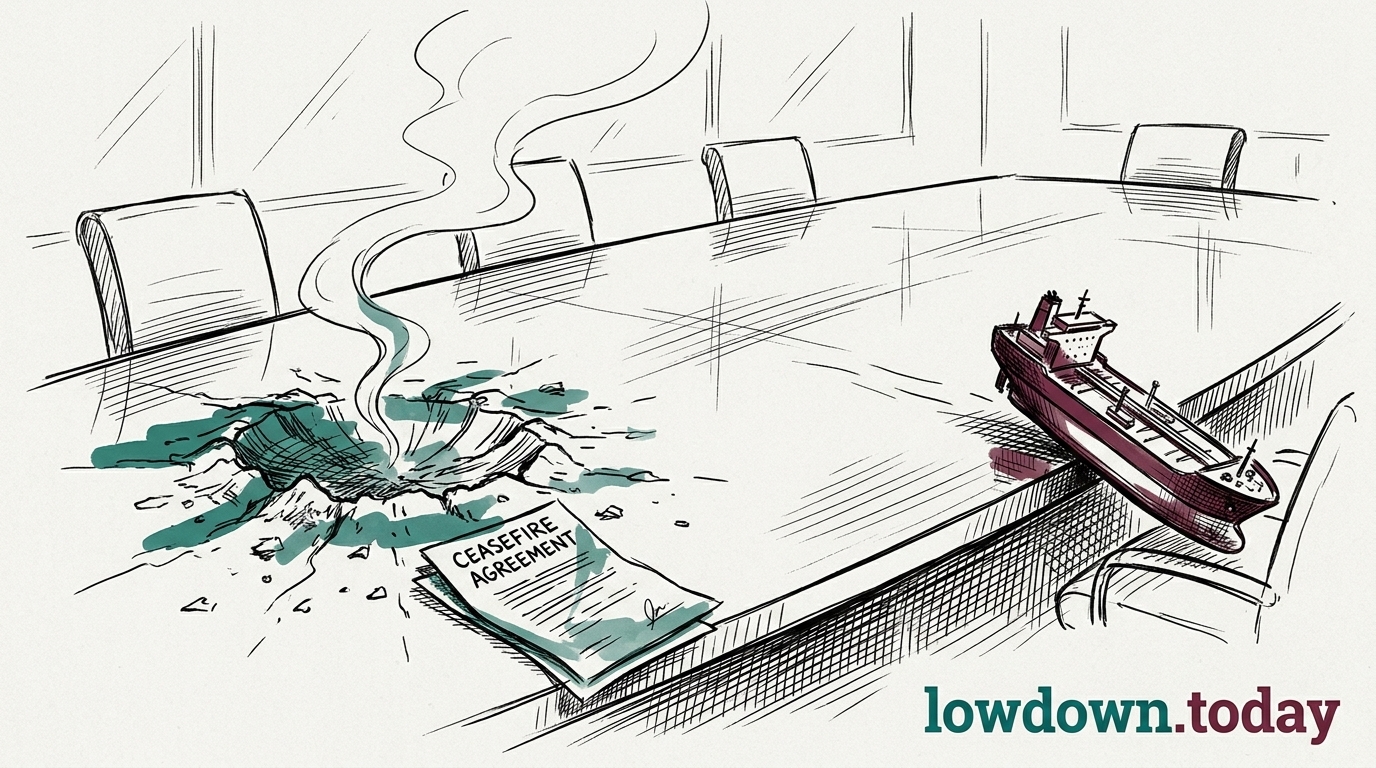
Bahrain, Kuwait, Qatar, Saudi Arabia and the United Arab Emirates (UAE), five Gulf states and not all six, wrote formally to the International Maritime Organization (IMO) around 21 May, telling commercial vessels not to engage Iran's transit route or cross the strait through it1. The IMO is the United Nations agency that sets the safety and security rules for international shipping, which makes it the one forum where Iran's claim to police the waterway meets a body that can answer with rules of its own.
The letter directly answers Iran's Persian Gulf Strait Authority (PGSA), the state body that published controlled-zone coordinates on 20 May reaching into Emirati and Omani waters, and that backs them with the rial-only toll system the Majlis passed the same week. By taking the dispute to the IMO, The Gulf states convert a bilateral stand-off into a regulatory contest, betting that the first credible multilateral text usually holds and later claims negotiate against it.
Qatar signed the rejection while holding the $12 billion in frozen Iranian assets that Tehran has named as its precondition for reopening Hormuz, and while mediating the US-Iran talks. Three roles, and they pull against each other. The mediator Iran depends on is publicly rejecting Tehran's Hormuz doctrine and sitting on the money Tehran most wants released.
The original freeze was a US Treasury instrument, which leaves Doha as the escrow holder rather than the decision-maker. It cannot release the funds without a Washington order, which means the mediator cannot bridge the one gap Tehran cares most about until the United States acts first. That is why the sequencing dispute will not resolve itself, and why a signature on an IMO letter and a seat at the negotiating table can sit, awkwardly, in the same set of hands.


