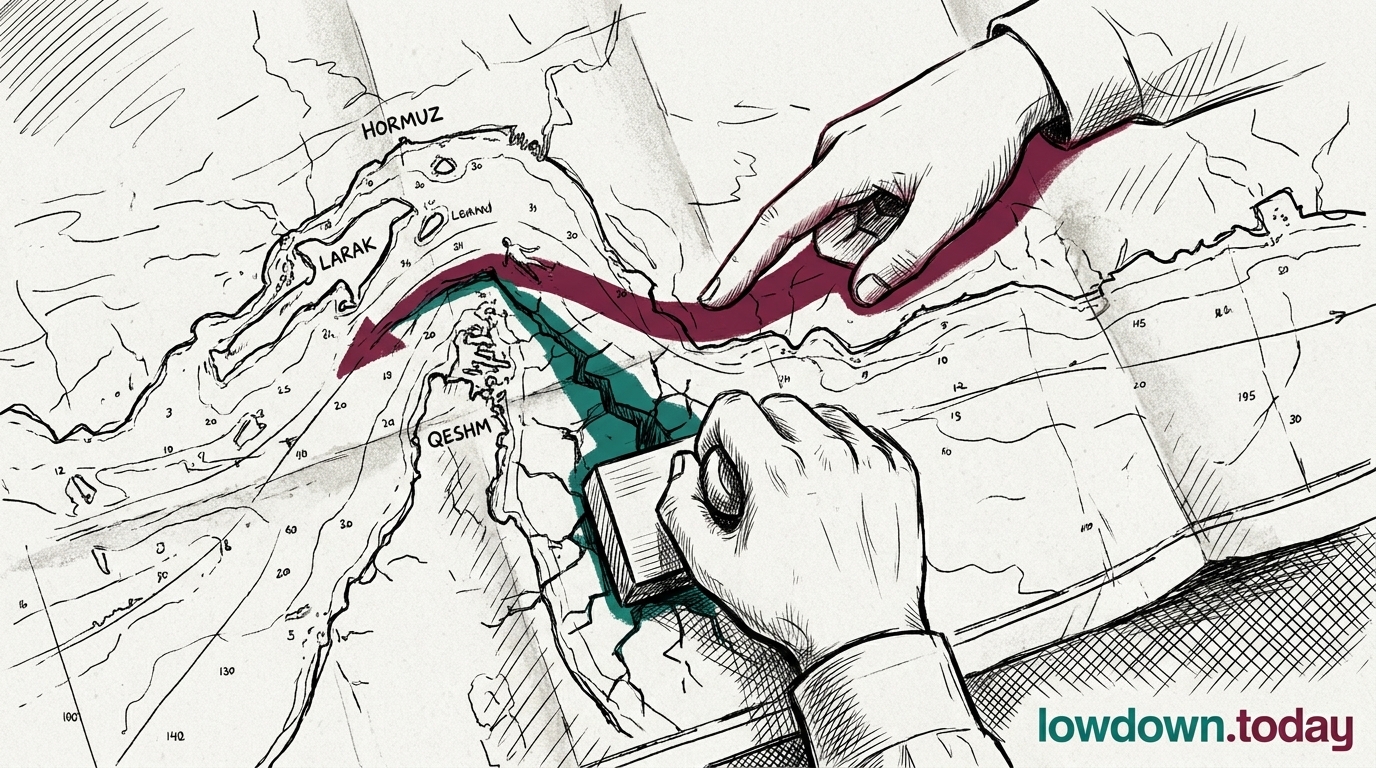
Early on 12 July the Islamic Revolutionary Guard Corps (IRGC) Navy, the naval arm of Iran's ideological military force, attacked the Cyprus-flagged container ship GFS Galaxy in the Strait of Hormuz and left its engine room heavily damaged, according to Gulf wire coverage1. Ten of the eleven Indian crew were rescued; one remains missing2. The IRGC Navy then declared the strait, the 33km channel carrying about a fifth of the world's seaborne oil, closed until further notice.
The Persian Gulf Strait Authority (PGSA), the Iranian body that asserts control over Hormuz passage, posted on X that transit was currently not possible, blaming recent illegal movements of US forces3. Both statements reached us through Iranian state media relayed by English aggregators, not direct Farsi primary sources.
Nine days earlier Muscat and Tehran had agreed to jointly steward Hormuz traffic as daily transits fell to two; the 12 July closure overrides that quiet accommodation and operationalises the Hormuz leverage Russia's Dmitry Medvedev likened to a nuclear weapon at Ali Khamenei's funeral. It also hardens the corridor's first live strike, the IRGC hit on the Qatari carrier Al Rekayyat a week earlier, from a one-off punishment into a standing prohibition. What empties the lane is the insurance market, not the Iranian Navy: war-risk underwriters and the International Group of P&I Clubs, which held their Hormuz war-risk exclusion through that earlier strike, price a contested legal status as harshly as a lawful blockade, so a declaration Tehran cannot lawfully impose still keeps cargoes off the water.
English-language wires name one struck vessel, the GFS Galaxy; Al Jazeera Arabic's readout of the CENTCOM response counts three commercial vessels attacked in the strait4. Neither outlet has reconciled the two counts, and a translation difference does not explain the gap. No English-language primary source has confirmed the higher figure.


