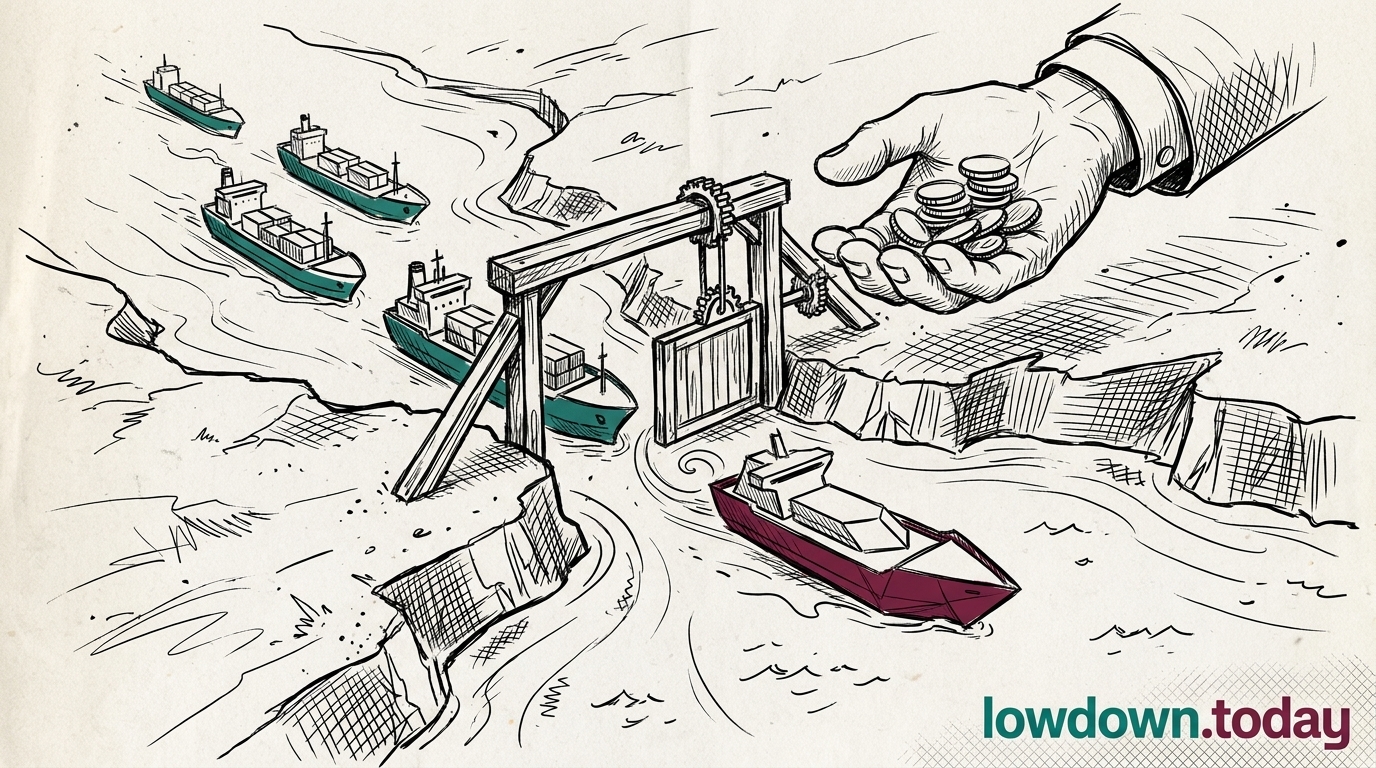
Ebrahim Azizi, chairman of Iran's Majlis National Security and Foreign Policy Committee, posted on X on Saturday 16 May that Tehran has "prepared a professional mechanism" to manage Strait of Hormuz traffic along a designated route, with "necessary fees" collected from cooperating vessels and operators of "the so-called freedom project" expressly barred. The chairman attached no fee schedule, no unveiling date and no parliamentary vote1. The Majlis is Iran's 290-seat Parliament; its National Security Committee is the legislative branch's apex voice on military and foreign policy, and Azizi has chaired it since 2024.
The political claim arrives on top of operational machinery that has been live since early May. The Persian Gulf Strait Authority (PGSA) opened registration at info@pgsa.ir on 6 May and Lloyd's List documented vessels paying up to $2 million per voyage in Chinese yuan. The Iranian Supreme National Security Council finalised the underlying Hormuz security plan and barred US weapons from transit on 13 May, so Azizi's post extends an already-running architecture into a published political claim with a named exclusion class.
That exclusion class is the legal flashpoint. Project Freedom, the US operational umbrella Donald Trump announced on Truth Social before pausing in early May, is precisely the kind of military mission Article 38 of the 1982 UN Convention on the Law of the Sea treats as guaranteed transit passage for all flags. By naming a sovereign exclusion list in writing, Azizi puts the Majlis directly across from the 26-nation Hormuz coalition signed in Bahrain and Qatar on 12 May, whose mandate is built on that same Article 38 guarantee. Four separate Iranian institutions, the SNSC, the IRGC, the PGSA and now the Majlis security committee, are converging on a single Hormuz posture: selective accommodation policed by guided coordination through declared minefields.


