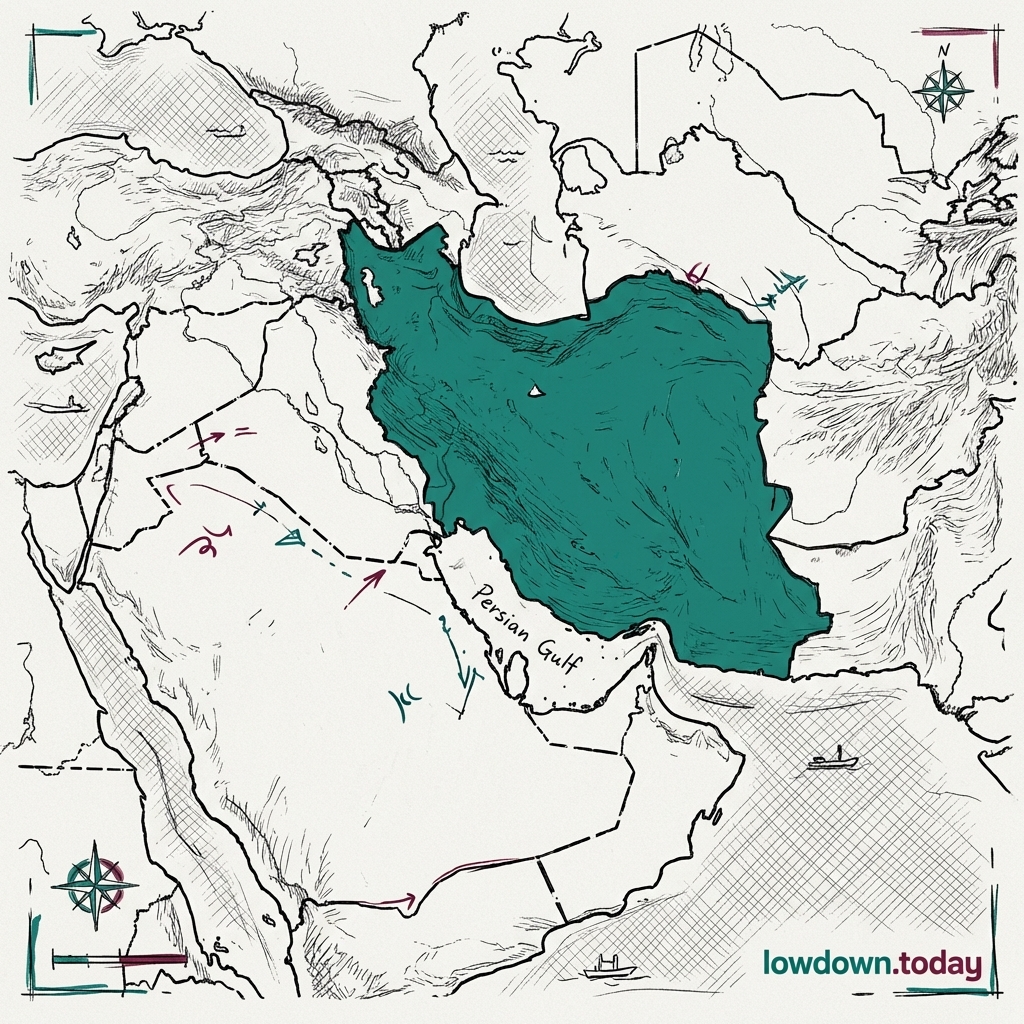
Iran
The Islamic Republic of Iran; theocratic OPEC-member state ruled by its Supreme Leader.
On 20 September, Iran's parliament received a bill to leave the Nuclear Non-Proliferation Treaty, though no withdrawal notice has begun the treaty clock.
Last refreshed: 22 September 2026 · Appears in 10 active topics
Why did Washington reimpose the Hormuz blockade it had only just lifted?
Timeline for Iran
Hanged both men and announced it through its judiciary outlet
Iran Conflict 2026: Iran hangs two men over Mashhad unrestLoaded no crude in the Gulf for the whole of September
Iran Conflict 2026: Iran loads no crude for a whole monthOFAC publishes the licence it revoked
Iran Conflict 2026Mentioned in: US flies its last troops out of Erbil
Iran Conflict 2026Mentioned in: Treasury names 10 Iran missile suppliers
Iran Conflict 2026Background
Iran is the Islamic Republic of Iran, a theocratic state on the northern shore of the strait of Hormuz. Its political system combines elected institutions with clerical authority centred on The Supreme Leader. The regular Artesh and the Islamic Revolutionary Guard Corps operate as separate military structures.
Iran's geography gives it lasting weight in Gulf security and energy trade. the strait of Hormuz is a principal route between The Gulf and the open ocean, making Iranian policy towards navigation important to nearby states and oil exporters. On 16 August, Iran's parliament asserted a role in managing the strait alongside the executive and foreign ministry.
Iran also remains a significant subject of international nuclear diplomacy and sanctions policy. Its programme, regional military links and energy exports ensure that decisions taken in Tehran affect relations with Gulf states, European governments, Russia, China and the United States.
Iran faces renewed nuclear scrutiny
On 1 September, the International Atomic Energy Agency said it still could not verify Iran's nuclear material and called access to the Isfahan plant urgent. That leaves Tehran's programme under a monitoring gap that one later inspection cannot simply erase.
On 9 September, the agency's Board of Governors referred Iran to the UN Security Council by 23 votes to three, with eight abstentions. Russia and China opposed the referral and can veto later binding measures, but the vote placed Iran's nuclear file back before the Council for the first time in two decades.
Iran retains Hormuz leverage
On 9 September, Iran declared a restricted maritime area from Chabahar into The Gulf of Oman without publishing coordinates. The absence of a boundary left shipping firms and insurers unable to plot the warning, but it kept Tehran central to decisions on traffic near its coast.
On 14 September, Iranian officials met Gulf states in Oman to discuss SAFE passage through the strait of Hormuz. Tehran said the route was the talks' only subject, keeping sanctions, tanker exchanges and the nuclear file outside that channel.
Iran faces renewed nuclear scrutiny
What does 'loss of continuity of knowledge' mean for Iran's nuclear programme?
Reference
What is the Islamabad MOU between Iran and the US?
What is the IRGC and why does it matter?
Recently resolved
Why did Iran get knocked out of the 2026 World Cup despite not losing their last match?
Did Iran stop retaliating against US forces in July 2026?
Has the US Treasury sanctioned anyone linked to Iran's Supreme Leader directly?
Did anyone die when Iran attacked tankers in July 2026?
When was Ali Khamenei finally buried?
What is Iran's current Supreme Leader position on the nuclear deal?
How much has Iran's oil revenue fallen since the war began?
What happened at the Doha Iran peace talks in May 2026?
What is the current status of Iran's nuclear programme?
What happened at Barakah nuclear plant on 17 May 2026?
When did the Iran-US war begin and how long has it lasted?
What is Araghchi's Iran counter-proposal to the US?
Why did the US reimpose the Hormuz naval blockade in July 2026?
What is Iran's position on the Strait of Hormuz talks?
How does Iran's economy survive under wartime sanctions?
Who actually controls Iran now that Khamenei is dead?
How long has Iran's internet been shut down?
What is OFAC General License U and why did it lapse?
Did the US-Israeli strikes destroy Iran's nuclear programme?
Who is Iran's Supreme Leader now?
Is the IAEA locked out of Iran's nuclear sites?
What started the Iran war in 2026?


