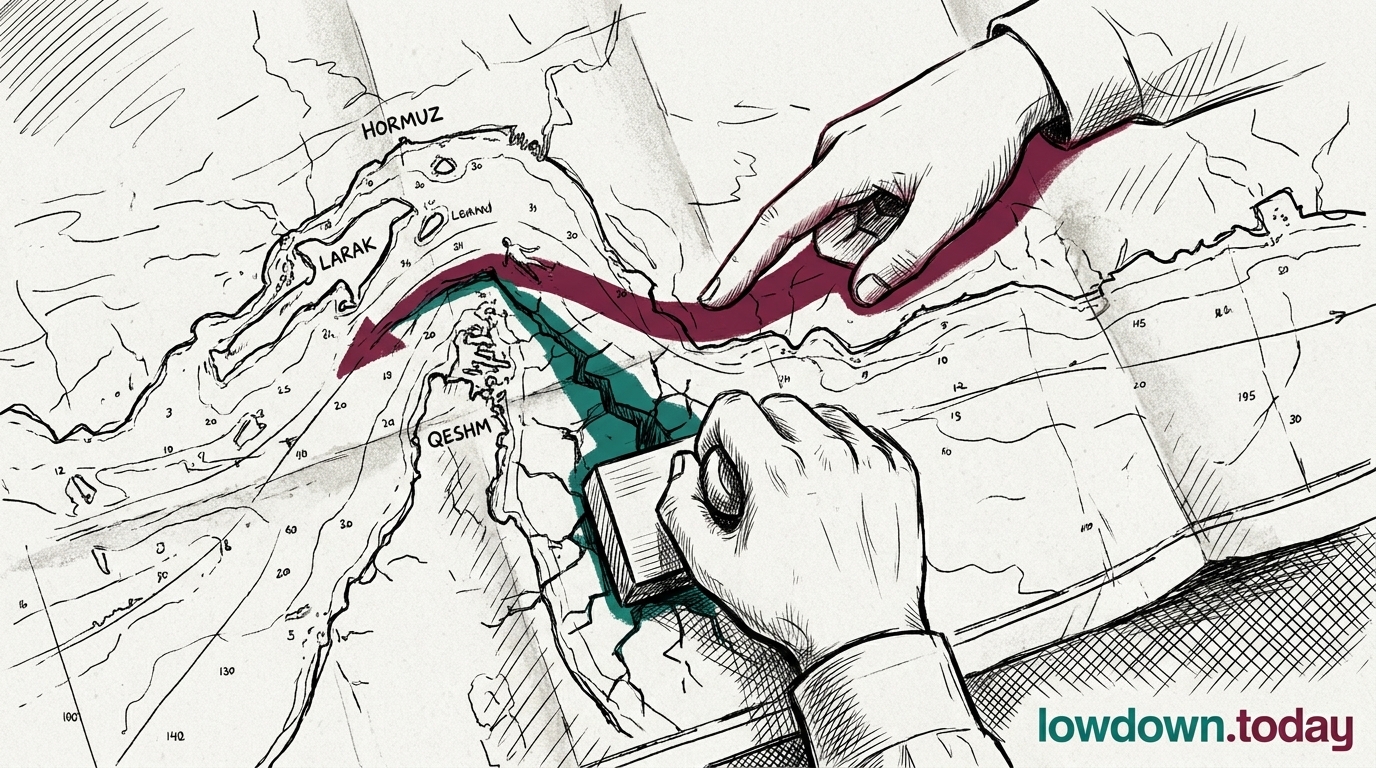
CENTCOM (US Central Command), the US military command responsible for the Middle East, launched its third strike wave of the week within hours of Iran's closure declaration, hitting roughly 140 targets: missile batteries, air-defence sites, IRGC fast-attack boats and positions on Qeshm Island1. The wave took the week's running total past 300, and CENTCOM called the strait open to all vessels seeking to lawfully transit the international waterway2. Iranian Navy Lieutenant Hamidreza Dehghani was reported killed at Jask port, per Iranian state media3.
Those figures and the open-strait line reached us through Al Jazeera and Iran International secondary readouts; CENTCOM's own release was unreachable4. President Donald Trump, who days earlier had called the interim US-Iran agreement over, told Meet the Press the strait was open as far as he was concerned. Iran, firing missiles and posting a formal notice, calls the water shut; Washington, flying sorties and issuing a sentence, calls it open.
CENTCOM's third wave extends a cadence already run twice this week, 90 targets on 8 July and more than 80 on 7 July. The only signed US instrument on Iran across that whole sequence remains the Treasury's 7 July revocation of the oil waiver General License X, replaced by a wind-down-only General License X1. A revocation withdraws relief; it does not create a new authority, so no War Powers Resolution clock attaches to this week's strikes and Congress gains no fresh signed record to grip.
Between 11 and 13 July Washington flew about 140 sorties and signed no new Iran instrument5. The Federal Register carries no fresh Iran document, the Office of Foreign Assets Control (OFAC), Treasury's sanctions bureau, logged its last Iran action on 10 July, and The White House presidential-actions register stops at a 9 July aircraft-tariff proclamation678. Allies and insurers reading for a durable US position on Hormuz have statements to plan against, not a signed framework.


