Skip to content
You can now search across every topic, entity and event.What's new
Iran Conflict 2026
26APR

Five vessels, no AIS: Hormuz goes dark

3 min read
13:59UTC

All five vessels that transited the Strait of Hormuz on Thursday 23 April had AIS suppressed, the blockade's first fully dark crossing day, Lloyd's List confirmed.

ConflictDeveloping
Key takeaway

P&I withdrawal has emptied Hormuz of legal traffic; no JWC redesignation is on the underwriting calendar.

All five vessels that transited the Strait of Hormuz on Thursday 23 April were running with their Automatic Identification System (AIS) suppressed, the first day of zero AIS-visible crossings since the blockade began, Lloyd's List confirmed 1. AIS is the maritime safety beacon required by the International Maritime Organisation that broadcasts a vessel's identity, position and heading; suppressing it is a deliberate act, normally penalised by port-state controls. Lloyd's List is the trade journal of the global shipping industry and the first-resort source for war-risk insurance pricing.

The cause sits in the London insurance market rather than the Iranian gunline. The five major Protection and Indemnity (P&I) clubs (Gard, Skuld, NorthStandard, London P&I and the American Club) cancelled war-risk cover for Iranian waters from around 5 March 2026. The London Joint War Committee (JWC), the underwriting body that designates global war-risk zones, expanded its zone to include Bahrain, Kuwait, Oman, Qatar and Djibouti; war-risk premiums have risen tenfold to what Lloyd's List describes as "double-digit millions per trip". An insured vessel that loses its P&I cover loses port-of-call access, charterer indemnities and the ability to transit a Suez or Panama queue without underwriter sign-off.

Insured tonnage has therefore stopped trying. The only ships still moving through Hormuz are sanctioned dark-fleet hulls operating outside legal insurance frameworks , which is the population CENTCOM's 33-vessel intercept count is being measured against. Both numbers describe a strait that has self-organised to be invisible. For European, Korean, Japanese and Indian flag tonnage, the strait of Hormuz is closed in commercial terms until either the JWC redesignates the war zone or the P&I clubs reinstate cover, neither of which is on the underwriting calendar.

The 5 March P&I withdrawal was a private commercial decision that has functioned as a more durable blockade than CENTCOM's enforcement. War-risk underwriting, not naval power, has emptied the chokepoint.


Deep Analysis

In plain English

When ships carry cargo across the world's oceans, their owners pay insurance to cover damage or loss. The companies that provide this insurance, called P&I clubs, cancelled their coverage for ships going through the Strait of Hormuz in early March. Without insurance, shipping companies cannot get permission to use major international ports, cannot get cargo contracts from big oil companies, and cannot get financing from banks. So even if there were no navy ships trying to stop them, commercial tankers and cargo ships cannot legally or financially complete a Hormuz transit. The ships that are still going through are the 'dark fleet' vessels that never had legitimate insurance to begin with, operating outside the normal rules of international shipping.

Deep Analysis
Root Causes

P&I clubs operate as mutual insurers: their reserves are funded by member premiums, not external capital. A single total-loss event in the JWC war zone would trigger reinsurance calls on Lloyd's syndicates that are themselves capitalised to handle a pre-war risk distribution, not a wartime total-loss scenario. The clubs' March 2026 withdrawal was a capital-adequacy response: their reinsurance treaties required them to exit a war zone once designated.

The **JWC**'s designation of Bahrain, Kuwait, Oman, Qatar and Djibouti alongside the existing Iranian-waters designation created an unprecedented contiguous war-zone footprint. Under standard reinsurance terms, continued cover across that footprint became untenable, forcing even clubs that might have negotiated individual endorsements to exit the entire zone simultaneously.

What could happen next?
  • Meaning

    If a VLCC is lost in the JWC war zone, the reinsurance call on Lloyd's syndicates could exhaust the reserves of multiple P&I clubs simultaneously, triggering a global shipping-insurance liquidity crisis that would extend the commercial closure of Hormuz well beyond the end of any military engagement.

    Short term · Assessed
  • Meaning

    The JWC's expanded war-zone designation covering five additional Gulf states means European, Korean and Japanese flag tonnage cannot transit the entire Gulf region without war-risk endorsements, effectively closing the Gulf to insured shipping rather than just Hormuz.

    Short term · Assessed
  • Meaning

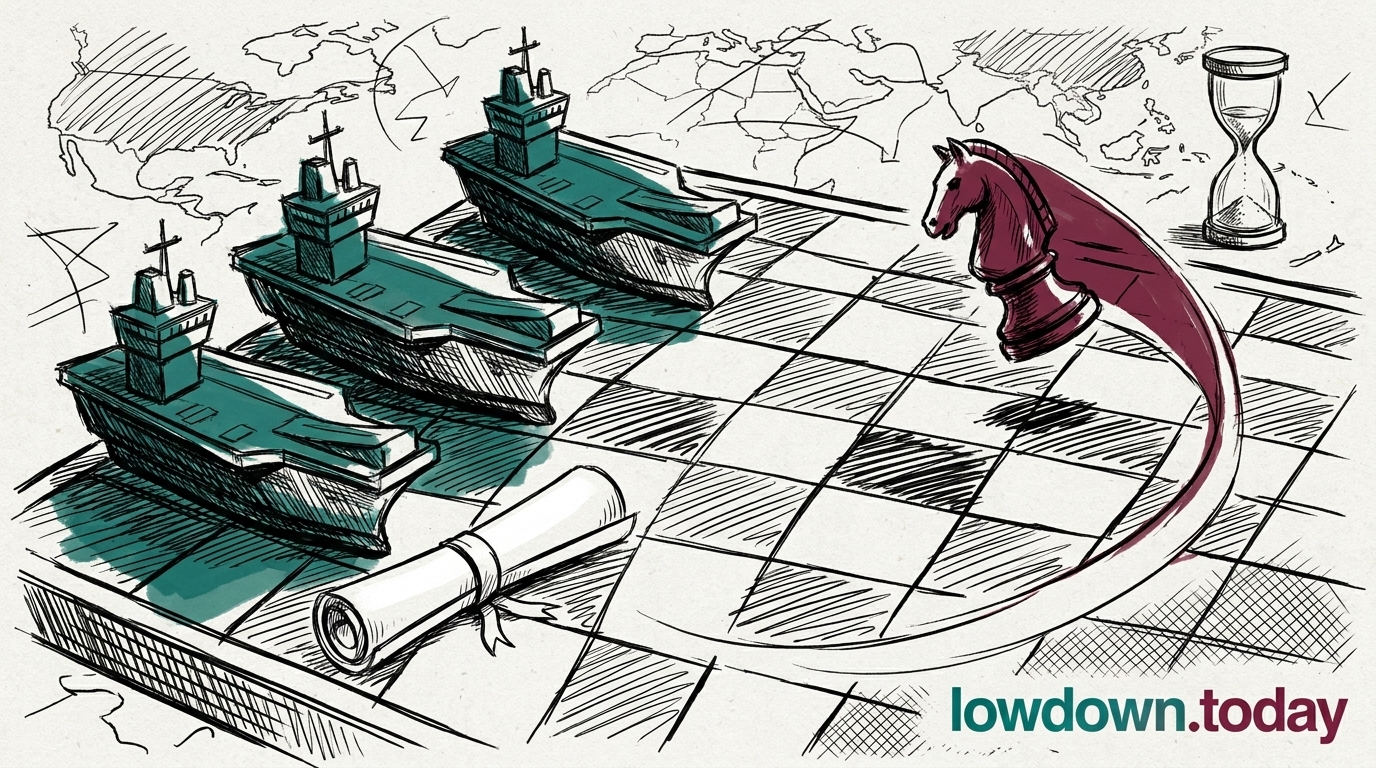
    A redesignation of the JWC war zone is the most commercially impactful single policy action available; it requires the JWC to judge that the military risk has reduced, a judgment that cannot be made while three US carrier strike groups are in theatre with no signed rules of engagement.

    Short term · Assessed
First Reported In

Update #80 · Three carriers, zero instruments

Lloyd's List· 26 Apr 2026
Read original
Different Perspectives
India
India
New Delhi has a national unaccounted for among GFS Galaxy's eleven-strong Indian crew, turning a standoff over transit rights into a consular emergency for a state with no seat at either table.
Oman
Oman
Muscat's 9 July arrangement to jointly manage Hormuz traffic with Iran, outside the frozen US channel, is overridden within days by Tehran's own unilateral closure and strike on GFS Galaxy.
Qatar
Qatar
Doha keeps mediating from an exposed position: Al Udeid hosts the CENTCOM strikes it is trying to broker a stand-down around, a week after a Qatari carrier was itself hit in the strait.
United States / CENTCOM
CENTCOM flew a third strike wave in a week, roughly 140 targets, killed Lieutenant Dehghani at Jask, and insists the strait remains open. It signed no instrument making that claim enforceable against Iran's closure.
Iran / IRGC
Iran / IRGC
Tehran struck GFS Galaxy and declared Hormuz closed, reasserting IRGC toll authority after its Oman-brokered management track failed to bind Washington to anything. The strike restores unilateral control after days of a negotiated alternative gaining ground.
Russia
Russia
Grossi's non-confirmation came from Kaliningrad, hours after Rosatom, the state agency that built and fuels Bushehr, hosted his talks. A refusal delivered from inside Russia's own nuclear orbit carries weight a Western capital could not manufacture, though Moscow itself made no statement on Iran's strike claim.



