If a drone reached Barakah's perimeter, what stops the next one reaching a reactor building?
Timeline for Barakah Nuclear Power Plant
IAEA welcomes Barakah Unit 3 power back
Iran Conflict 2026UNSC at Barakah: red line invoked
Iran Conflict 2026Mentioned in: Brent at $111, IEA at $106: the $5 gap
Iran Conflict 2026Mentioned in: Brent breaks $110, ADNOC bypasses Hormuz
Iran Conflict 2026Mentioned in: Drone hits perimeter of Barakah nuclear plant
Iran Conflict 2026Background
The Barakah Nuclear Power Plant became the focus of acute international concern on 17 May 2026, when three drones crossed the UAE's western border; one struck a generator on the plant's perimeter, while UAE air defences intercepted the other two. The UAE Ministry of Defence confirmed no radiation leak and no injuries. The IAEA issued a statement of 'grave concern' without naming a perpetrator. Brent Crude surged to $110.30 on the following trading day as markets assessed the implications of a drone reaching a nuclear facility.
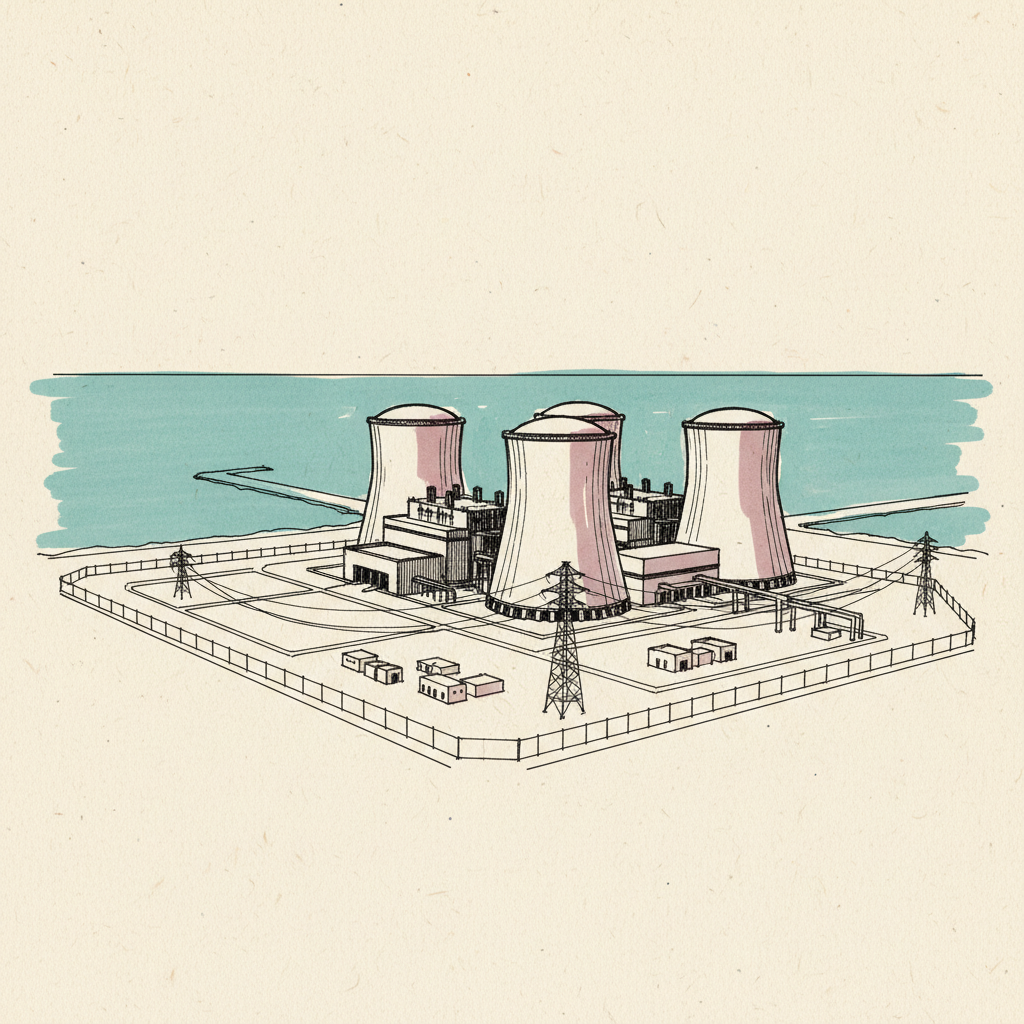
Barakah is the Arab world's first operational nuclear power plant, located on a remote stretch of coastline in Abu Dhabi's Al Dhafra region, roughly 53 kilometres south-east of Ruwais on the Arabian Gulf. It comprises four APR-1400 pressurised water reactors, each rated at approximately 1,400 megawatts, built by South Korea's Korea Electric Power Corporation (KEPCO) and operated by the Emirates Nuclear Energy Corporation (ENEC). Units 1 and 2 reached commercial operation in 2021 and 2022 respectively; Units 3 and 4 were in staged commissioning during the conflict period. Full four-reactor capacity would supply approximately 25 per cent of the UAE's electricity demand.
The drone strike on Barakah's perimeter is without precedent in the history of nuclear facilities: no reactor complex had previously been physically struck during an active armed conflict at this scale, although the Russian capture of Zaporizhzhia in Ukraine had raised comparable IAEA concerns in 2022. The strike's significance extends beyond immediate damage — it establishes that non-state or state-directed actors can reach a nuclear facility, setting a precedent for future conflict escalation thresholds and forcing every IAEA member with civilian nuclear infrastructure to reassess perimeter-defence requirements.
Was there a nuclear accident at Barakah in 2026?
Who built the Barakah nuclear power plant in the UAE?
How much electricity does Barakah produce?
Where is the Barakah nuclear plant located in the UAE?
What did the IAEA say after the Barakah drone strike?

