Skip to content
You can now search across every topic, entity and event.What's new
Iran Conflict 2026
10AUG

Day 164: Iran replaces the man who set its terms

4 min read
23:27UTC

Iran's security council published six conditions for reopening the Strait of Hormuz on Saturday. A day later the secretary who signed them resigned, and on Monday the Supreme Leader signed six military decrees, two of them formalising commands already being exercised. Washington's only new instrument in the same window was a sanctions listing aimed at crypto exchanges rather than ships.

Key takeaway

Iran and the United States changed personnel and financial tools while keeping their Hormuz terms apart.

This briefing mapped
Diplomatic
Domestic
Economic
Military
Regulatory

Mohammad Bagher Zolghadr set out six conditions on 8 August before Iran will reopen the Strait of Hormuz, beginning with an end to American military action.

Sources profile:This story draws on neutral-leaning sources

Mohammad Bagher Zolghadr, then secretary of Iran's top security council, set six conditions on 8 August for reopening the strait of Hormuz. Washington must end its military action, lift the naval blockade and withdraw its forces. It must also pay war damages, lift sanctions and release Iran's frozen assets.

Not one condition concerns pilotage or traffic rules, so no shipping arrangement opens the waterway by itself. Tehran had already demanded $12bn in frozen assets back in May. 

President Masoud Pezeshkian appointed Mohsen Rezaei secretary of the Supreme National Security Council on 9 August, a day after his predecessor published Iran's terms for Hormuz.

Sources profile:This story draws on neutral-leaning sources

Mojtaba Khamenei issued six senior military appointments in Tehran on 10 August. Two of them formalise commands the officers were already exercising.

Sources profile:This story draws on neutral-leaning sources

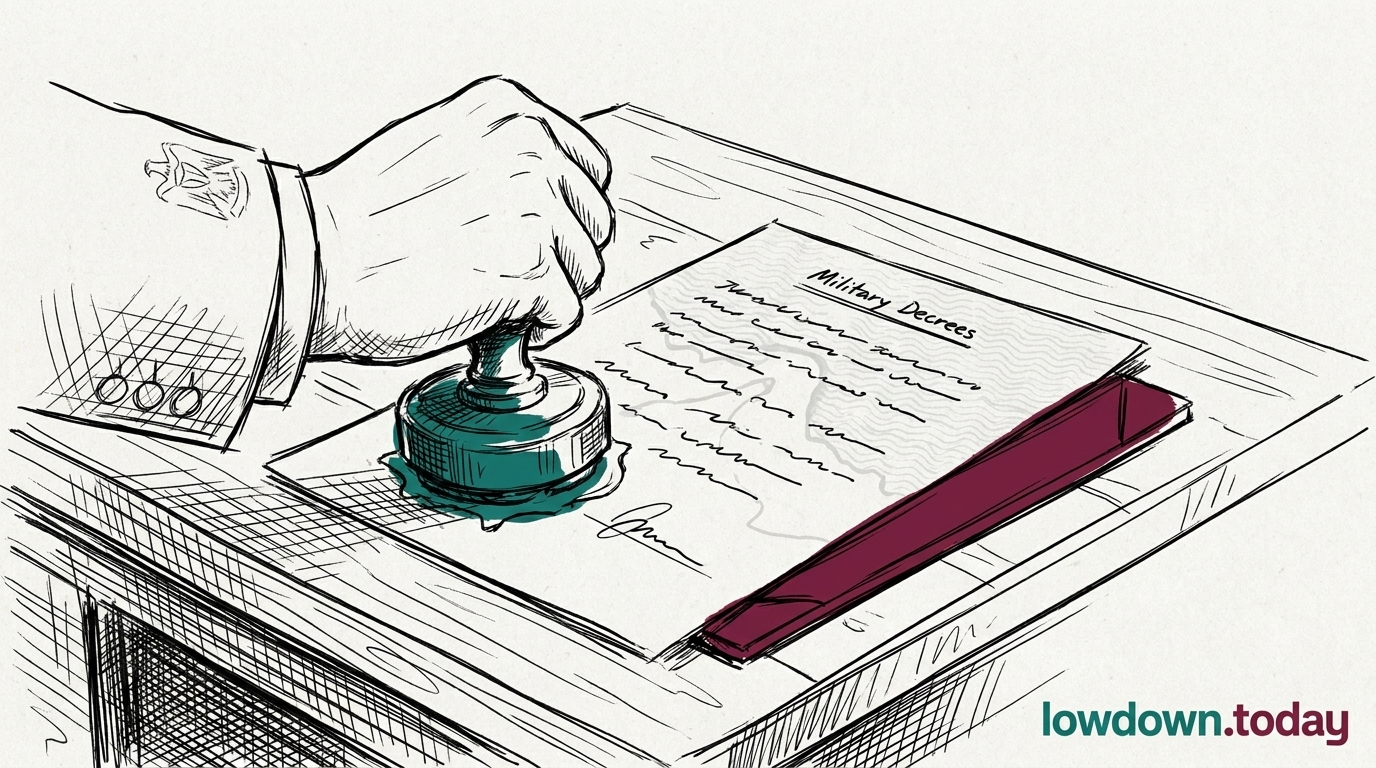
Mojtaba Khamenei signed six military decrees in Tehran on 10 August. They cover the armed forces chief of staff and his deputy, the Revolutionary Guard commander and deputy, a naval commander and the Basij militia head.

Two of the six change nothing operationally. Ali Ozamaei has commanded the Guard's navy since early July, and Ahmad Vahidi has led the Guard throughout the war. Monday supplied paperwork Iran had been skipping. 

Esmaeil Baqaei said on 10 August that transit fees are not under discussion with Oman, and named the four areas that are: monitoring, environment, maritime services and crime.

Sources profile:This story draws on neutral-leaning sources

Foreign ministry spokesman Esmaeil Baqaei said on 10 August that transit fees are not under discussion in Iran's shipping route talks with Oman. He listed four areas under discussion: monitoring, environmental protection, maritime services and crime.

Those headings are the first published detail of a bilateral channel Baqaei first described in May. A joint statement still waits on technical points, and neither Muscat nor Washington has confirmed the arrangement. 

Lloyd's List Intelligence counted 84 weekly transits through the Strait of Hormuz on 7 August, up from 45. A normal week carries more than 700.

Sources profile:This story draws on centre-leaning sources from United States
United States
LeftRight

Weekly transits through the strait of Hormuz reached 84 in the week to 7 August, up from 45. Lloyd's List Intelligence supplied the count, relayed by the Associated Press. A normal week carries more than 700 vessels.

Traffic almost doubled and the strait still runs at roughly an eighth of normal. Lloyd's List has not published the split between tankers and general cargo, so the rise cannot yet be read as energy trade returning. 

The United Arab Emirates said on 8 August that an Iranian missile targeted a ship owned by ADNOC in the Strait of Hormuz. ADNOC reported no casualties.

Sources profile:This story draws on centre-leaning sources from United States
United States
LeftRight

OFAC designated five Iranian individuals and ten entities on 7 August, including exchanges in Tehran and Dubai and three published digital-asset addresses.

Sources profile:This story draws on neutral-leaning sources

The United States Treasury designated five Iranian individuals and ten entities on 7 August. The list names Aban Tether Exchange in Tehran, Titan Exchange in Dubai, and digital-asset firms registered in Georgia and Poland. Treasury also published three crypto addresses for one Dubai-registered firm.

Treasury sanctioned two Iranian marine insurers on 30 July, pressure that only works if port states enforce it. A published wallet address blocks at every compliance desk immediately, wherever the counterparty sits. 

Le Monde says Saudi Arabia, Pakistan and Turkey signed a defence agreement in Mecca on 7 August treating an attack on one as an attack on all. No signatory has published the text.

Sources profile:This story draws on centre-left-leaning sources from France
France

Le Monde reported on 10 August that Saudi Arabia, Pakistan and Turkey signed a defence agreement in Mecca on 7 August. The paper says the text treats an armed attack on one signatory as an attack on all three.

No signatory has published any wording, and the report is an editorial rather than a document. Saudi, Pakistani and Turkish official channels carried nothing, so the mutual-defence clause is reported and not verified. 

Sources:Le Monde

SABA reports at least 17 soldiers killed at Saudi-backed camps in eastern Yemen, and Kpler data shows tankers thinning out of the Bab el-Mandeb.

Sources profile:This story draws on centre-leaning sources from United States
United States
LeftRight

President Masoud Pezeshkian said on 10 August that he had met Supreme Leader Mojtaba Khamenei for about seven hours and found him in full health.

Sources profile:This story draws on neutral-leaning sources

President Masoud Pezeshkian said on 10 August that Supreme Leader Mojtaba Khamenei is in full health. Pezeshkian described their meeting in Tehran as running about seven hours.

Israeli and Arab outlets reported in April that Khamenei had undergone three leg surgeries and suffered severe facial burns. Both accounts are attributed to named outlets and neither has been independently confirmed. Khamenei has not appeared on audio or video since taking office in March. 

Closing comments

Sideways: Oman's route talks can reduce operational risk, but passage will not normalise unless the Supreme National Security Council changes the 8 August 2026 conditions or Washington changes its military, sanctions or asset position. A published Saudi-Pakistani-Turkish pact, if confirmed, would add a separate military decision point for Riyadh, Islamabad and Ankara.

Different Perspectives
Iran's Supreme National Security Council
Iran's Security Council published six conditions for reopening Hormuz, including sanctions relief and frozen assets. Tehran treats maritime access as part of a wider settlement rather than a shipping-only arrangement.
Oman
Oman
Oman and Iran agreed discussions on monitoring, environmental protection, maritime services and crime, while excluding transit fees. Muscat's role is operational mediation, but it cannot settle demands directed at Washington.
United Arab Emirates
The UAE said an Iranian missile targeted an ADNOC-owned vessel on 8 August. Abu Dhabi's claim puts its state energy fleet inside the dispute, though the incident's details remain unresolved.
United States Treasury
The US Treasury designated five Iranian individuals and ten entities, including crypto exchanges and wallet addresses, on 7 August. Washington is applying financial pressure while Iran asks for sanctions relief before reopening Hormuz.
Shipping and insurance market
Lloyd's List Intelligence counted 84 Hormuz transits in the week to 7 August, against more than 700 in normal conditions. Vessel operators and underwriters need verified passage rules and a lower attack risk before regular sailings return.
Yemen's internationally recognised government and affected communities
SABA reported at least 17 soldiers killed at Saudi-backed camps in eastern Yemen as tanker use of Bab el-Mandeb fell. The fighting adds civilian and supply risks to a route ships use when Hormuz is unsafe.
