
Skip to content
You can now search across every topic, entity and event.What's new
Iran Conflict 2026
12AUG

Day 166: The war moved from the air to the water

2 min read
14:52UTC

No US strike inside Iran has been reported since 29 July, by CENTCOM, by Press TV, by Al Jazeera or by Middle East Eye. In the same fortnight a US Navy helicopter put two Hellfire missiles into a merchant ship in the Gulf of Oman, Houthi missiles killed six people in the Bab el-Mandeb, and every identified non-Iranian tanker crossing Hormuz ran with its transponder switched off. Mohsen Rezaei, Iran's new security chief, raised the price of reopening the strait.

Key takeaway

Iran hardened its Hormuz reopening price the same day the US disabled a blockade-running ship by missile strike.

This briefing mapped
Military
Diplomatic

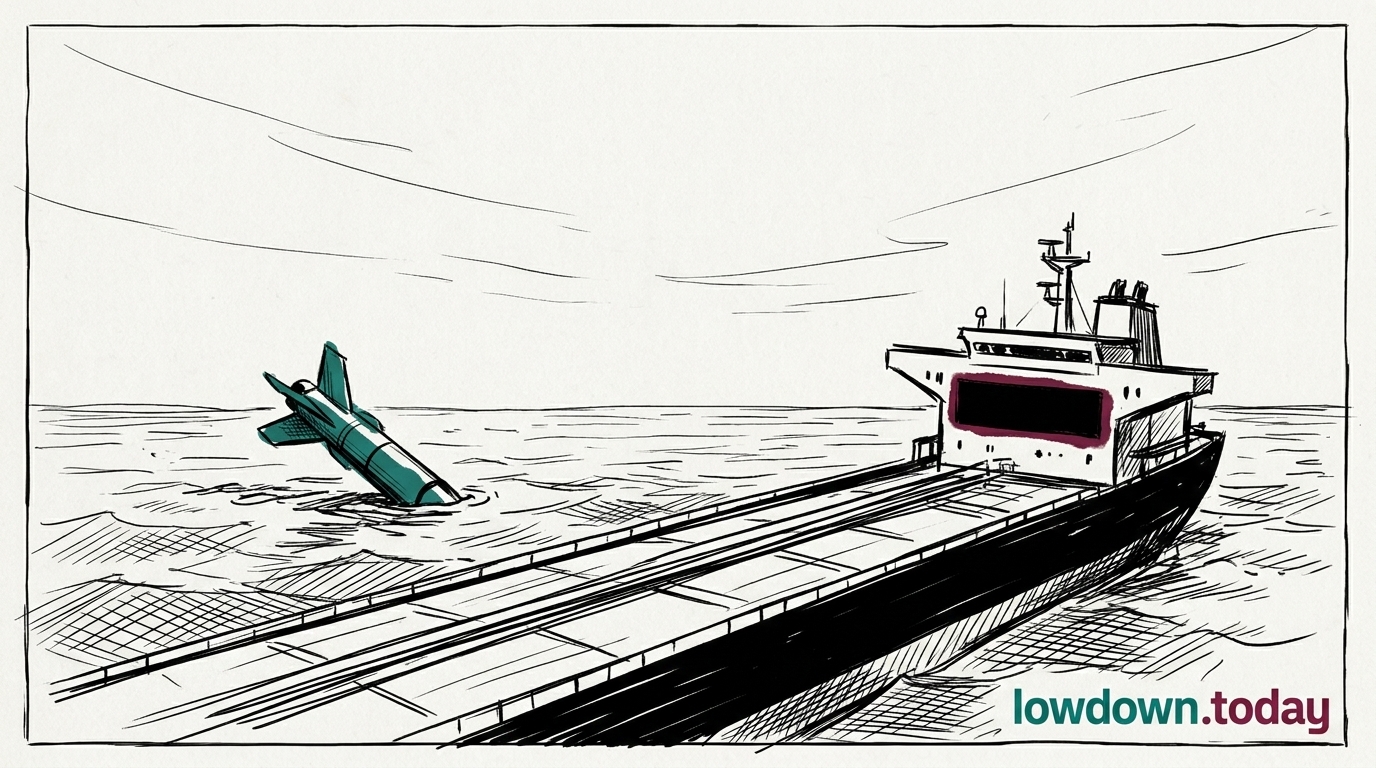
A US Navy MH-60 put two Hellfire missiles into the engine room of the Panamanian-flagged M/V Vela Nova on 11 August. Until Tuesday the blockade of Iranian ports ran on radio warnings, diversions and boarding parties.

Sources profile:This story draws on mixed-leaning sources from Qatar, United States and 1 more
IranQatarUnited States
LeftRight

UKMTO logged an incident involving a container ship and military forces in The Gulf of Oman at 07:15 UTC on 11 August, reported by the vessel's own master under Advisory 109-26, without establishing a cause at the time. CENTCOM later named the vessel as the Panamanian-flagged M/V Vela Nova and said a US Navy MH-60 helicopter fired two Hellfire missiles into its engine room, disabling its steering gear, after the vessel ignored warnings and tried to evade the Iran-port blockade; CENTCOM's statement did not address crew casualties. The same day President Trump said the US 'totally controls' the strait of Hormuz, and IRGC spokesman Mohebbi claimed the US has no warship left in The Persian Gulf, a claim AP's same-day count of fifteen or more US warships and two aircraft carriers in the Arabian Sea contradicts.

Washington's blockade of Iranian ports has moved from warnings and boardings to missiles fired into a civilian hull. 

Mohsen Rezaei told China's ambassador on 11 August that the Strait of Hormuz reopens only when the United States ends its war and releases Iran's blocked funds. Pakistan and Qatar spent the same day calling the talks advanced.

Sources profile:This story draws on mixed-leaning sources from Iran
Iran
LeftRight

Mohsen Rezaei, secretary of Iran's Supreme National Security Council, told China's ambassador Zong Piyu in Tehran on 11 August that the strait of Hormuz reopens only when the United States ends its war on Iran and its regional allies and releases Iran's blocked funds, ruling out any role for the Iran-Oman transit arrangement in that decision. The same day, Pakistan's defence minister Khawaja Asif said matters are 'shaping up in favor of peace' on Hormuz, and a Qatari foreign ministry spokesperson called the Iran-Oman reopening talks advanced, without either naming a text, a date or a mechanism.

The Iranian body that must sign any Hormuz deal has publicly raised its terms and dismissed the shipping track. 

Houthi missiles killed six people and injured at least ten aboard a cargo vessel in the Bab el-Mandeb on 11 August. AP and Al Jazeera give the ship two different flags.

Sources profile:This story draws on mixed-leaning sources from Qatar and United States
QatarUnited States
LeftRight

Houthi missiles killed six people and injured at least ten aboard a cargo vessel in the Bab el-Mandeb on 11 August, the first reported shipping deaths of this bout of the campaign; the vessel's identity is disputed between AP's account of a Yemeni commercial ship, with four crew and two National Resistance Forces personnel killed, and Al Jazeera's naming of the Egyptian-owned Tihamah, a Saudi cargo vessel.

Attacks on the Bab el-Mandeb route have moved from delay and premium to dead crew. 

Brigadier General Mohammad Reza Naghdi told Iranian state television on 11 August that the Guard has been ordered to operate far beyond Iran's borders. He named no unit and no timescale.

Sources profile:This story draws on mixed-leaning sources from Qatar and Iran
QatarIran
LeftRight

Brigadier General Mohammad Reza Naghdi, a senior adviser to the IRGC, said on Iranian state television on 11 August that the Guard has been ordered to build the capability to operate on enemy soil far from Iran's borders, a claim with no named unit, no timescale and no second source.

One named adviser has claimed in words a reach Iran has not demonstrated in action. 

Anwar Gargash, the UAE president's diplomatic adviser, wrote on X on 11 August that the region cannot remain trapped between war and peace. Abu Dhabi had helped call off an American strike nine days earlier.

Sources profile:This story draws on centre-left-leaning sources from United Kingdom
United Kingdom

Anwar Gargash, diplomatic adviser to the president of the United Arab Emirates, warned on X on 11 August that the region cannot remain trapped between 'neither war nor peace.'

A Gulf capital that helped halt an American strike is now saying the halt has settled nothing. 

Closing comments

Sideways, with the mechanism that would tip it upward being a second CENTCOM disabling strike inside the blockade zone. The method is not new: US munitions struck the engine room of the Palau-flagged tanker MT Settebello on 10-11 June 2026 after it repeatedly failed to comply, killing three Indian sailors and drawing two formal protests from New Delhi. The Vela Nova strike is that method again, and the blockade tally has already moved from two disabled vessels a week earlier to three disabled among 55 vessels redirected since 14 July 2026. The mechanism that would tip it down is a signed Oman corridor text that Iran's Supreme National Security Council does not publicly disown within the same news cycle, which Rezaei's 11 August statement makes markedly less likely in the near term.

Different Perspectives
Mohsen Rezaei, Iran's Supreme National Security Council
Rezaei told China's ambassador Hormuz reopens only when the US ends the war and unblocks Iran's funds, and that the Oman transit deal "will have no impact" on that decision. He is drawing a hard line between the technical corridor track and the political settlement his council controls.
United States Central Command / President Trump
CENTCOM confirmed a helicopter strike disabled a container ship that tried to evade the blockade, and Trump said the US "totally controls" the Strait of Hormuz. Washington is treating evasion of the blockade as grounds for disabling fire rather than the redirection tactic CENTCOM used through July.
Pakistan and Qatar (Oman corridor mediators)
Pakistan's defence minister said matters are "shaping up in favor of peace" on Hormuz and a Qatari spokesperson called the Iran-Oman reopening talks advanced. Both are publicly ahead of Tehran's own security council, which has just disowned the deal's significance.
Shipping and insurance underwriters
War-risk premiums are still set against an active blockade and a fatal Bab el-Mandeb attack with an unresolved vessel identity. A disabling strike and a diplomatic "advanced" claim pulling in opposite directions gives underwriters no single signal to reprice cover against.
Anwar Gargash, UAE presidential diplomatic adviser
Gargash warned the region cannot stay trapped between "neither war nor peace", naming the stalemate itself as unsustainable for a Gulf state hosting US forces and absorbing the shipping-risk cost without being party to either the strike decisions or the corridor talks.