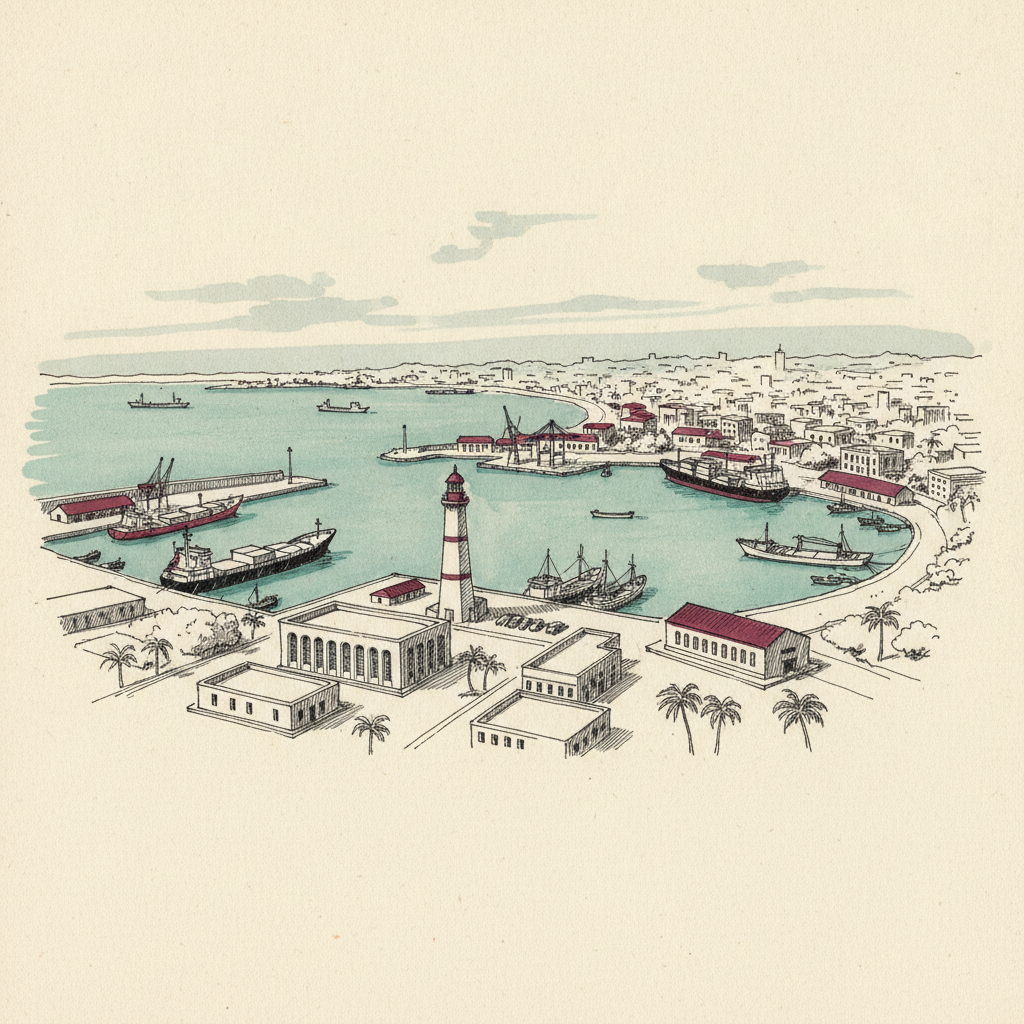
Djibouti
Djiboutian port city opposite Yemen beside the Bab el-Mandeb shipping route.
On 7 August, reporting on the Yemen escalation placed Djibouti opposite a Bab el-Mandeb route carrying fewer tankers.
Last refreshed: 20 August 2026 · Appears in 1 active topic
Why does disruption opposite Djibouti affect Red Sea shipping?
Timeline for Djibouti
Mentioned in: Houthis take all of Yemen's Red Sea coast
Iran Conflict 2026Mentioned in: Gulf ports plan for a shut strait
Iran Conflict 2026Mentioned in: Six dead in the Bab el-Mandeb
Iran Conflict 2026Mentioned in: Yemen's front began with a blocked flight
Iran Conflict 2026Riyadh founds a 43-nation naval bloc
Iran Conflict 2026Background
Djibouti is a port city in the Horn of Africa beside the Bab el-Mandeb, opposite Yemen. The passage connects the Red Sea with The Gulf of Aden and forms part of the SEA route towards the Suez Canal.
That setting gives the city a durable strategic relevance to Commercial shipping and maritime security. Traffic approaching or leaving the narrow waterway passes close to Djibouti's coast, even when events causing concern occur elsewhere.
Djibouti is therefore a useful geographic reference point for assessing disruption in the southern Red Sea. Its significance arises from location and proximity to the chokepoint, rather than from an assertion that the city is itself a party to every incident there.
Djibouti faces a quieter strait
Reporting on 7 August described fewer tankers using the Bab el-Mandeb during the Yemen escalation. Djibouti sits on the African side of that passage, so a reduction in traffic is directly relevant to the waters and shipping corridor beside the city.
The evidence does not report an attack on Djibouti or establish a disruption to the city itself. Its place in the story is geographic: Djibouti marks the western side of a chokepoint where events across the water in Yemen can alter the risk assessment of vessels approaching the Red Sea.
Reference
Why does Djibouti matter to Red Sea shipping?
Where is Djibouti?
What is Camp Lemonnier?
Why does Djibouti host so many foreign military bases?
Is Djibouti part of Saudi Arabia's new Red Sea coalition?
Where is Djibouti in relation to Yemen?
Why does the Bab el-Mandeb matter for Djibouti?
What happened to shipping near the Bab el-Mandeb in July?

