Skip to content
Iran Conflict 2026
22APR

Day 54: Trump posts an exit Iran can't reach

10 min read
10:22UTC

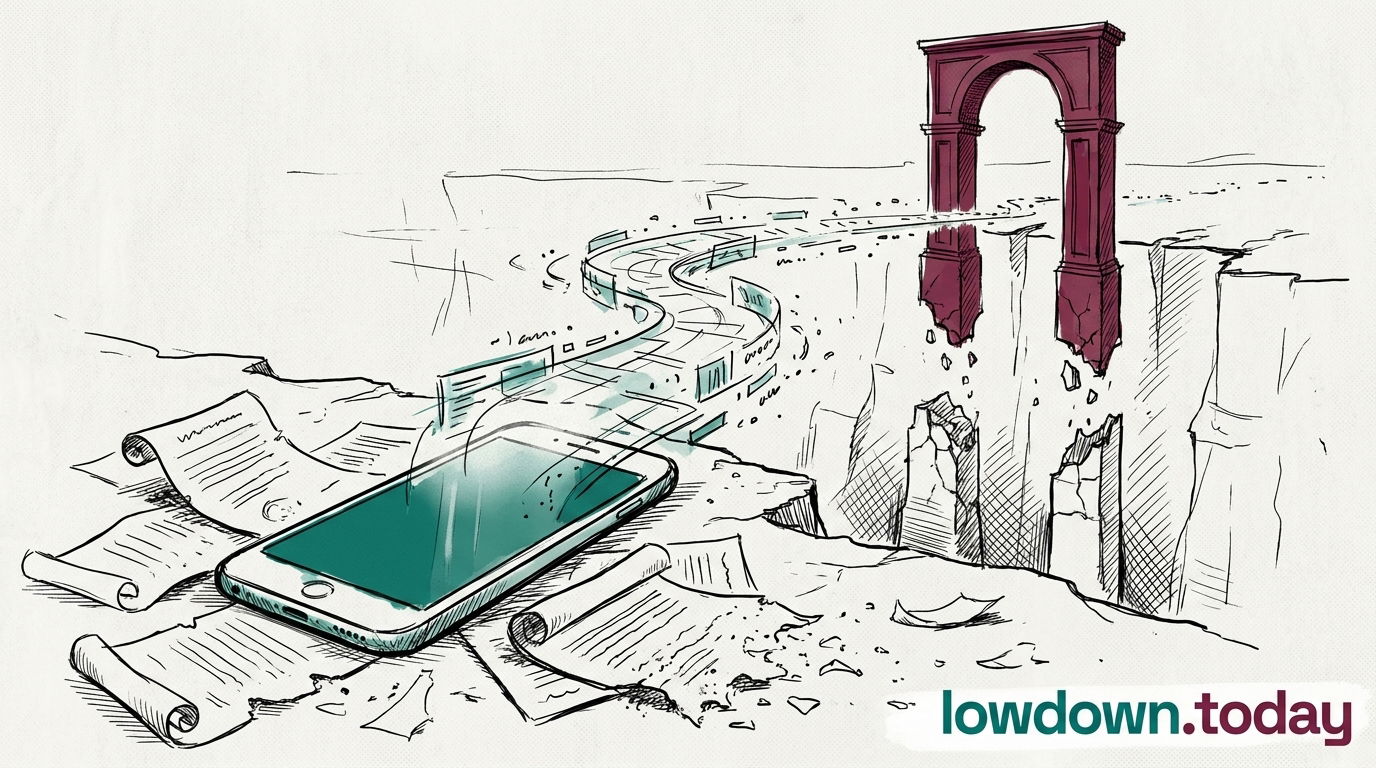
Donald Trump extended the Iran ceasefire indefinitely via Truth Social on 21 April, conditioned on Tehran submitting a 'unified proposal' through a government he described in the same post as 'seriously fractured'. Day 53 closes the fortnight that was supposed to force signed paper: GL-U lapsed unwritten on 19 April, the 22 April ceasefire clock rolled over on a post, the Lebanon truce runs to 26 April on State Department text alone, and the War Powers Resolution 60-day mark falls on 29 April. Five verbal instruments at five forcing moments across 53 days. The technique has stopped being tactical and become the method.

Key takeaway

The ceasefire extension runs indefinitely on a post with a trigger Iran's split cannot currently meet.

In summary

Donald Trump extended the Iran ceasefire indefinitely on 21 April through a Truth Social post, conditioning the extension on Tehran producing a 'unified proposal' from a government his own post described as 'seriously fractured'. With seven tankers rerouted to Chabahar outside CENTCOM's enforcement geometry, an IRGC hardline that blocks any proposal, a protest prisoner executed the same morning Trump demanded eight releases, and the War Powers Resolution clock expiring 29 April against zero signed Iran instruments in 53 days, Day 53 confirmed that the White House is running a war on posts rather than paper.

This briefing mapped
Loading map…
Diplomatic
Military
Humanitarian
Economic
Legal
Sources profile:This story draws on mixed-leaning sources from Qatar
Qatar

Donald Trump extended the Iran ceasefire indefinitely on 21 April through a Truth Social post that named Pakistan's Army Chief Asim Munir and Prime Minister Shehbaz Sharif as the requestors 1. The Federal Register carried no notice. The State Department published no agreed text. The extension was conditioned on Iran submitting a 'unified proposal' through what the same post called a 'seriously fractured' government; the blockade, Trump added, continues.

On 20 April Trump had told Bloomberg an extension was 'highly unlikely' without a deal . The pivot 24 hours later coincided with JD Vance's Islamabad trip being postponed after Iran rebuffed a restart, leaving Munir's shuttle as the only live diplomatic channel Washington could publicly name. On whitehouse.gov's presidential-actions index, the Iran column remains empty of signed instruments for the war to date. Five verbal instruments at five forcing moments across the past fortnight sits past the threshold where technique reads as accident.

Explore the full analysis →
Sources profile:This story draws on mixed-leaning sources from United States and Israel
United StatesIsrael
LeftRight

UKMTO Warning 041-26 went live at 03:55 UTC on 22 April, logging an IRGC Navy gunboat strike on a container ship roughly 15 nautical miles north-east of Oman 1. The master's report recorded no radio warning before fire, contradicting the framing Fars News ran hours later that the vessel had ignored Iranian warnings 2. UKMTO cited heavy damage to the bridge; no crew were injured, no fire broke out and no pollution was reported on either ship 3.

Donald Trump's indefinite extension on Truth Social had gone live seven hours earlier. A second vessel was fired on shortly afterwards in the Strait of Hormuz, unclaimed as of the alert's release and with no damage recorded 4. The pattern now runs to three IRGC strikes on commercial shipping in four days: the Sanmar Herald and Jag Arnav fired on despite radio clearance on 18 April , the CMA CGM Everglade damaged by an explosive device 25nm north-east of Oman the same night , and the 22 April bridge hit that followed a verbal ceasefire extension by seven hours.

Explore the full analysis →
Sources profile:This story draws on neutral-leaning sources from Israel
Israel

Windward detected seven Very Large Crude Carriers (VLCCs, the standard two-million-barrel oil tankers that carry Gulf crude) near Chabahar on Iran's Makran coast on 20 April 1. Chabahar is Iran's only deep-water port on the Arabian Sea and sits east of the geometry Admiral Brad Cooper's narrower port-interdiction order covers. The same Windward log counted three strait transits the day before, a fraction of the 135-per-day pre-war baseline and the lowest count since the blockade began.

Earlier mid-transit reroutings from India to Chinese ports ahead of the OFAC General License U lapse established the Chabahar-routing adaptation; seven VLCCs at anchor there indicate the same workaround now running at capacity. The USS Spruance's firing into the Touska's engine room earlier in the same window hardened the Hormuz risk premium on the kinetic side, but the structural story is sideways: vessels avoiding the strait do not need the strait reopened to clear cargo.

Explore the full analysis →
Sources:Windward
Sources profile:This story draws on centre-left-leaning sources from United States
United States

Ahmad Vahidi, commanding the Islamic Revolutionary Guard Corps (IRGC, Iran's parallel military), told deputies on 21 April that the IRGC opposes negotiation while the blockade stands 1. Foreign Minister Abbas Araghchi called the blockade 'an act of war and thus a violation of the ceasefire' to Farsi-language press the same day 2. A senior adviser to parliamentary speaker Mohammad Bagher Ghalibaf separately described the extension as 'a ploy to buy time for a surprise strike'.

The three lines landed on the same day President Masoud Pezeshkian, Ghalibaf and foreign ministry spokesman Esmaeil Baqaei had already hardened their rhetoric . This is the same civilian-IRGC deadlock that broke the Islamabad round on 12 April, when the IRGC's blockade-first condition held the door shut . Washington has now set an exit trigger whose fulfilment requires Tehran to resolve a split the Islamabad collapse proved it cannot resolve under pressure.

Explore the full analysis →
Sources:NBC News
Briefing analysis
What does it mean?

Day 53 closes the fortnight that was supposed to force signed paper with five verbal instruments intact and zero Iran instruments on the presidential-actions index. The extension is structurally self-sealing: its trigger (a unified Iranian proposal) requires civilian authority over the IRGC, which is the same deadlock that collapsed the Islamabad round on 12 April, and which the IRGC's refusal on 21 April has now reaffirmed publicly. Chabahar's seven VLCCs running outside CENTCOM's written geometry erode the blockade's physical grip at the same moment the 29 April WPR clock removes the legal cover for not producing paper.

The domestic execution pipeline at Qezel Hesar and the 1,272-hour internet blackout document a domestic repression track operating on its own timetable, independent of diplomatic tempo.

Watch for
  • any Iran instrument on whitehouse.gov before 29 April; IRGC movement toward the Araghchi civilian position or further widening; OFAC post-GL-U designations covering Chabahar vessels; CENTCOM response to the Tasnim drone claim in the Sea of Oman.
Sources profile:This story draws on neutral-leaning sources from Iran
Iran

Amirali Mirjafari was executed in the early morning of 21 April at Qezel Hesar Prison in Karaj, secretly and without a final family visit, according to Hengaw, the Norway-based Kurdish human rights organisation monitoring the case 1. He was the eighth protest-era detainee executed since the war began at the end of February. Hengaw puts the total political-prisoner figure at 17. His arrest-to-execution interval, roughly three months from his January detention, matches the 'maximum decisiveness' directive the judiciary head issued in early March.

The hanging came the day after Ali Fahim's execution at the same prison, the fourth in a single protest case . Earlier Hengaw filings documented the three-month cadence at Qezel Hesar directly: trials under a month, predawn hangings, no pre-execution family visit. Iran's judicial pipeline is running one protest-era execution per week on the same clock as the Pakistan-mediated back-channel.

Explore the full analysis →
Sources:Hengaw
Sources profile:This story draws on neutral-leaning sources from Israel
Israel

Brent crude briefly crossed $100 per barrel on expiry morning on 21 April before retreating to $97.91 by close after Trump's extension post landed 1. The close sits 45 per cent above the $67.41 pre-war baseline. Goldman Sachs's $120 Q3 severe scenario remains the operative forecast frame across sell-side desks.

Monday's 7 per cent surge to $96.88 on early extension hope gave Tuesday's market the exit-trigger test, and the trigger was identified as unreachable faster than the futures curve could reprice. The four-dollar round-trip through the $100 handle tracked the moment the market parsed the Truth Social text: blockade continues, unified-proposal condition unmet, tanker risk at the Hormuz gate unchanged. Dated Brent's refusal to settle below $96 across five sessions now is what a blockade-continues price looks like once traders stop pricing a near-term diplomatic resolution.

Explore the full analysis →
Sources:Windward
Sources profile:This story draws on centre-right-leaning sources from United Kingdom
United Kingdom

On 21 April, the same day as Mirjafari's hanging, Trump posted on Truth Social urging Iran to release eight women reportedly facing execution from January protest arrests, calling their release 'a great start to our negotiations' 1. Iran's judiciary formally denied the eight face execution. Hengaw's case record contradicts the denial: at least one of the named women is already death-sentenced and at least one more faces charges carrying the death penalty .

The mismatch between the Truth Social demand and the judiciary's same-day denial compresses a pattern that has built through the fortnight. Trump posts a condition. An Iranian principal rejects its factual basis. No instrument follows on either side. The humanitarian appeal attaches to the unified-proposal framing set hours earlier in the extension post, yet lands inside a country whose prolonged internet blackout keeps the named women's families without meaningful access to the outside world.

Explore the full analysis →
Sources profile:This story draws on mixed-leaning sources from Qatar
Qatar

The War Powers Resolution (WPR, the 1973 statute giving Congress 60 days to authorise or end a hostility) clock that started on the 28 February outbreak runs out on 29 April. Behind it sits an operation with zero executive instruments on the Iran file. Senator Josh Hawley's Authorization for Use of Military Force (AUMF, the statutory authority Congress grants a president for specific hostilities) push was conditioned on the war neither ending nor winding down 1.

The Senate had blocked an earlier WPR last week, short of the threshold by five votes . The indefinite extension supplies the White House the political argument that the war is winding down, which is precisely the linguistic window Hawley's condition left open. Fifty-three consecutive days now sit behind the White House tracker with the same number in the Iran column: zero . The 29 April mark may pass on the same pattern that got it here, and if it does, the first signed Iran instrument of the war will not exist.

Explore the full analysis →
Causes and effects
Why is this happening?

The administration's preference for unsigned verbal instruments across 53 days reflects a deliberate choice to preserve executive discretion by avoiding the oversight and litigation surfaces that signed paper creates. Iran's decision-making is structurally divided between the reformist civilian government, the principlist parliament and the IRGC; the unified proposal trigger is achievable only if Tehran resolves a constitutional split that has been open since the 28 February strikes. Both sides therefore benefit from the ambiguity of a posture-based rather than clock-based ceasefire, though the self-judging exit sits with Washington.

Sources profile:This story draws on neutral-leaning sources

The Saudi Press Agency (SPA) released a foreign-ministry welcome of the extension within hours of Trump's post, framing it as a step toward 'comprehensive sustainable pacification' 1. The United Arab Emirates (UAE) withheld any public welcome and posted three harder conditions in parallel: a plan on Iran's ballistic missile and nuclear programmes, compensation for war damages, and immediate unconditional Hormuz reopening 2.

Fujairah still carries the burn marks of the March strikes on its storage farms, and Iranian ballistic missiles reaching Gulf soil is not an abstract file in Abu Dhabi the way it is in Washington. Riyadh by contrast has Petroline's full-capacity route to Yanbu carrying Gulf barrels clear of the strait, which buys willingness to defer the Hormuz-reopening question; the 18 April Antalya quadrilateral with Pakistan, Turkey and Egypt already registered a Saudi lean toward preserving channels rather than enforcing preconditions. The Gulf Cooperation Council (GCC) is now publicly divided on whether the extension stabilises or buys Iran's escalation time, and the fault line sits along sequencing the two capitals have reason to weigh differently.

Explore the full analysis →
Sources:MEMRI
Sources profile:This story draws on neutral-leaning sources

Guo Jiakun at China's Foreign Ministry (FMPRC) spoke for 11 paragraphs at the 21 April press conference about regional stability and named zero Chinese vessels 1. He told reporters the regional situation sits 'at a critical stage of whether the conflict could end' and said Beijing 'supports the early restoration of normal passage through the Strait of Hormuz' 2. The transcript carried no protest over blockade legality under customary international law.

84.9 per cent of the 153.7m barrels of Iranian crude on water is China-bound on the most recent tracking windows, roughly 130m barrels sitting in ships on Chinese account. The Rich Starry, Murlikishan and Elpis precedents have already monetised the port-only carve-out CENTCOM wrote for itself after 13 April, and Ping Shun's mid-transit rerouting to Chinese ports showed the same pattern on the supply side. Beijing's silence is the carve-out's public-facing cover: the ships keep moving, the foreign ministry script never names them, and Washington does not have to answer for letting US-sanctioned hulls transit unchallenged.

Explore the full analysis →
Sources:FMPRC
Sources profile:This story draws on centre-left-leaning sources from United States
United States

JD Vance was set to depart for Islamabad on Tuesday 22 April for a further round of mediation. Iran's foreign ministry said publicly on 21 April it had no plans to reengage, and the shuttle was stood down hours later. Trump's extension post, filed hours afterward, named Asim Munir and Shehbaz Sharif as the channel Washington had left.

The stand-down replays the prior Islamabad collapse, where the civilian-IRGC split on blockade sequencing blocked any joint text from being produced. The extension's exit trigger requires Iran's civilian government to speak for the IRGC, which is the specific capacity Tehran has twice now failed to produce under compression. Vance's third Islamabad round ended with Iran's foreign ministry's blockade-first position overriding any civilian openness; with Vance grounded again, the next scheduled contact point is the diplomatic silence around the end-April WPR mark rather than a dated meeting.

Explore the full analysis →
Sources:NBC News
Sources profile:This story draws on centre-right-leaning sources from United Kingdom
United Kingdom

India's Ministry of External Affairs (MEA) maintained public silence for seven days on the 15 April OFAC designations naming five Indian nationals and eight India-registered firms in the Shamkhani network . The first acknowledgement, whenever it comes, will land against a sharper operational backdrop than it would have a week ago.

Chabahar operational rights, held by India under a 2016 agreement with Tehran, create a direct India-US exposure as Windward detected seven VLCCs there on 20 April. The same MEA earlier summoned Iran's ambassador over IRGC fire on Sanmar Herald and Jag Arnav , , a quicker reflex when Indian-flagged bottoms were hit than when Indian nationals appeared on a US Treasury list. The silence is telling diplomatic economy: Delhi prefers to acknowledge neither the designations nor the Chabahar arithmetic on the same stage.

Explore the full analysis →
Sources profile:This story draws on neutral-leaning sources

Trita Parsi at the Quincy Institute assessed the extension as a climbdown on 21 April: 'No agreement, no sanctions relief, no nuclear reconciliation, no return to war, while Iran continues controlling the strait.' 1 Parsi's reading is the most publicly articulated critique from a Washington-adjacent analyst bringing regional context rather than partisan framing.

The climbdown reading sits alongside a method reading rather than in opposition to it. Five verbal statements at five calendar deadlines across 14 days, against a White House tracker that has held at zero Iran instruments across the full war, crosses the threshold where absence of paper starts to look engineered. Trump's earlier uranium-transfer claim that Baqaei denied within hours was an earlier instance of the same verbal-instrument cadence. Parsi describes the diplomatic outcome; the instrument record describes the technique producing it. An extension with an unreachable exit trigger closes the calendar without closing the war, which is what a method built on unsigned posts delivers.

Explore the full analysis →
Sources:Fararu
Sources profile:This story draws on centre-left-leaning sources from United States
United States

Tasnim's 20 April claim of IRGC drone launches against US Navy vessels in the Sea of Oman remained unconfirmed through 21 April. CENTCOM issued neither confirmation nor denial. Tasnim's original report named neither a target hull nor an intercept outcome, which keeps both Tehran's and Washington's escalation thresholds ambiguous.

The silence tracks the pre-deadline discretion pattern behind whitehouse.gov's extended zero on Iran instruments. A confirmed drone launch would harden Hawley's AUMF case by creating an ongoing hostility the White House cannot describe as winding down. A denial would require CENTCOM to acknowledge the claim on the record, which in turn would commit it to a public position ahead of the WPR clock that expires at end of month. Non-response does the discretion work that signed paper would foreclose.

Explore the full analysis →
Sources:NBC News

In Brief

  • Brent crossed $100 on expiry morning before retreating to $97.91 on the extension; Goldman Sachs's $120 Q3 severe scenario remains the operative frame .
  • India's Ministry of External Affairs (MEA) has held public silence for seven days on the 15 April OFAC designations naming five Indian nationals and eight India-registered firms in the Shamkhani network .
  • Iran's internet blackout passed 1,272 hours on Day 53, roughly 53 days unbroken, per Hengaw's running count cross-checked against MP Ranjbar's 'not advisable' statement.
  • Tasnim's 20 April claim of IRGC drone launches against US Navy vessels in the Sea of Oman remains unconfirmed 48 hours later; CENTCOM has issued neither confirmation nor denial.
  • Ahmad Vahidi at the IRGC and Abbas Araghchi at the foreign ministry remain publicly opposed on whether the blockade voids the ceasefire; the split is unchanged 48 hours into the extension.

Watch For

  • Any Iran-related presidential instrument landing on whitehouse.gov or the Federal Register by the 29 April WPR deadline; default expectation is none.
  • Movement by the IRGC track under Vahidi toward the civilian position under Araghchi, or a further widening of the split.
  • OFAC designations post-GL-U targeting specific vessels, routes, or third-country buyers; the tracker has now passed 72 hours since the lapse without a public follow-on.
  • Whether the Saudi-UAE divergence on extension conditions surfaces as a public GCC disagreement, particularly on Hormuz reopening sequencing.
  • Any CENTCOM public response to the 20 April Tasnim drone-strike claim in the Sea of Oman; 48-plus hours of silence preserves executive discretion ahead of the 29 April clock.
Closing comments

Lateral and displacing, not vertical. The extension defuses the 22 April clock without closing any underlying deadlock; it shifts pressure to the 29 April WPR deadline and onto Iran's internal unification decision. The blockade continues, Chabahar rerouting undermines its physical grip, and the unconfirmed Tasnim drone claim in the Sea of Oman keeps the kinetic floor volatile while the diplomatic ceiling becomes indefinite.

Different Perspectives
Iran: divided state (Araghchi vs Vahidi)
Araghchi called the blockade 'an act of war and thus a violation of the ceasefire' while Vahidi told IRGC deputies the corps opposes negotiation while the blockade stands; a Ghalibaf adviser called the extension 'a ploy to buy time for a surprise strike'. Three Iranian principals in three contradictory directions on the day the extension landed.
Trump administration / CENTCOM
Trump extended the ceasefire by Truth Social post with a self-judging trigger, no Federal Register notice, and an explicit statement that the blockade continues. The administration now holds the Hawley AUMF clock at bay with the argument the war is winding down.
Pakistan as mediator (Munir/Sharif/Dar)
Trump's post named Munir and Sharif as the requestors of the extension, placing Islamabad publicly at the pivot between Washington and Tehran after Vance's trip was postponed. Pakistan's shuttle is now the only live diplomatic channel Washington has publicly acknowledged.
European coalition (Macron/Starmer / Northwood)
Northwood opened on 20 April to draft Hormuz rules of engagement for 40 nations without US or Gulf-state signatures; the European-authored ROE will become the first credible Hormuz governance text if the US continues to abstain from signing Iran instruments.
China (FMPRC / Guo Jiakun)
Guo spoke for 11 paragraphs about regional stability on 21 April while naming zero Chinese vessels; Beijing's FMPRC transcript lodged no protest over blockade legality under customary international law. China holds roughly 84.9% of the 153.7 million barrels of Iranian crude on water and declines to acknowledge the arrangement.
Russia (Rosatom / Kremlin)
Rosatom confirmed Bushehr evacuation was complete with 24 volunteers and 282 tonnes of material remaining; Peskov continued to advance the uranium custody offer publicly. The evacuation removes Russia's operational capacity at Iran's only functioning nuclear plant while the offer remains rhetorically alive.

