Skip to content
Iran Conflict 2026
22APR

Trump extends ceasefire on Truth Social post

2 min read
10:22UTC

Lowdown Analysis

ConflictDeveloping
Key takeaway

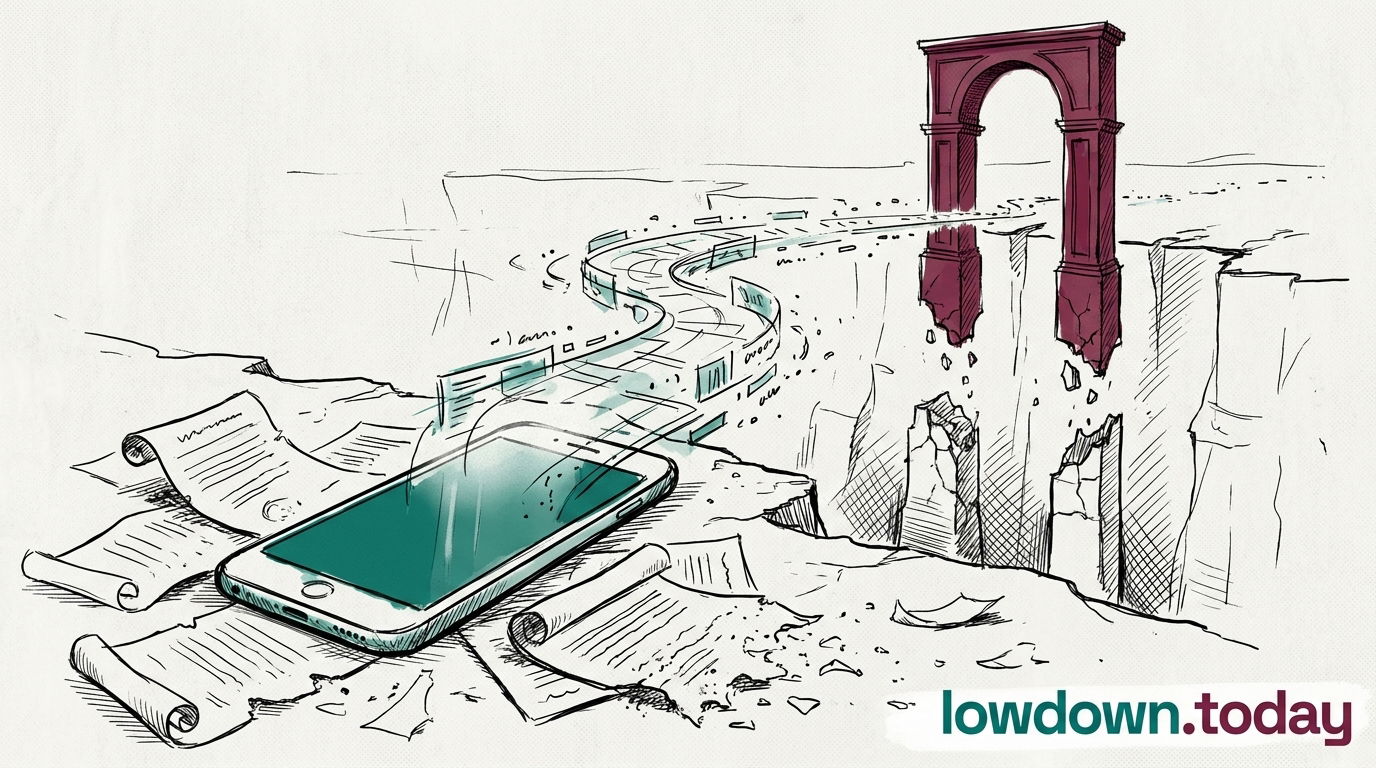
The Iran ceasefire now runs indefinitely on a Truth Social post with no Federal Register notice and no signed text.

Donald Trump extended the Iran ceasefire indefinitely on 21 April through a Truth Social post that named Pakistan's Army Chief Asim Munir and Prime Minister Shehbaz Sharif as the requestors 1. The Federal Register carried no notice. The State Department published no agreed text. The extension was conditioned on Iran submitting a 'unified proposal' through what the same post called a 'seriously fractured' government; the blockade, Trump added, continues.

On 20 April Trump had told Bloomberg an extension was 'highly unlikely' without a deal . The pivot 24 hours later coincided with JD Vance's Islamabad trip being postponed after Iran rebuffed a restart, leaving Munir's shuttle as the only live diplomatic channel Washington could publicly name. On whitehouse.gov's presidential-actions index, the Iran column remains empty of signed instruments for the war to date. Five verbal instruments at five forcing moments across the past fortnight sits past the threshold where technique reads as accident.

Deep Analysis

In plain English

Donald Trump announced on 21 April that the Iran ceasefire would continue indefinitely, but he did so in a Truth Social post rather than a signed executive order, proclamation, or Federal Register notice. Trump filed five energy-sector Presidential Determinations on 20 April; the Iran column of his presidential-actions page has held at zero for 53 days. He added a condition: Iran must submit a 'unified proposal' for talks. The problem is that Iran's government is deeply divided , its civilian leaders and its powerful military force, the Revolutionary Guard, have contradictory positions. Trump described Iran's government in the same post as 'seriously fractured'. This matters because without signed paper, the ceasefire has no legal standing. It can be reversed or changed with another post at any time, with no congressional involvement and no institutional record.

Deep Analysis
Root Causes

The Trump administration's preference for unsigned verbal instruments rests on a structural legal calculus: signed executive instruments enter the Federal Register and the presidential-actions index, where they are immediately available to congressional oversight committees, plaintiff law firms, and foreign tribunals. A Truth Social post has no equivalent accessibility under the Administrative Procedure Act.

The IRGC's institutional veto over Iran's civilian government means Washington lacks a counterparty capable of countersigning any instrument , producing a secondary reason why paper is unattractive: a signed ceasefire that the Iranian military can override by firing on tankers has less institutional value than an unsigned post that preserves diplomatic flexibility.

Escalation

Lateral. The extension neither closes the kinetic gap (blockade continues, Touska still in US custody) nor opens a new escalation pathway. It displaces the 22 April calendar trigger onto the 29 April WPR deadline.

What could happen next?
  • Consequence

    The White House can now argue the war is winding down, potentially deflating Senator Hawley's AUMF push before the 29 April WPR deadline.

    Immediate · 0.8
  • Risk

    With no signed instrument on the Iran file, any future administration or legal challenge has no executive document to litigate, creating a precedent for military action outside the APA framework.

    Long term · 0.75
  • Precedent

    Five verbal instruments at five forcing moments establishes Truth Social as an accepted mechanism for war management, normalising unsigned executive action at the highest operational tempo.

    Long term · 0.8
First Reported In

Update #76 · Trump posts an exit Iran can't reach

Al Jazeera· 22 Apr 2026
Read original
Different Perspectives
Global South governments (Indonesia, Brazil, South Africa)
Neutrality was possible when the targets were military. 148 dead schoolgirls made it impossible — no government can explain that away to its own citizens.
Trump administration
Oscillating between claiming diplomatic progress and threatening escalation, while deploying additional ground forces to the Gulf.
Pakistan government
Pakistan government
Positioning as indispensable mediator by confirming indirect talks, but unable to bridge the substantive gap between both sides' incompatible demands.
European Union
European Union
The EU rejected Trump's Hormuz toll joint-venture on 12 April citing UNCLOS, provided the legal ground for the 8 April Élysée statement, and the Paris conference agenda now includes European financial sanctions on Iran if Hormuz remains closed. Brussels is both the legal architecture behind Europe's Hormuz position and a potential independent sanctions actor converging on the US pressure track.
Gulf states (UAE, Saudi Arabia, Kuwait, Bahrain)
Absorbing daily Iranian missile and drone attacks, discovering Hezbollah assassination networks within their borders, and relying entirely on their own air defences with no functioning diplomatic channel to Tehran.
United States government
Trump described operations as 'extremely ahead of schedule' and said Iran's leaders are 'begging to make a deal.' The administration is working to arrange a Vance visit to Islamabad while declining to respond publicly to Kallas's call to confront Russia.