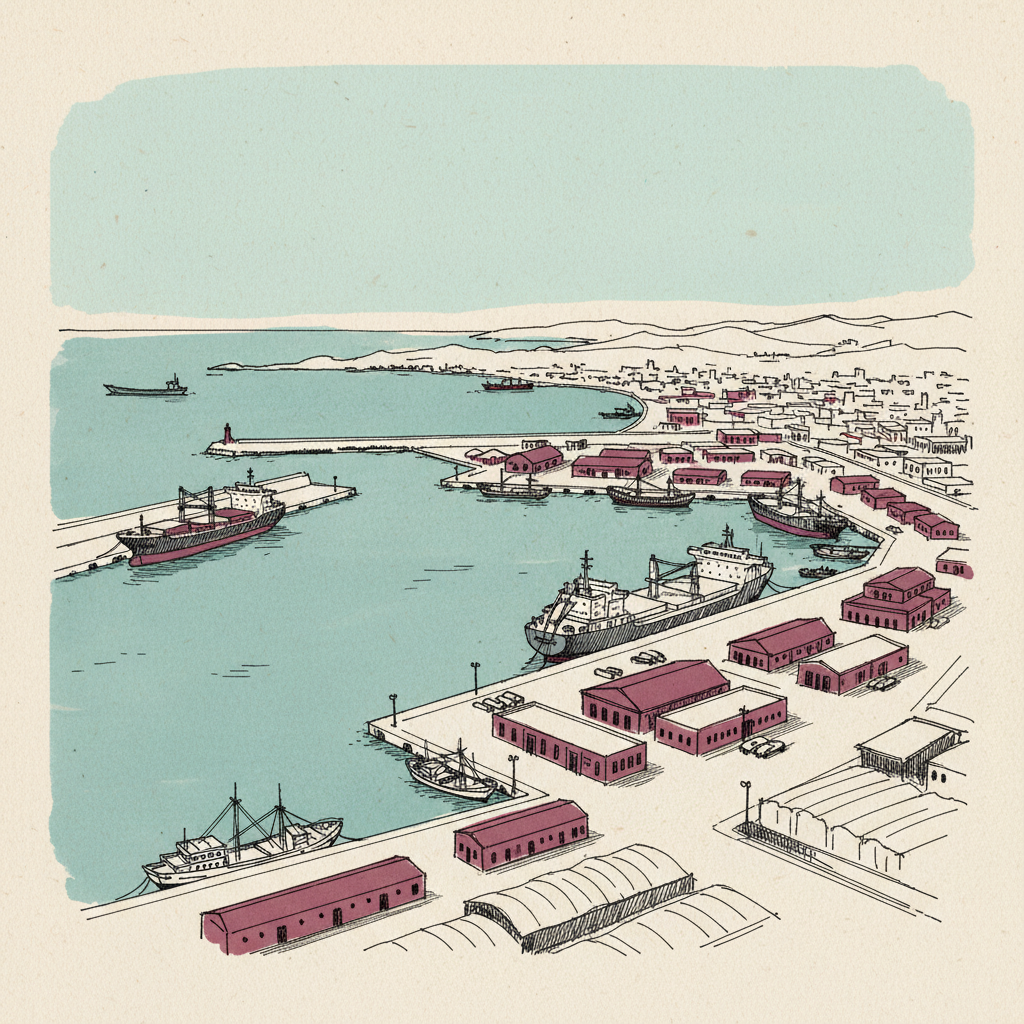
Chabahar
Iran's only deep-water Arabian Sea port; India's $120m stake transferred to Iranian entity when the sanctions waiver lapsed 26 April.
Last refreshed: 28 July 2026 · Appears in 1 active topic
With India gone, who actually controls Chabahar now — and does Iran want it back?
Timeline for Chabahar
Iran takes safe passage to Oman on Monday
Iran Conflict 2026Iran declares a restricted sea area
Iran Conflict 2026Suffered partial power loss after the strike wave
Iran Conflict 2026: Second US strike wave in 48 hoursChabahar waiver expires; India hands stake over
Iran Conflict 2026Transferred from Indian operational control to Iranian control ahead of waiver expiry
Iran Conflict 2026: India hands Chabahar to Iran at Sunday midnightBackground
Chabahar is Iran's only deep-water port on the Arabian Sea, located in Sistan-Baluchestan province. It sustained partial power loss in the CENTCOM strike wave of 8 July 2026, alongside the ports of Bandar Abbas and Konarak and a north-east railway bridge, the second such wave in 48 hours.
India Ports Global (IPGL) operated the port's free zone under a 2024 ten-year agreement covering $120 million of investment, but transferred its operational holding to an Iranian entity on 26 April 2026 when the US sanctions waiver lapsed. The transfer deed includes a reversion clause restoring Indian control once US sanctions ease.
Chabahar sits outside the strait of Hormuz, giving it strategic importance as an alternative cargo route unaffected by Hormuz closures. During the 2026 conflict it appeared in tanker-tracking data as a potential VLCC Anchorage: seven supertankers carrying a combined 14 million barrels clustered near the port in mid-April as Hormuz transits collapsed to three per day. Chabahar also serves India's strategic connectivity to Afghanistan and Central Asia via the International North-South Transport Corridor, bypassing Pakistan, a geopolitical interest that pre-dates the 2026 conflict and will outlast it.
The IPGL withdrawal was the first third-country state-owned operator exit from Iran in the 2026 war. The forced transfer remains India's most visible geopolitical setback of the conflict: OFAC's refusal to extend the Chabahar waiver demonstrated that no third-country operator can maintain a foothold in Iran under active US sanctions, regardless of strategic interest. The July power-loss episode shows the port's infrastructure, and not just its ownership, remains exposed as the war continues past the June memorandum.
Why are oil tankers clustered near Chabahar during the Iran blockade?
What is Iran's Chabahar port and why does India have a stake in it?
What is Chabahar port and why does India have an interest in it?
Why did India give up Chabahar port?
Is Chabahar outside the Hormuz blockade?
Was Chabahar port hit in the July 2026 strikes?


