Skip to content
You can now search across every topic, entity and event.What's new
Iran Conflict 2026
13MAR

Iran deploys drone boats in Hormuz

4 min read
04:41UTC

The IRGC deployed explosive unmanned surface vessels for the first time — a weapon it had only ever supplied to proxies — in the same waters it is trying to close to everyone else.

ConflictDeveloping
Key takeaway

Iran's first direct USV deployment, informed by years of Houthi proxy operational data, signals doctrine maturity rather than improvisation.

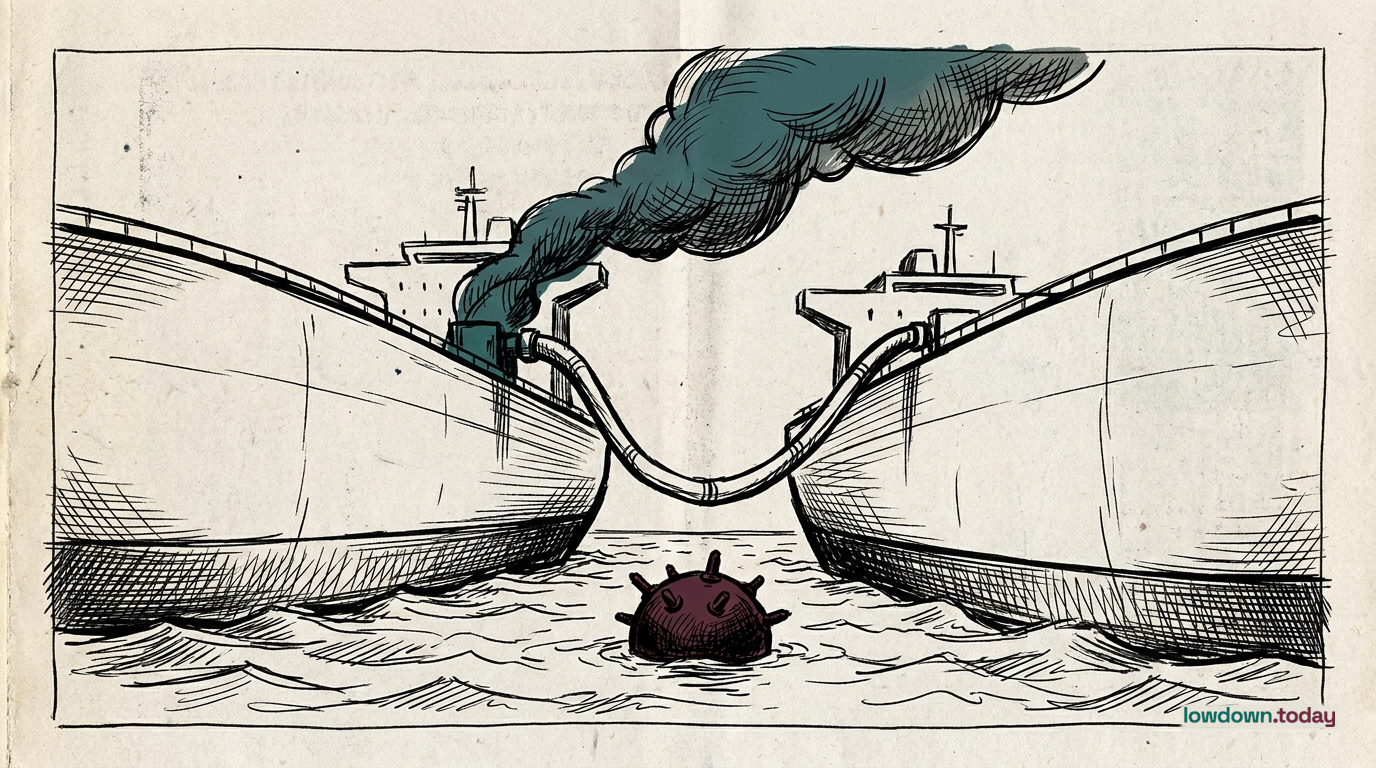
At least two of Thursday's six maritime attacks used explosive-laden unmanned surface vessels — drone boats — the first time Iran's IRGC Navy has deployed a weapon it previously supplied only to proxy forces. The Houthis used Iranian-made drone boats against Saudi Coalition vessels in the Red Sea as early as 2016, when one struck the Emirati logistics catamaran HSV-2 Swift near the Bab el-Mandeb strait. Iran provided the technology and the engineering; its proxies took the operational risk. That division has now collapsed. The IRGC is using the weapon itself, in its own waters, against commercial shipping.

Drone boats are small, low-profile, and difficult to detect on radar. They operate in shallow coastal waters — precisely the conditions of the strait of Hormuz, where the navigable channel narrows to 21 nautical miles and large warships are constrained in their ability to manoeuvre. Unlike anti-ship missiles, which can be tracked on approach and engaged by shipboard defence systems such as Phalanx CIWS or SeaRAM, a drone boat approaching at wave height among legitimate fishing dhows and coastal traffic produces a targeting problem that existing naval defences were not built for. The Gulf is one of the most congested waterways on earth. Distinguishing a threat from a fishing boat at two nautical miles, in time to engage, is an operational challenge no navy has solved at scale.

The deployment follows a visible pattern. As CENTCOM struck missile launchers, naval vessels, and the IRGC's aerospace and drone headquarters in Tehran , conventional fire initially dropped. CENTCOM cited this as evidence of destruction. By Day 8, 109 drones and 9 ballistic missiles struck UAE targets in a single day , answering whether reduced fire reflected destroyed or merely dispersed capacity. The drone boat is the next step in that asymmetric adaptation: a weapon that is cheap to produce, requires no fixed launch infrastructure that air strikes can neutralise, and is effective against the commercial shipping the IRGC's absolute Hormuz blockade declaration is designed to stop.

The economics are unambiguous. A drone boat costs tens of thousands of dollars. The tankers it targets carry cargo worth hundreds of millions. The warships that would need to defend against it cost billions per hull. Every drone boat that forces a tanker to divert or an insurer to withdraw coverage achieves the same strategic effect as a far more expensive Ballistic missile — at a fraction of the cost and with no launch signature for satellites to detect in advance.

Deep Analysis

In plain English

For years, Iran supplied remote-controlled explosive boats to Houthi rebels in Yemen, who used them against ships in the Red Sea. This was effectively Iran testing weapons and tactics through proxies, without direct involvement or attribution risk. Thursday marks the first time Iran itself used these drone boats directly. This distinction matters because it means Iran's own military has trained with these weapons, developed operational tactics, and is now confident enough to deploy them in a major conflict. The boats are cheap to build, difficult to detect on radar because they sit low in the water, and can operate in shallow coastal areas where large warships cannot easily follow or engage them.

Deep Analysis
Synthesis

Iran effectively used Houthi forces as a live operational testing environment for USV tactics throughout the 2023-24 Red Sea campaign. That proxy deployment generated real-world data on detection rates, effective standoff distances, countermeasure response times, and optimal sea-state deployment conditions — at no direct cost or attribution risk to Iranian forces. Iran's first direct deployment therefore arrives with an established operational baseline, not as an experimental capability encountering combat conditions for the first time.

Root Causes

Iran's USV programme developed as a direct response to US carrier-denial requirements under IRGC asymmetric naval doctrine. The 2011 'mouj-e zananeh' swarming concept originally envisaged manned speedboat swarms; unmanned surface vessels are the logical evolution — retaining the asymmetric cost advantage while removing human casualties from the equation and extending operational endurance.

Escalation

If Iran deploys drone boats in swarm configurations — five or more simultaneously against a single escort or tanker — they could overwhelm close-in weapons systems designed to defeat one or two threats at a time. Task Force 59's own red-team exercises have identified swarm USV attacks as among the hardest threats to defeat in Gulf shallow-water conditions. This would make naval tanker escorts significantly more dangerous than conventional mine or missile threats, potentially rendering escort operations unsustainable.

What could happen next?
  • Precedent

    Iran's direct USV deployment establishes a legitimised operational template that Houthi, Hezbollah, and other IRGC-affiliated forces can now cite as sanctioned doctrine for maritime grey-zone operations.

    Medium term · Assessed
  • Risk

    Swarm USV attacks against escorted tankers could overwhelm close-in weapon systems and make naval escort operations militarily unsustainable in Gulf shallow-water conditions.

    Short term · Suggested
  • Consequence

    US Navy CIWS ammunition expenditure against USVs is significantly higher per-threat than against missiles, stressing naval munitions logistics in theatre under a sustained USV campaign.

    Short term · Suggested
  • Risk

    USV deployment in UAE approach waters would test Abu Dhabi's port protection capabilities against a threat profile they were not primarily designed to defeat at scale.

    Short term · Suggested
First Reported In

Update #33 · Oil breaks $100; war reaches Iraqi waters

Al Jazeera· 13 Mar 2026
Read original
Different Perspectives
India
India
India buys more Saudi crude than any other country and has 2.5 million nationals working in the kingdom, so a $100 Brent and a live strike on Saudi tankers reach New Delhi through both fuel bills and remittance risk. Neither channel has an alternative route the way Saudi Arabia's own pipeline does.
Qatar
Qatar
Qatar co-authored the four-mediator ten-day ceasefire proposal alongside Egypt, Pakistan and Oman, centred on resuming Hormuz navigation, while separately pursuing its dated compensation claim against Iran at the UN Security Council filed on 21 July. Doha is mediating and litigating in the same week.
Israel
Israel
Israeli intelligence, reported by the Wall Street Journal, assesses Iran moved thousands of centrifuges and part of its roughly 440kg enriched-uranium stock into Pickaxe Mountain after the June 2025 strikes on its three main nuclear sites. Some of the US refuelling aircraft now deploying to the region are bound for Israeli bases and Ramon Airport.
Houthis
Houthis
Yahya Saree announced the missile and drone strikes on the Encelia and Layla on 22 July as enforcement of the embargo his forces had declared by radio warning alone two days earlier. Six vessels already turned back on the broadcast; the strike shows Houthi forces will use weapons once warnings stop working.
Saudi Arabia
Saudi Arabia
Saudi Arabia's state news agency confirmed only a fire on the Encelia's bow, with the crew safe; the Layla strike remains unconfirmed by Riyadh. The kingdom built its Petroline pipeline specifically to bypass Hormuz through the Red Sea, so the tanker fire lands on the route Riyadh had already spent billions escaping.
United States
United States
Washington is weighing both ten-day proposals but wants a longer truce than either offers, and moved F-16 and F-35 jets plus refuelling aircraft into the region while it decides. That deployment, not Trump's Pickaxe Mountain remarks, is the measurable US action, buying options for the day talks fail rather than betting on them.