Regime change
Replacing a foreign government by external force; the declared, contested aim of the Iran war.
Last refreshed: 30 March 2026 · Appears in 1 active topic
Did Washington and Tel Aviv agree on regime change, or are they fighting different wars?
Timeline for Regime change
Mentioned in: Pentagon war bill balloons to $200bn
Iran Conflict 2026Mentioned in: Netanyahu: revolution needs ground ops
Iran Conflict 2026Mentioned in: Trump rejects every Pentagon off-ramp
Iran Conflict 2026Mentioned in: IDF warns Tabriz to evacuate
Iran Conflict 2026Mentioned in: Beijing sends envoy, not warships
Iran Conflict 2026Background
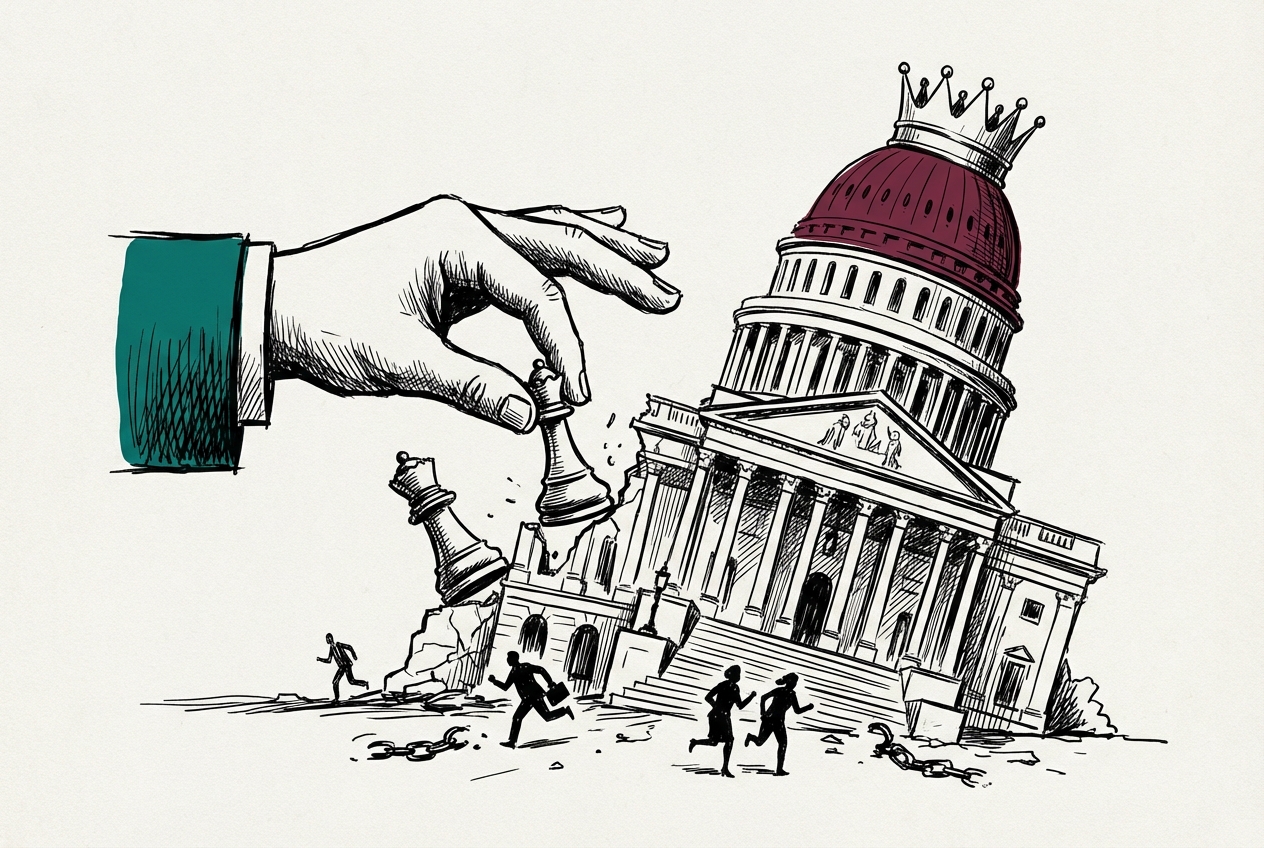
Regime change refers to the deliberate replacement of a foreign government, typically through military force, covert action, or induced popular uprising. The 1953 Iran Coup, in which the CIA and MI6 toppled Prime Minister Mosaddegh, is the foundational reference point: it installed the Shah and seeded the revolutionary grievances that produced the Iranian Revolution of 1979. The term carries deep historical weight in Iran, where external interference in governance is a dominant political narrative.
Benjamin Netanyahu declared Regime change an explicit Israeli war aim in late March 2026, stating Israel has "an organised plan with many surprises to destabilise the regime" and addressing Iranians directly. That declaration publicly diverged from Washington: Pete Hegseth had stated days earlier "this is not a Regime change war," while Marco Rubio said the US "would welcome ending the governing system in Tehran" on the same day.
The contradiction between allies is operationally significant. CENTCOM was directed to "dismantle the Iranian regime's security apparatus," a war aim materially broader than nuclear facilities, yet US officials feared Israeli strikes may rally Iranian society behind its government rather than destabilising it. China explicitly opposed any "plotting of colour revolution or seeking Regime change," framing the question as one of sovereignty.
What is regime change?
Did the US say the Iran war is about regime change?
What is the difference between regime change and nuclear disarmament as war aims?
Why does China oppose regime change in Iran?
Has external regime change in Iran been tried before?


