Skip to content
Briefings are running a touch slower this week while we rebuild the foundations.See roadmap
Cuba Dispatch
18MAY

Diesel adrift, grid splits, Rubio at Vatican

5 min read
19:15UTC

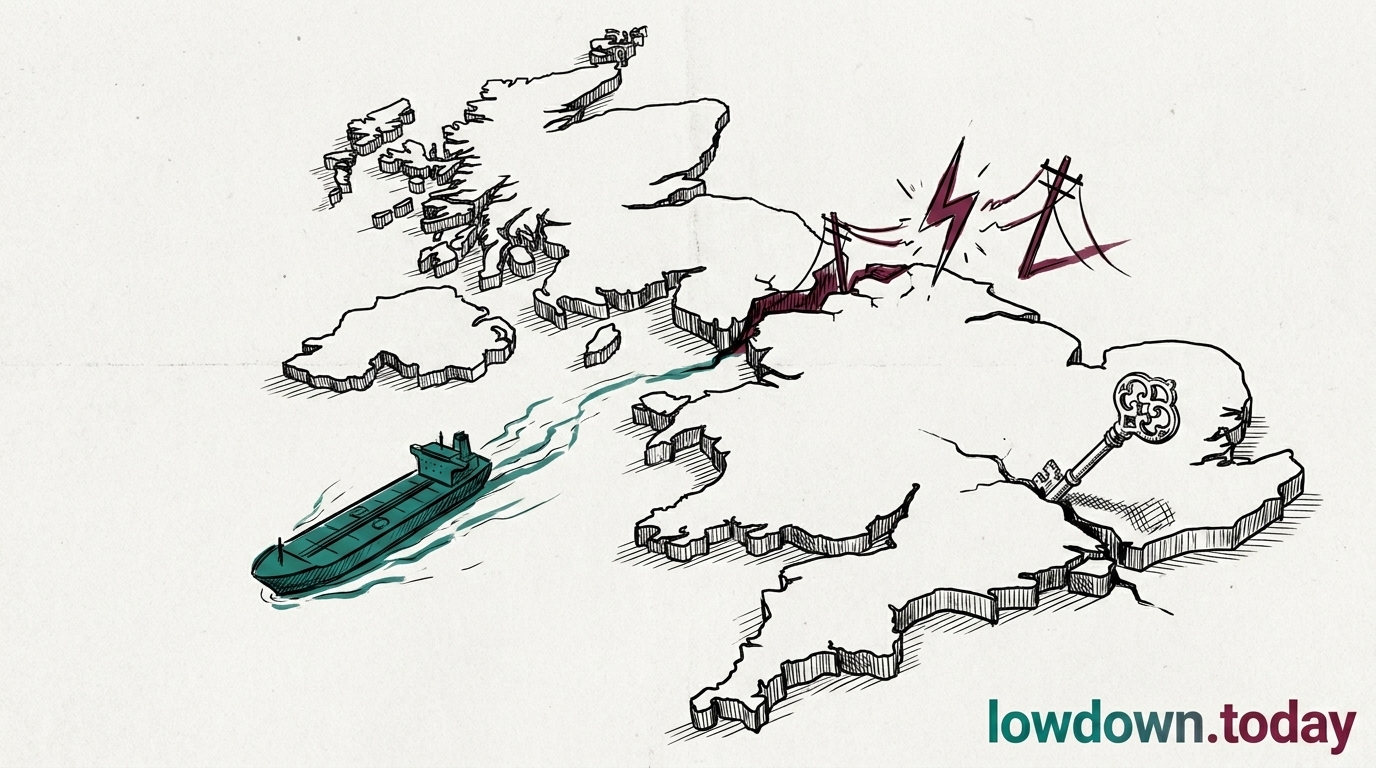
Three fractures in one fortnight. The Sovcomflot Universal sits 1,000 nautical miles out with 270,000 barrels of diesel and no lawful Cuba destination after GL 134B expired on 16 May. The eastern provinces have run on isolated microsystems since the 14 May grid disconnection. Marco Rubio reopened the Vatican channel on 9 May.

Key takeaway

The unified-state proposition Havana has defended since 1959 (one grid, one fuel pipeline, one negotiating channel) fractured in three places in seven days.

This briefing mapped
Loading map…
Regulatory
Infrastructure
Economic
Diplomatic
Domestic
Legal
Humanitarian

OFAC let General Licence 134B lapse on 16 May without a Cuba-specific successor, leaving the Sovcomflot Universal's 270,000 barrels of diesel outside any US authorisation envelope.

Sources profile:This story draws on neutral-leaning sources

OFAC's General License 134B expired at midnight on 16 May 2026 without a Cuba-specific replacement. The Sovcomflot Universal is still adrift roughly 1,000 nautical miles from Matanzas, carrying 270,000 barrels of diesel that the licence's text never authorised landing in Cuba.

The gap matters because GL 134B was always Russia-facing, not Cuba-facing. With Executive Order 14404 now layered on top of the Cuban Assets Control Regulations, the cargo's options collapse to discharge at a non-Cuban port, transhipment to a flag-of-convenience tanker, or sale at a forced-seller discount. 

Cuba's national grid partially disconnected on Thursday 14 May at 06:09; Granma, Santiago de Cuba and Guantánamo ran on isolated local microsystems for several hours.

Sources profile:This story draws on neutral-leaning sources

At 06:09 on 14 May 2026 Cuba's Sistema Eléctrico Nacional partially disconnected from Ciego de Ávila through Guantánamo. UNE brought the four central provinces back over four hours, but Granma, Santiago de Cuba and Guantánamo stayed on local microsystems for vital services only.

UNE's microsystem regime keeps only hospitals, water and bakeries powered in eastern Cuba. Routine partial disconnection means the eastern third of the island runs on islanded diesel and ship-board generation at a known loss rate, with no replacement crude in port. 

The Antonio Guiteras thermoelectric plant suffered its ninth 2026 outage at 04:58 on 14 May; plant director Román Pérez Castañeda said 180 days of capital maintenance are needed but cannot be scheduled.

Sources profile:This story draws on neutral-leaning sources

The Antonio Guiteras thermoelectric plant suffered its ninth 2026 outage at 04:58 on 14 May after a boiler leak. Director Román Pérez Castañeda told Granma the plant needs 180 days of comprehensive maintenance but cannot be taken down because Cuba's situation does not allow it.

Guiteras supplies roughly 280 MW at full load, the single biggest bloc on the SEN. The inter-failure interval has compressed to nine days. Each restart accelerates the underlying boiler degradation the 180-day shutdown was supposed to fix. 

Energy Minister Vicente de la O Levy stated on 13 May that Venezuelan crude supply to Cuba has been interrupted since November 2025, four months earlier than the 18 March PDVSA carve-out previously framed as the proximate cause.

Sources profile:This story draws on neutral-leaning sources

On 13 May 2026 Cuban Energy Minister Vicente de la O Levy told Mesa Redonda that Venezuelan crude supply has been cut since November 2025, four months earlier than Havana had publicly admitted. He put Cuban domestic production at 40,000 barrels a day against demand of 90,000 to 110,000 barrels.

The November-2025 cut date moves the Venezuelan break point upstream of the PDVSA carve-out on 18 March 2026. That changes the story: the supply gap is structural, not a recent sanctions consequence, and the daily shortfall sits at 50,000 to 70,000 barrels with no committed replacement source. 

Sources:CiberCuba

US Secretary of State Marco Rubio held a 45-minute audience with Pope Leo XIV at the Holy See on Saturday 9 May, proposing humanitarian aid to Cuba routed through the Catholic Church rather than GAESA.

Sources profile:This story draws on neutral-leaning sources

On 9 May 2026 US Secretary of State Marco Rubio held a 45-minute private audience with Pope Leo XIV at the Holy See covering Cuba and Venezuela. Washington proposed routing humanitarian aid to Cuba through the Catholic Church rather than GAESA or any state channel. The same day, Havana Cathedral held a state-level mass marking the first anniversary of Leo XIV's pontificate.

The Vatican channel is the only diplomatic line where the Trump administration and Havana share a trusted interlocutor. Rubio's choice of the Pope as venue, after the 10 April Havana talks stalled, narrows the negotiating geometry to a single institution with 90 years of Cuban operational history. 

The 1 May Cuba order Trump signed has been formally numbered Executive Order 14404; OFAC published Cuba General License 1 on 7 May as a savings clause aligning the new order with the existing Cuban Assets Control Regulations.

Sources profile:This story draws on neutral-leaning sources

Executive Order 14404, signed by President Trump on 1 May 2026, was formally numbered this week. OFAC published Cuba General License 1 on 7 May as a savings clause aligning the order with the Cuban Assets Control Regulations, simultaneously issuing FAQs 1251 through 1256 and re-tagging GAESA and Moa Nickel SA entries with [Cuba-EO].

The formal numbering and savings clause complete the legal architecture. EO 14404 now sits on top of the 1963 CACR framework rather than parallel to it, meaning every existing Cuba transaction must be re-tested against both regimes. OFAC has signalled that future Cuba designations will land under the new [Cuba-EO] tag, not the legacy [Cuba] tag. 

OFAC added Ania Guillermina Lastres Morera to the Specially Designated Nationals list on 7 May under the [CUBA-EO] tag, the first individual designation under the new order.

Sources profile:This story draws on neutral-leaning sources

On 7 May 2026 OFAC added Ania Guillermina Lastres Morera, born 19 August 1962 in Marianao, Havana, to the Specially Designated Nationals list under the new [Cuba-EO] tag. She is the first individual designation under Executive Order 14404.

The choice of a previously unprofiled mid-level intelligence officer rather than a senior official signals OFAC is starting at the operational-security tier and working upwards. The [Cuba-EO] tag also extends to family members 18 and over, opening a designation pipeline that the 1963 CACR did not authorise. 

Rep. Carlos Giménez (FL-26) issued a 7 May press release endorsing Executive Order 14404 as 'necessary to target the regime's security apparatus'; Mario Díaz-Balart and María Elvira Salazar aligned publicly.

Sources profile:This story draws on neutral-leaning sources

Representative Carlos Giménez (FL-26) issued a public press release on 7 May 2026 endorsing Executive Order 14404 as 'necessary to target the regime's security apparatus...The days of impunity are over'. Mario Díaz-Balart and María Elvira Salazar aligned publicly with the endorsement the same day.

The three-member Florida Cuban-American delegation locked in unified support for EO 14404 on day six of the order's lifespan. The press release converts the 11 February letter , which Treasury had ignored for 96 days, into a House Republican policy anchor that constrains future executive walk-back. 

Rep. Delia Ramírez (D-IL) led 32 House Democrats in a 14 May letter to Defense, State and Homeland Security characterising potential US military action against Cuba as 'illegal, highly destabilising, and catastrophic for the Cuban people'.

Sources profile:This story draws on neutral-leaning sources

On 14 May 2026 Representative Delia Ramírez (D-IL) led 32 House Democrats in a joint letter to the Secretaries of Defense, State and Homeland Security characterising potential US military action against Cuba as 'illegal, highly destabilising, and catastrophic for the Cuban people'. Senators Kaine, Schiff and Gallego publicly endorsed the House initiative.

The 32-signatory letter follows the 29 April Senate war-powers vote , where Republicans sustained Senator Rick Scott's point-of-order to block discharge of S.J.Res.124 51-47. With 35 combined federal legislators now opposed on record, the administration faces structured congressional resistance to any kinetic Cuba option without Article II authorisation. 

Cuba's Supreme Popular Court rejected Luis Manuel Otero Alcántara's early-release appeal in late April, ruling the natural sentence-end of 9 July 2026 stands.

Sources profile:This story draws on neutral-leaning sources

Cuba's Supreme Popular Court rejected Luis Manuel Otero Alcántara's early-release appeal in late April 2026, ruling the natural sentence-end date of 9 July 2026 stands. The ruling procedurally closed the early-release vector before the 24 April US dissident-release deadline arrived.

Otero is the San Isidro Movement founder whose freedom Washington made the 24 April deadline's load-bearing demand. The court's pre-deadline ruling removed any face-saving release path, forcing both governments to accept either the natural 9 July end-date or a continued stand-off through summer. 

EU Special Representative for Human Rights Kajsa Ollongren received the Acuerdo de Liberación in Brussels on 13 May from OCDH, Cuba Decide, Alianza de Cristianos de Cuba and Christian Solidarity Worldwide.

Sources profile:This story draws on neutral-leaning sources

On 13 May 2026 in Brussels, EU Special Representative for Human Rights Kajsa Ollongren received the Acuerdo de Liberación from four organisations: OCDH, Cuba Decide, Alianza de Cristianos de Cuba and Christian Solidarity Worldwide. The document demands EU asset freezes on named Cuban officials and a victims' compensation fund.

The handover formalises the four-organisation coalition's two-month campaign since the 2 March signing in Miami. Acceptance at Ollongren's level activates the EU Global Human Rights Sanctions Regime review pathway, which is the procedural channel for any future EU asset-freezing action under the Magnitsky-equivalent instrument adopted in December 2020. 

Bloomberg's May 2026 satellite analysis confirmed Cuban nighttime light fell by up to 50% across the island, with Santiago de Cuba and Holguín worst affected.

Sources profile:This story draws on centre-left-leaning sources from United States
United States

Bloomberg satellite analysis published in May 2026 confirmed Cuban nighttime light fell by up to 50% across the island, with Santiago de Cuba and Holguín worst affected. The drop provides visual macro-confirmation of the SEN's microsystem fragmentation.

Satellite radiometry is the most credible cross-check available, because it sidesteps both Cuban official reporting and émigré-source amplification. A 50% drop in nighttime emissions at metropolitan scale corresponds to roughly 60-65% of normal load being unserved at the evening peak, consistent with the 14 May fragmentation pattern. 

Sources:Bloomberg

Cuba's National Civil Defense Staff instructed households on Saturday 16 May to assemble three-day food backpacks under the Meteor 2026 drill, three days after the energy minister conceded the island was 'out of fuel'.

Sources profile:This story draws on neutral-leaning sources

On 16 May 2026 the National Civil Defense Staff instructed Cuban households to assemble three-day food backpacks under the Meteor 2026 civil-defence preparedness drill. The instruction landed three days after Energy Minister De la O Levy publicly conceded the island was 'out of fuel' .

Meteor is Cuba's annual hurricane-season exercise. The 2026 framing extends it from hurricane preparedness to general emergency reserves, with explicit instruction to assemble portable rations. The proximity of the announcement to the fuel-shortage admission converts a routine drill into a household-level acknowledgement that conditions could deteriorate further. 

Sources:CiberCuba
Closing comments

Direction: sideways with structural deterioration. The Universal's continued drift past 16 May 2026 with no GL 134C and no enforcement signals US tolerance of an indefinite legal-limbo holding pattern, which keeps Russia exposed without forcing a 270,000-barrel discharge or interdiction. The 14 May 06:09 controlled-fragmentation event is a step-change from the rolling-blackout pattern: a state-altering operational decision by UNE, not an evening peak deficit. Tipping mechanism on the Universal sits with Treasury Secretary Bessent's GL 134C decision within 14 days of the 16 May expiry; tipping mechanism on the grid sits with UNE's pre-August scheduling decision on the 180-day Antonio Guiteras capital-maintenance window (last comprehensive overhaul: 36 years ago).

Different Perspectives
Trump administration and Florida Republican delegation (Bessent, Rubio, Giménez, Díaz-Balart, Salazar)
OFAC let GL 134B lapse on 16 May without a successor and added Lastres Morera as the first SDN under EO 14404 on 7 May. Giménez's 7 May press release endorsed the order as targeting the "regime's security apparatus"; Díaz-Balart and Salazar aligned. The Florida delegation moved from pressure to credit-taking on the personal-sanctions architecture.
Cuban government (Díaz-Canel, Rodríguez Parrilla, De la O Levy)
Díaz-Canel's 13 May Facebook post offered dialogue "on equal terms" while ruling out political prisoners on the table; De la O Levy publicly conceded the island was "out of fuel" and corrected the Venezuelan cut-off date to November 2025. The framing casts US pressure as collective punishment without naming EO 14404 directly.
Holy See (Pope Leo XIV)
Pope Leo XIV hosted Rubio for 45 minutes on 9 May with Cuba and Venezuela on the agenda, opening institutional space for US humanitarian aid routed through the Catholic Church rather than GAESA. His three pre-pontifical Cuba visits (2008, 2011, 2019) give the Holy See standing inside Cuban Catholic infrastructure that the State Department lacks.
Russia and Sovcomflot
Moscow stayed publicly silent on the Universal's status after the 16 May GL 134B expiry. The 270,000-barrel diesel cargo sits roughly 1,000 nautical miles from Cuba under an exclusion clause operative from loading; Sovcomflot carries indefinite legal exposure without US enforcement, and the announced replacement for the depleted Kolodkin is the very vessel that cannot lawfully unload.
European Union (Kajsa Ollongren)
Ollongren received the Acuerdo de Liberación in Brussels on 13 May from OCDH, Cuba Decide, Alianza de Cristianos de Cuba and Christian Solidarity Worldwide, a four-organisation petition for EU asset freezes on named Cuban officials and a victims' compensation fund. Brussels has been asked to open a restrictive-measures track parallel to the US personal-sanctions architecture.
OCDH and dissident coalition (Otero Alcántara, Osorbo proxies)
The Madrid-based OCDH coordinated the 13 May Brussels handover after the Cuban Supreme Popular Court rejected Otero Alcántara's early-release appeal in late April. The coalition's pivot to the EU restrictive-measures track follows procedural closure of the early-release vector before the 24 April US deadline lapsed.
