S.J.Res.124
Senate war-powers resolution introduced April 2026 to limit US military action against Cuba.
Last refreshed: 7 May 2026 · Appears in 2 active topics
How did a Senate procedural vote reshape Cuba's fuel crisis in May 2026?
Timeline for S.J.Res.124
Failed in the Senate 47-49 on 23 July
Iran Conflict 2026: House votes to end war, Senate won'tStood as the procedurally distinct Senate route lost 51-47 on 29 April
Cuba Dispatch: 32 House Democrats warn against Cuba actionBlocked from discharge by Senate procedural vote
Cuba Dispatch: Senate blocks Cuba war-powers check 51-47Background
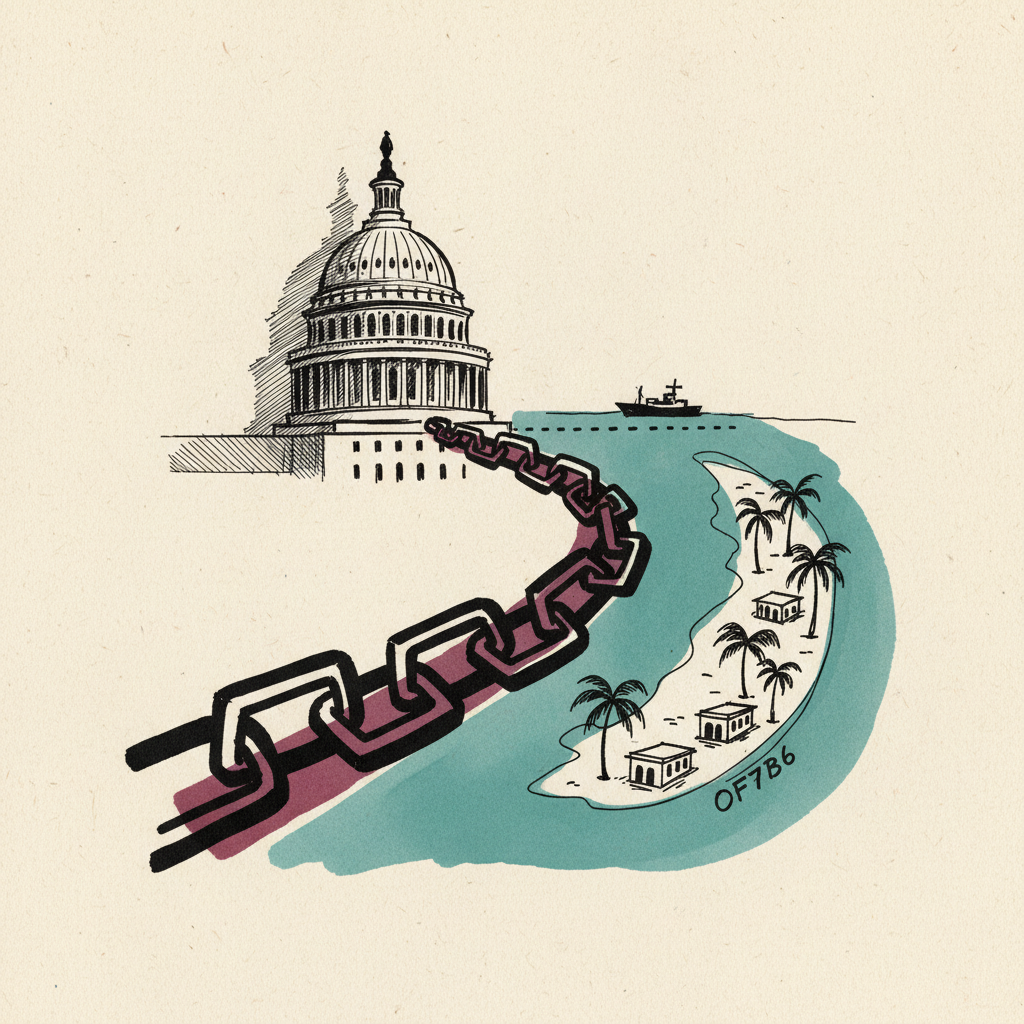
S.J.Res.124 was introduced on 25 April 2026 by Democratic senators Tim Kaine (Virginia), Adam Schiff (California), and Ruben Gallego (Arizona) under the War Powers Resolution of 1973. The resolution would have required the President to remove US armed forces from any unauthorised hostilities against Cuba within 60 days, and its drafters defined Coast Guard blockade and quarantine operations in the Florida Straits as hostilities for that purpose. It was blocked from reaching a floor vote on 29 April when the Senate voted 51-47 to sustain a point of order raised by Rick Scott of Florida.
The resolution's key legal argument was that the US naval presence deterring sanctioned tankers from declaring Cuban destinations constituted unauthorised hostilities under the 1973 War Powers Resolution, which requires congressional authorisation for sustained deployments. Bloomberg had reported the naval posture as a de facto blockade deterring Russian crude deliveries. Two Republicans, Susan Collins of Maine and Rand Paul of Kentucky, joined Democrats in opposing the point of order; Democrat John Fetterman of Pennsylvania voted with Republicans.
The failed resolution left no legislative check on the Trump administration's Cuba military posture. In practical terms, the 51-47 vote tells every shipping desk that US naval operations in the Caribbean need no congressional authorisation, which materially affects tanker route decisions for the Russian Sovcomflot vessel Universal, covered by OFAC General Licence 134B and drifting 1,000 nautical miles from Cuba at 2-3 knots with no declared destination.