Skip to content
Briefings are running a touch slower this week while we rebuild the foundations.See roadmap
Cuba Dispatch
18MAY

SEN splits east from centre at 06:09

3 min read
19:15UTC

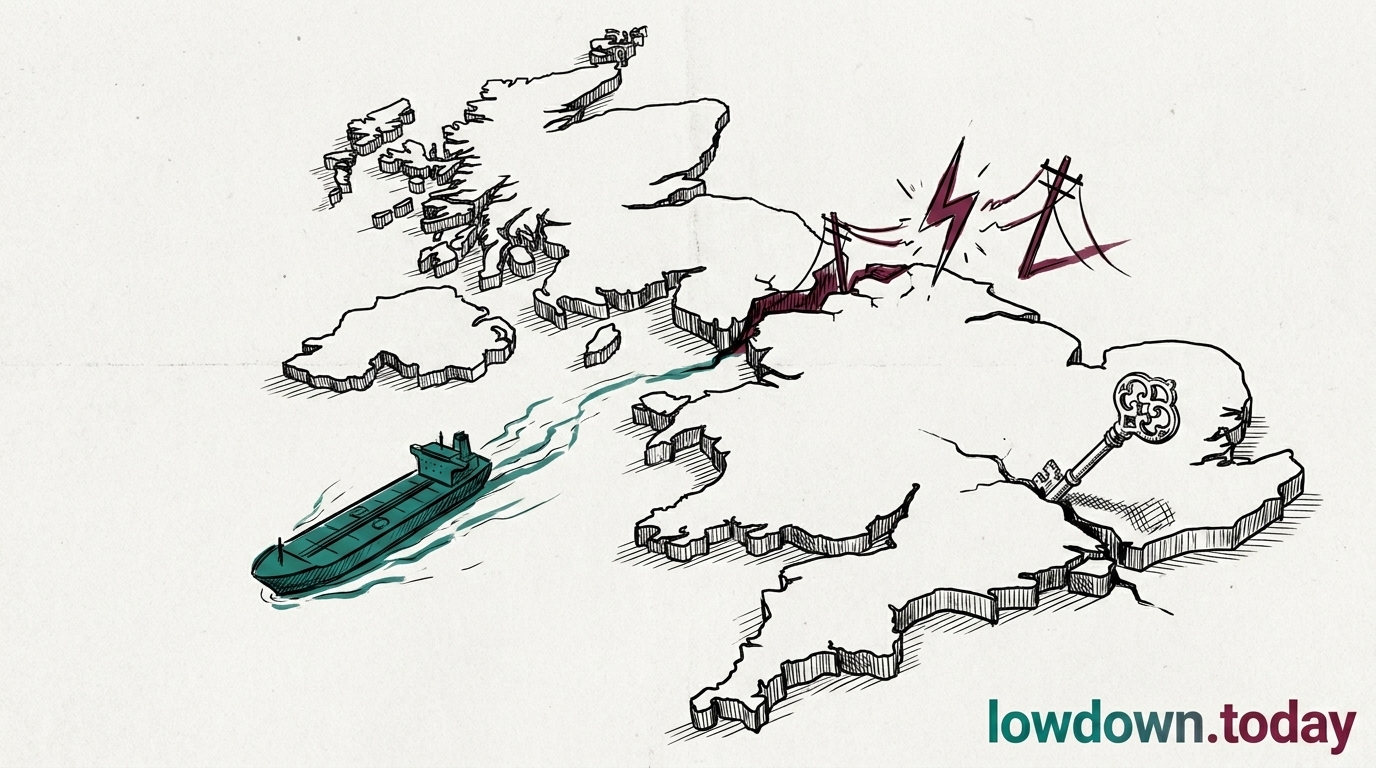
Cuba's national grid partially disconnected on Thursday 14 May at 06:09; Granma, Santiago de Cuba and Guantánamo ran on isolated local microsystems for several hours.

PoliticsDeveloping
Key takeaway

UNE fragmented the SEN at 06:09 on 14 May to avoid a national blackout, isolating three eastern provinces.

At 06:09 on Thursday 14 May 2026, the Sistema Eléctrico Nacional (SEN, Cuba's national electrical grid) partially disconnected from Ciego de Ávila through Guantánamo. Unión Eléctrica Nacional (UNE, the state electrical utility) reconnected the four central provinces in sequence over the following four hours: Ciego de Ávila at 08:16, Camagüey at 09:19, Las Tunas at 09:50, Holguín at 10:44. Granma, Santiago de Cuba and Guantánamo continued operating on local microsystems for vital services only, according to UNE's Nota Informativa.

Hospitals, water-pumping stations and refrigeration in the three eastern provinces ran on local generators on top of the rolling blackouts the country was already absorbing. UNE's controllers identified the 04:58 boiler-leak failure of the Antonio Guiteras thermoelectric plant in Matanzas as the proximate trigger, the same plant whose seventh 2026 failure on 5 May UNE technicians had publicly committed to resolve by 10 May.

Grid engineers describe partial disconnection as a controlled-collapse mode: the operator sacrifices the unified grid to prevent a full national blackout of the kind Cuba absorbed in October 2024 and again in March 2025. UNE's 14 May choice is the first publicly documented 2026 case of the utility selecting fragmentation as the preferred operational state. For several hours that morning, Cuba's eastern provinces operated as separate electrical realities from Havana.

UNE's own 14 May forecast put the peak deficit at 2,050 MW against demand of 3,250 MW, with Havana on a 20-22 hour daily blackout cycle. Reconnection of the three eastern provinces to the SEN was not confirmed in the utility's notice. The 1959-era unitary-grid claim has stopped being reliably true on any given morning.

Deep Analysis

In plain English

The **Sistema Eléctrico Nacional**, or SEN, is Cuba's electricity grid. It runs in a single line from the west of the island to the east. When the generation in the middle of the country drops too low to push power all the way east, the eastern provinces automatically cut themselves off so the rest of the country does not collapse with them. That is what happened at 06:09 on 14 May. The grid pinched at **Ciego de Ávila**. The central provinces came back online over four hours. The eastern provinces, including the city of **Santiago de Cuba**, stayed disconnected and switched to small local generators running only for hospitals, water pumping and basic services. For homes and shops in the east, this means the lights stay off until either central generation recovers or replacement fuel arrives.

Deep Analysis
Root Causes

The fragmentation reflects Cuba's transmission topology rather than generation shortfall alone. The SEN runs as a single longitudinal corridor from Pinar del Río to Guantánamo with limited east-west redundancy. When central generation drops below the threshold to push power east through the **Ciego de Ávila** bottleneck, the eastern end islands automatically. The 2026 sequence is the third instance this year of automatic islanding rather than operator-commanded shedding.

Fuel composition compounds the topology problem. **Antonio Guiteras** runs on Russian Urals-grade crude; the smaller eastern plants run on Venezuelan Merey-16 or, when Merey runs out, on heavier domestic crude with sulphur content above the boilers' design tolerance. With Venezuelan supply cut since November 2025 , the eastern plants are burning fuel they were not engineered for, raising forced-outage rates and lowering the threshold at which fragmentation triggers.

What could happen next?
  • Consequence

    Eastern province microsystem regime will persist until at least the next foreign crude shipment arrives, which Energy Minister De la O Levy has not confirmed.

    Short term · 0.8
  • Risk

    Repeated automatic islanding accelerates boiler degradation across eastern plants running off-spec fuel, raising the probability of compounded failure when reconnection is attempted.

    Medium term · 0.65
  • Consequence

    Tourism receipts in Holguín and Santiago will fall a further 8-12% through the May-June shoulder season as tour operators reroute bookings to Varadero and Cayo Coco.

    Short term · 0.7
First Reported In

Update #4 · Diesel adrift, grid splits, Rubio at Vatican

Unión Eléctrica Nacional· 18 May 2026
Read original
Different Perspectives
OCDH and dissident coalition (Otero Alcántara, Osorbo proxies)
The Madrid-based OCDH coordinated the 13 May Brussels handover after the Cuban Supreme Popular Court rejected Otero Alcántara's early-release appeal in late April. The coalition's pivot to the EU restrictive-measures track follows procedural closure of the early-release vector before the 24 April US deadline lapsed.
European Union (Kajsa Ollongren)
Ollongren received the Acuerdo de Liberación in Brussels on 13 May from OCDH, Cuba Decide, Alianza de Cristianos de Cuba and Christian Solidarity Worldwide, a four-organisation petition for EU asset freezes on named Cuban officials and a victims' compensation fund. Brussels has been asked to open a restrictive-measures track parallel to the US personal-sanctions architecture.
Russia and Sovcomflot
Moscow stayed publicly silent on the Universal's status after the 16 May GL 134B expiry. The 270,000-barrel diesel cargo sits roughly 1,000 nautical miles from Cuba under an exclusion clause operative from loading; Sovcomflot carries indefinite legal exposure without US enforcement, and the announced replacement for the depleted Kolodkin is the very vessel that cannot lawfully unload.
Holy See (Pope Leo XIV)
Pope Leo XIV hosted Rubio for 45 minutes on 9 May with Cuba and Venezuela on the agenda, opening institutional space for US humanitarian aid routed through the Catholic Church rather than GAESA. His three pre-pontifical Cuba visits (2008, 2011, 2019) give the Holy See standing inside Cuban Catholic infrastructure that the State Department lacks.
Cuban government (Díaz-Canel, Rodríguez Parrilla, De la O Levy)
Díaz-Canel's 13 May Facebook post offered dialogue "on equal terms" while ruling out political prisoners on the table; De la O Levy publicly conceded the island was "out of fuel" and corrected the Venezuelan cut-off date to November 2025. The framing casts US pressure as collective punishment without naming EO 14404 directly.
Trump administration and Florida Republican delegation (Bessent, Rubio, Giménez, Díaz-Balart, Salazar)
OFAC let GL 134B lapse on 16 May without a successor and added Lastres Morera as the first SDN under EO 14404 on 7 May. Giménez's 7 May press release endorsed the order as targeting the "regime's security apparatus"; Díaz-Balart and Salazar aligned. The Florida delegation moved from pressure to credit-taking on the personal-sanctions architecture.

