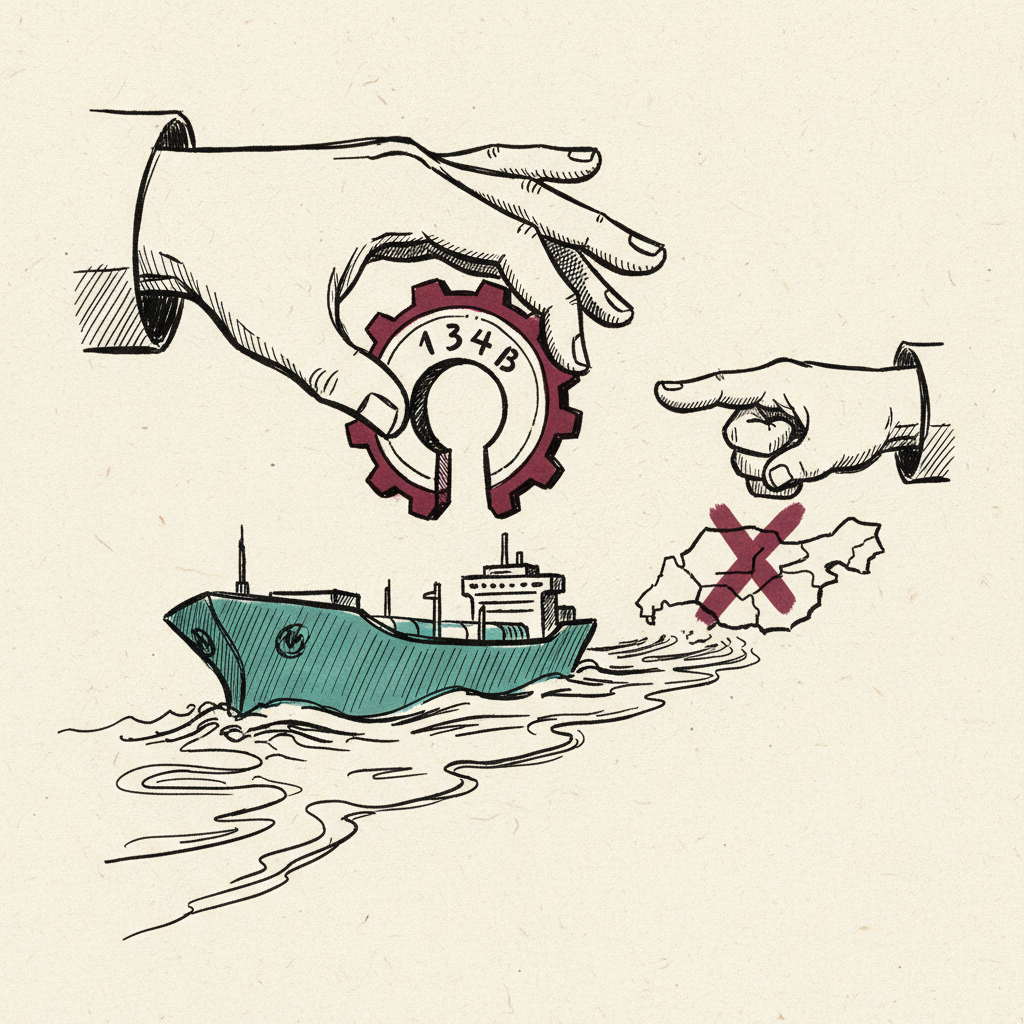
General License 134B
Expired OFAC waiver for Russian crude in-transit completions; lapsed 16 May 2026; superseded by GL 134C (valid to 17 June 2026).
General License 134B expired on 16 May after allowing completion of Russian crude cargoes loaded before 17 April. OFAC issued its successor, GL 134C, on 18 May, keeping the same fixed loading cut-off while extending the completion window.
Last refreshed: 12 October 2026 · Appears in 4 active topics
With no GL 134C, which European buyers are now exposed on incomplete Russian cargoes?
Timeline for General License 134B
Mentioned in: Sanctions vice tightens on Russian crude
European Oil MarketsUnpublished successor to GL 134C; its absence is the binary risk on 17 June
European Oil Markets: Mentioned in: OFAC's GL 134C lapses 17 June; EU cap at riskMentioned in: GL 131F resets the Lukoil sale clock
European Oil Marketssuperseded by GL 134C
European Oil Markets: Mentioned in: OFAC signs GL 134C, third Russia bridgeAuthorised Russian crude delivery through 17 June 2026, excluding Cuba
Russia-Ukraine War 2026: Treasury Drops Cuba From Russian-Crude WaiverBackground
General License 134B was an Office of Foreign Assets Control general licence for winding down transactions involving Russian-origin crude oil and petroleum products already loaded on vessels. Its function was limited: it covered completion activities for a defined set of cargoes rather than creating an open authorisation for new Russian oil shipments.
The licence belonged to a rolling series of short-term permissions following GL 134A. Its fixed loading cut-off mattered because later extensions could preserve services for cargoes already at sea without covering newly loaded cargoes. On 17 April, reporting described the licence as allowing sales through 16 May for oil loaded before that date.
GL 134B remains useful as a reference point for how OFAC used narrow, time-bound licences to manage sanctions exposure in shipping, insurance and delivery chains. Its successor, GL 134C, retained the earlier cut-off while extending the completion period to 17 June.
The waiver narrowed before expiry
On 17 April, General License 134B authorised services needed to complete sales and delivery of Russian crude loaded before that date. The licence gave vessels, insurers and service providers a time-limited route to finish transactions already under way.
Its expiry on 16 May left the licence series at a legal cliff before OFAC issued GL 134C on 18 May. The successor retained the 17 April loading cut-off and ran to 17 June, so the series became progressively narrower rather than reopening Russian oil trade.
What is OFAC General License 134B?
Does GL 134B cover Iran?
When does General License 134B expire?
Why did OFAC renew the Russian oil licence but not the Iranian one?
What happens to Russian oil cargoes now that General License 134B has expired?
Why did the US not renew General License 134B with a new GL 134C?
How does the Adani $275m fine relate to the GL 134B expiry?
What did General License 134B cover for shadow-fleet tankers?


Written with AI from Lowdown's published reporting. Not individually reviewed by an editor. Updated 12 October 2026. Editorial standards.