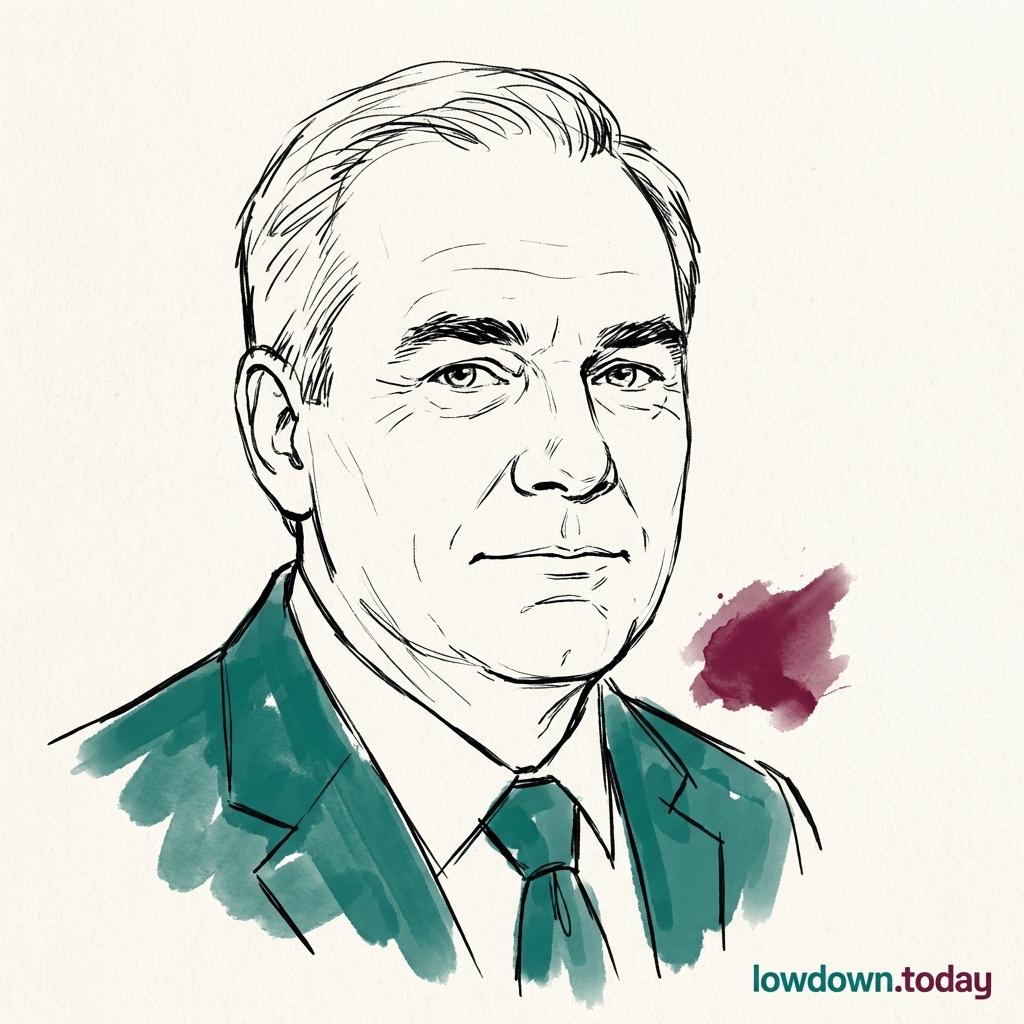
Tim Kaine
Democratic Senator from Virginia and cosponsor of bipartisan War Powers Resolution requiring congressional approval for further Iran military action.
Last refreshed: 28 July 2026 · Appears in 2 active topics
Why did a Democrat and a libertarian Republican team up to restrain Trump on Iran?
Timeline for Tim Kaine
Sponsored the Iran war-powers resolution advanced 50-47 on 20 May
Iran Conflict 2026: War powers clock outlasts the HouseMentioned in: WPR wind-down hits 1 June cliff
Iran Conflict 2026Sponsored the Iran war-powers resolution discharged from committee
Iran Conflict 2026: Senate 50-47 discharges Kaine Iran resolution to floorEndorsed the House initiative after losing the 29 April discharge motion
Cuba Dispatch: 32 House Democrats warn against Cuba actionRejected WPR clock-pause theory on the Senate floor
Iran Conflict 2026: Trump letter declares the war overBackground
Tim Kaine has represented Virginia in the US Senate since 2013, serving on the Senate Armed Services and Foreign Relations Committees. A former Governor of Virginia and Mayor of Richmond, he was the Democratic vice-presidential nominee alongside Hillary Clinton in 2016. He has made congressional war powers authority a sustained focus, repeatedly invoking the 1973 War Powers Resolution against executive military actions in Yemen, Syria, and Iran.
In early 2026, Kaine co-sponsored a bipartisan War Powers Resolution with Republican Senator Rand Paul requiring congressional authorisation before any further US military action against Iran. That resolution failed 47-53 on 4 March 2026, with Democrat John Fetterman voting against. Kaine continued pressing on the WPR front as the war extended: by 29 April Chuck Schumer had scheduled a sixth WPR vote, with the legal backdrop shifting — Section 1544(b) of the War Powers Resolution adds a 30-day wind-down period to the 60-day clock, placing the operative legal cliff at approximately 1 June rather than 1 May. He also joined the bipartisan AI jobs data coalition, extending his legislative reach from war powers to workforce policy.
Kaine's sustained war-powers activism has made him the Senate's most consistent institutional voice for congressional control over executive military discretion — a position that draws unlikely allies like Rand Paul and is equally resisted by both Republican leadership and hawkish Democrats. His repeated floor challenges have failed, but the accumulation of five losing votes has progressively tightened the margin and embedded the WPR's legitimacy as a constraint mechanism.
Who is Senator Tim Kaine?
What was the Kaine-Paul war powers resolution?
Is Tim Kaine involved in the AI jobs debate?
Kaine-Paul resolution vs Massie-Khanna resolution?
When does the War Powers Resolution 60-day clock actually expire for Iran?


