Skip to content
Briefings are running a touch slower this week while we rebuild the foundations.See roadmap
Cuba Dispatch
27APR

US aircraft lands in Havana, first since 2016

4 min read
10:55UTC

Assistant-secretary State Department officials flew into Havana on Friday 10 April for direct talks; Cuba's foreign ministry confirmed the visit publicly eleven days later.

PoliticsDeveloping
Key takeaway

The first US government aircraft to land in Havana since 2016 confirmed a direct bilateral channel runs alongside EO 14380.

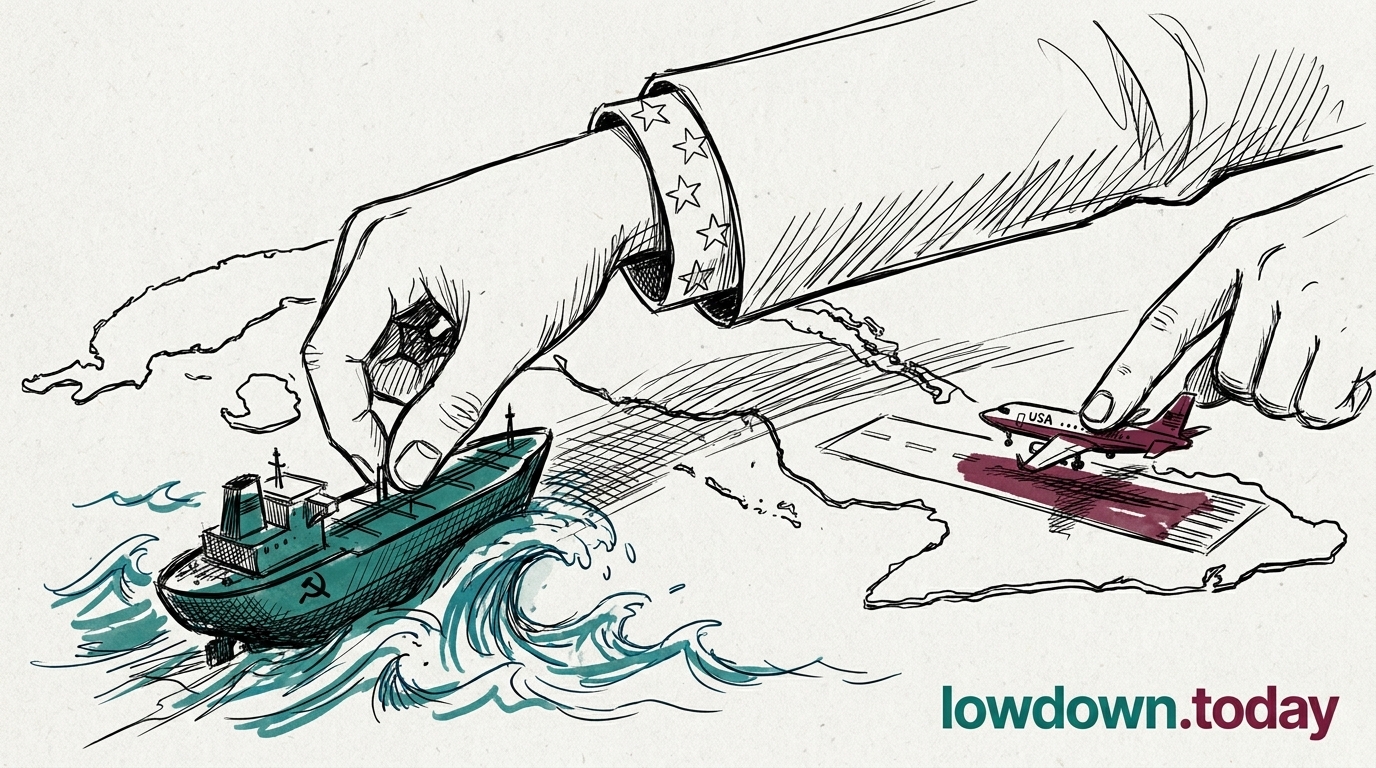
A US government aircraft landed in Havana on Friday 10 April 2026 carrying assistant-secretary-level State Department officials, the first US government landing on the island since 2016. Cuba's foreign ministry under-director Alejandro Garcia del Toro confirmed the talks publicly on Tuesday 21 April, describing them as "respectful and professional" with "no threats or deadlines". Axios broke the visit; Al Jazeera and the Spokesman-Review corroborated.

The published US conditions ran across the structure of the Cuban state. Washington asked for the release of named political prisoners, an end to repression, economic liberalisation, Starlink terminal access, compensation for assets confiscated in 1959, and a reduction in Russian and Chinese influence on the island. Starlink is the satellite-internet service that bypasses Cuba's state telecom monopoly; the request for terminal access targets Havana's information control directly. Garcia del Toro called the secondary-tariff threat "blackmail" and said Cuba's first demand was the lifting of the energy blockade.

EO 14380, the Trump executive order activated in late January , nominally walls Cuba off from US engagement; the Havana landing demonstrates that a direct State Department track has been running in parallel for at least eight days before GL 134B extended Russian-oil cover. Foreign Minister Bruno Rodríguez Parrilla's 14 April statement framing US sanctions as "extraterritorial" coercion made no reference to direct contact, consistent with Garcia del Toro's confirmation following the visit by eleven days rather than preceding it.

UNE deficit reports put Cuba's grid shortfall at 1,732 MW on 15 April; Garcia del Toro's energy-blockade demand frames the bilateral channel as a fuel-supply negotiation as much as a human-rights one. The Florida delegation revocation letter has produced no Treasury response in 75 days, leaving the State Department track as the operational US Cuba policy of the fortnight.

Deep Analysis

In plain English

For the first time since 2016, a US government plane landed in Havana and American diplomats met their Cuban counterparts face to face. The US brought a list of demands: free specific political prisoners, allow SpaceX's Starlink internet service to operate, reduce Russian and Chinese influence on the island, and compensate Americans for property seized after the 1959 revolution. Under-director Garcia del Toro confirmed the meeting on 21 April but called the US secondary-tariff threat blackmail. Havana's stated precondition for any deal was the lifting of the energy sanctions that had left the UNE grid running at a 1,732 MW deficit as of 15 April (ID:2437). Garcia del Toro also told SCMP that specific US conditions reported by Axios were not presented in the form described.

Deep Analysis
Root Causes

The visit took place inside the EO 14380 sanctions architecture that has, since 29 January, made Cuba entirely dependent on Russian crude for its thermal fleet. That dependency created the leverage Washington brought to the table: the energy blockade precondition Cuba named is a direct reference to the UNE deficit figures (ID:2437). The US chose to open the channel now because the grid crisis gave it a concrete deliverable to offer or withhold.

The 11 February Florida-delegation revocation letter (ID:2446) created a public posture problem for State: any direct engagement with Havana risked the delegation's accusation of appeasement. The 75 days of Treasury silence on that letter, running in parallel with the Havana visit, suggests the administration decided to hold the diplomatic and congressional tracks separately.

What could happen next?
  • Consequence

    Cuba's public rejection of the secondary-tariff framing as blackmail forecloses a quick face-saving exchange; any agreement requires both sides to walk back their opening public positions.

    Short term · 0.8
  • Opportunity

    The visit establishes an assistant-secretary-level channel that can be resumed without the logistical and political threshold of a new aircraft landing; subsequent contacts can proceed through the Havana interests section.

    Medium term · 0.72
  • Risk

    If the lapsed dissident-release deadline produces no US enforcement response, Cuba's leadership will calibrate future US ultimatums as non-binding, raising the threshold for any Cuban concession.

    Medium term · 0.77
First Reported In

Update #2 · Two Cuba policies, one fortnight

The Spokesman-Review· 27 Apr 2026
Read original
Different Perspectives
Florida Cuban-American congressional delegation (Gimenez, Diaz-Balart, Salazar)
The three Florida House Republicans demanded OFAC revoke all Cuba licences on 11 February; Treasury has not responded at 85 days. Their silence after the 51-47 Senate vote signals dissatisfaction with the executive's pace, but the delegation has not broken publicly with the administration's two-track direction.
Vatican / Holy See channel
The Holy See channel mediated the 2015 Obama-Castro normalisation but has not been publicly credited or disavowed in the 10 April back-channel contacts. The lapsed 24 April dissident-release deadline with no Vatican statement suggests the channel has not produced a mediating intervention in this cycle.
US Senate war-powers cohort (Kaine, Schiff, Gallego)
The three Democrats who introduced S.J.Res.124 on 25 April lost the 51-47 discharge vote two days later; Collins and Paul crossing on institutionalist and libertarian grounds locate a small but identifiable bloc to build on for any renewed motion. Democrats would need to flip two more Republicans or recover Fetterman's vote.
WOLA and engagement-leaning US policy community
WOLA has assessed that the 1 May family-designation framework is structurally novel but may have limited enforcement bite against Cuba's nomenklatura, which holds wealth predominantly in peso-denominated state positions with limited offshore exposure. CEPR has tracked the informal USD/CUP rate as a real-time signal of fuel supply risk and MLC availability simultaneously.
OCDH and Prisoners Defenders
OCDH's April report logged 366 repressive actions against 277 in March, with active prison deterioration during the announced indulgence. Prisoners Defenders' political-prisoner count reached 1,250, the highest in its history, while Amnesty International confirmed zero prisoners of conscience released in any 2026 pardon wave.
Russian government / Sovcomflot
Sovcomflot dispatched the Kolodkin in March and positioned the Universal as the follow-on, but Bloomberg's AIS reporting shows the Universal drifting 1,000 nautical miles from Cuba since 14 April at 2-3 knots with no declared destination. Whether the stall reflects a commercial decision or Moscow testing US deterrence before GL 134B expires is not determinable from public data.

