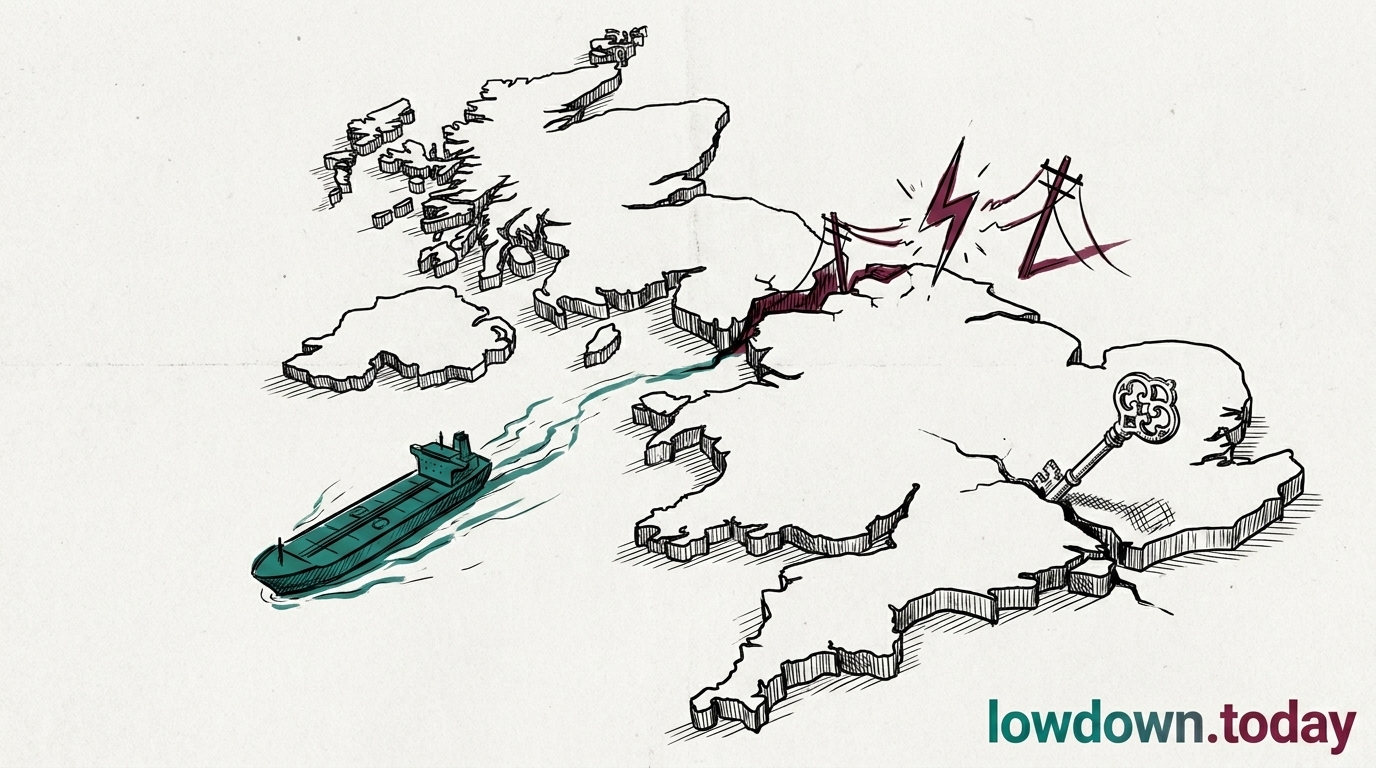
General Licence 134B lapsed at midnight Washington time on Saturday 16 May. The Office of Foreign Assets Control (OFAC, the US Treasury sanctions administrator) issued no GL 134C and no Cuba-specific tanker general licence under the new Executive Order 14404. The Sovcomflot Universal, a 50,923 DWT Russian state tanker carrying 270,000 barrels of diesel, last broadcast on AIS (Automatic Identification System) on 29 April at 2.2 knots west-south-west, roughly 1,000 to 1,600 kilometres from Cuba.
Baker McKenzie's 16 May sanctions analysis confirmed what the licence text already stated: GL 134B is a Russia-programme wind-down instrument, and its operative language explicitly excludes from authorisation "transactions involving persons located in, or organised under the laws of...Cuba". OFAC has carried that exclusion clause in the licence since first issuance. The vessel has therefore never had a lawful Cuba unloading window, even before it ran out of time.
Lowdown logged the Universal as adrift on 5 May; the 16 May expiry hardened that drift into legal limbo. Cuba General License 1, OFAC's 7 May savings clause under EO 14404, attaches the new order to the existing Cuban Assets Control Regulations (CACR, the modern US embargo framework). The savings clause adds no Cuba fuel-delivery permission. Treasury's absence of a GL 134C reads as policy by omission: the agency keeps the carrying costs on Sovcomflot and on the wider Russian shadow fleet without having to interdict, enforce, or extend.
For Havana, the practical effect is that the vessel announced as the successor to the depleted Anatoly Kolodkin cargo is the same vessel Washington has barred from discharge. Any unloading attempt now exposes every payment intermediary, insurer and downstream buyer of subsequent Sovcomflot cargoes to the EO 14404 secondary-sanctions perimeter.
OFAC's silence has now authored the Universal's status more decisively than any deadline did.




