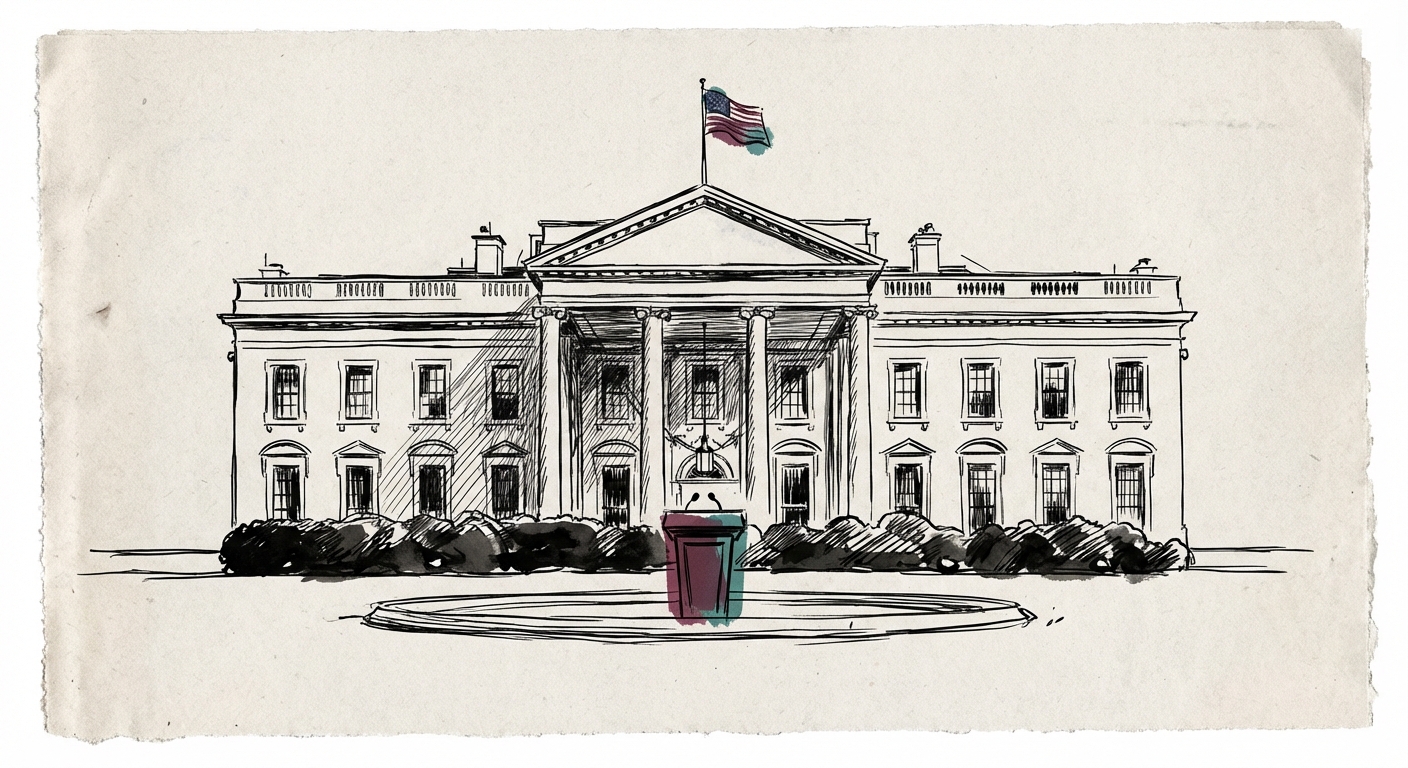
Trump administration
Trump's second-term executive branch; running bifurcated Cuba policy alongside Iran war and domestic election enforcement.
On 13 July, the Trump administration expanded Cuba sanctions to the Ministry of Tourism in a ten-entity designation batch under Executive Order 14404.
Last refreshed: 22 September 2026 · Appears in 4 active topics
Why did the Trump administration extend Russian oil cover to Cuba while publicly threatening military action?
Timeline for Trump administration
Mentioned in: NAACP sues DHS over ICE at the polls
US Midterms 2026Mentioned in: Washington rejects the Majlis Hormuz transit bill
Iran Conflict 2026Mentioned in: MPs name the UK's sovereignty gap
European Tech SovereigntyBackground
The Trump administration is the executive branch of the US federal government under Donald Trump's second term, inaugurated in January 2025. It directs federal foreign, defence, immigration and economic policy through The White House, Cabinet departments and Treasury agencies.
Its current relevance lies in its ability to turn policy into military action, border rules and sanctions. On 5 June, Treasury's Deadline for dealings with GAESA placed foreign companies trading with Cuba under sanctions risk. On 7 July, Treasury revoked an Iranian oil waiver and replaced it with a wind-down licence.
That combination makes The Administration the decision-making centre for US executive action. Its choices affect allies, adversaries, companies and travellers through federal powers that persist beyond any single news cycle.
Cuba sanctions expanded through tourism
On 13 July, The Administration extended its Cuba sanctions campaign to the Ministry of Tourism when the State Department designated ten Cuban entities under Executive Order 14404. The batch followed a 16-day pause and was the largest single-day set of designations since 18 May.
That step built on the 5 June wind-down Deadline for GAESA, Cuba's military business group. The Deadline required foreign companies to end covered dealings or lose their legal protection, putting The Administration's sanctions authority directly into Cuba's tourism and hard-currency economy.
The administration faced war powers pressure
On 13 May, the Senate rejected an Iran war-powers resolution by 49 votes to 50. The result left The Administration able to continue the campaign without Congress directing a withdrawal, despite three Republican senators backing the measure.
On 9 June, The Administration ordered strikes on Iran without a congressional authorisation or notification to the United Nations. Its legal position rested on Article II self-defence authority, while The House had voted six days earlier to wind down US involvement.
Why did a UK parliamentary committee criticise the Trump administration in July 2026?
What happened when the Trump administration's Cuba dissident-release deadline expired?
When did a US government aircraft last land in Havana before 2026?
Why did the Trump administration issue OFAC GL 134B covering Russian oil to Cuba?
What is the SAVE Act and SAVE system?
Why are LGBTQ+ fans boycotting the US World Cup?
Is Congress funding the Iran war?
What is the Trump administration doing in Iran?

