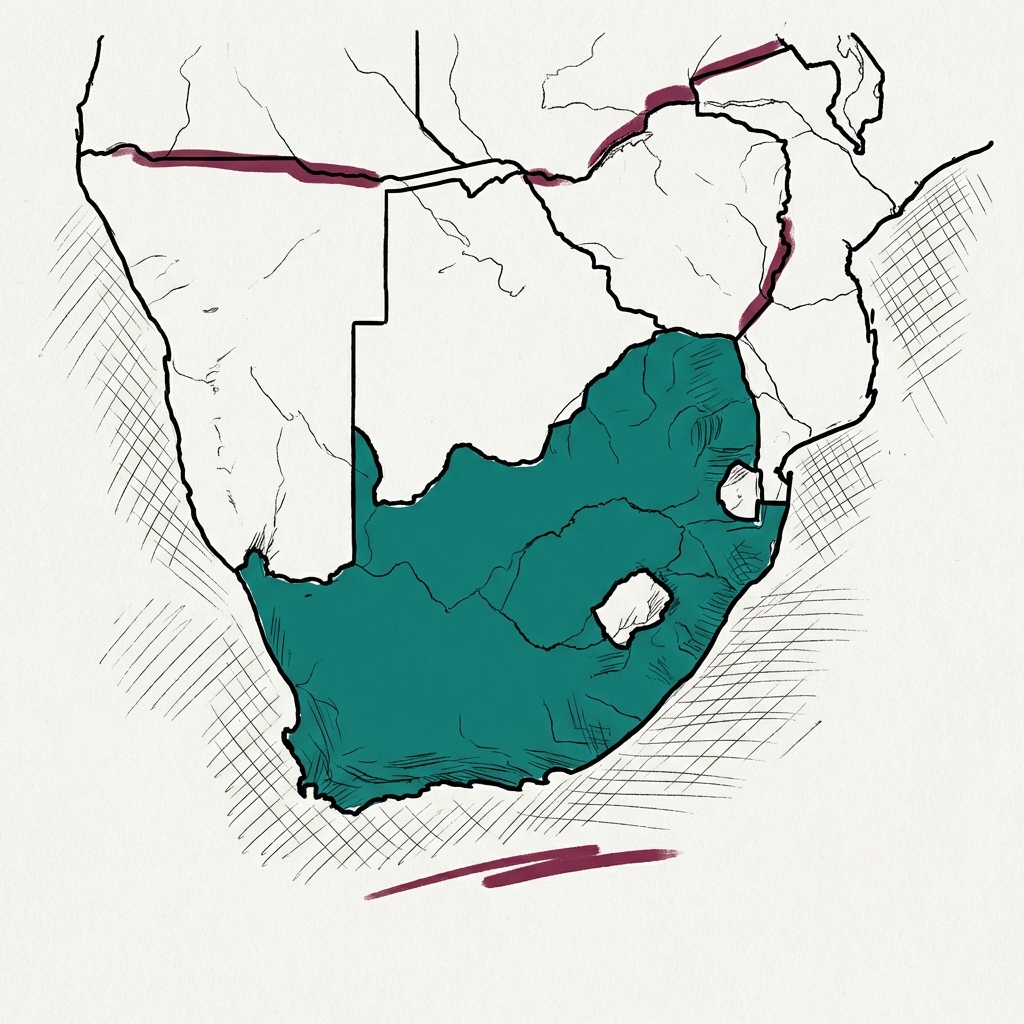
South Africa
Africa's most industrialised economy; 2026 World Cup openers, Cape route shipping hub, and strategic ambiguity on Iran.
On 3 April, South Africa's Cabinet approved an immigration plan proposing a remote-work visa and points-based residency system, though Parliament must pass enabling laws before either takes effect.
Last refreshed: 22 October 2026 · Appears in 6 active topics
How did Bafana Bafana perform on their return to the World Cup after a 16-year absence?
Timeline for South Africa
Mentioned in: Foschini Group attack hits TFG London
Cybersecurity: Threats and DefencesMentioned in: Saudi premium residents gain 31 services
Nomads & CommunitiesMentioned in: WHO talks on pathogen sharing fail again
Pandemics and BiosecurityBackground
South Africa is Africa's most industrialised economy and a member of BRICS, the G20 and the African Union. Pretoria is the executive capital, Cape Town is the legislative seat and Johannesburg is the largest city. Cape Town, Durban and Richards Bay connect southern African trade to global shipping routes.
Its memberships place South Africa between Western trade ties and blocs containing Iran, China and Russia. On 12 September, BRICS adopted language expressing concern about The Gulf conflict and calling for restraint without naming a state. That posture reflects Pretoria's preference for collective diplomatic language amid internal bloc disagreement.
South Africa also attracts foreign and remote workers, but its immigration system remains a constraint. Home Affairs has admitted a backlog that breaches legal deadlines, while proposed remote-work and points-based routes still require legislation.
South Africa delays immigration reform
On 30 March, Home Affairs acknowledged that visa decisions were missing legal deadlines and allowed applicants awaiting decisions to remain lawfully until 30 June 2027. Cabinet adopted a revised immigration White Paper on 3 April.
The paper proposes a points system with remote-work, start-up and skilled-worker routes, but those changes need Acts of Parliament. Applicants therefore remain under South Africa's October 2024 framework. The gap between policy and law matters for a country seeking skilled workers while its administration carries a conceded backlog.
South Africa broke its knockout ceiling
South Africa returned to the men's World Cup after a 16-year absence and reached the knockout rounds for the first time. A 1-0 win over South Korea on 24 June made the side Group A runner-up on four points.
Canada ended the run in the Round of 32 when Stephen Eustaquio scored in the 92nd minute. For South Africa, the tournament still marked a national football threshold: progression beyond the group stage after an opening defeat and a three-match ban for captain Themba Zwane.
When was South Africa last at the World Cup before 2026?
Why is South Africa's visa backlog significant for nomads?
What is South Africa's 2026 immigration White Paper?
Does South Africa have a digital nomad visa?
Why has South Africa stayed quiet about the Iran conflict in 2026?
Why are so many ships going around South Africa?
Is South Africa in BRICS?
How is the Iran war affecting South Africa?
Written with AI from Lowdown's published reporting. Not individually reviewed by an editor. Updated 22 October 2026. Editorial standards.